

I no longer need to con myself into believing that I struggled with choices for a long time. I still do, sometimes. I know now that my life works better when I stick to what The Holy Bible teaches. In fact, my autobiography, ‘Bedroom Called Rainbow’, plots how my broken childhood set me up to fail terribly. So too, does the story revolve around Jesus and how God brought me to a place of healing. In short, I am so convinced about Jesus that I have begun craving God’s Word more than my sinful life, which was chaos on steroids. It wasn’t like that for most of my life- loving God.
Deuteronomy 28 and Luke 6 are magnificent juxtapositions in God’s Holy Word that reveal how God wants us to use choice. We will get into that in a bit. But first, let’s build a case around the fact that choice, aka free will, is proof of God’s Existence.
To quote ‘Psychology Today’, “The simple act of deciding supports the notion that we have free will.”
If we have free will, then God exists?
WHY?
In Genesis 3, we see free will as the gift from God that was misappropriated by Adam and Eve, which caused this Pandora’s box of chaos we live with today. God’s enemy, and ours, manipulated our original ancestors, who only knew God’s goodness and had no reference for evil. Interestingly, Romans 1 vs 32 reminds us that coercion to evil is a sin, ‘Although they know God’s righteous decree and His judgment, that those who do such things deserve death, yet they not only do them, but they even [enthusiastically] approve and tolerate others who practice them’ (Amplified Bible). This incredible Word of Origin, Genesis 3 vs 1-7, from God, helps us examine the statement of free will being proof of God’s Existence. We know that we can decide between options- that is self-evident. If free will is an action that exists, and we have God’s Holy Word showing the very first misuse of free will, logically, we can, at least, admit that based on the existence of both free will and The Holy Bible, God does indeed exist. Therefore, it is entirely logical and rational that God exists.
GENESIS 3 VS 1-7:
‘The serpent was the shrewdest of all the LORD God had made. One day he asked the woman, “Did God really say you must not eat the fruit from any of the trees in the garden?”
2 “Of course, we may eat fruit from the trees in the garden,” the woman replied.
3 “It’s only the fruit from the tree in the middle of the garden that we are not allowed to eat. God said, ‘You must not eat it or even touch it; if you do, you will die.'”
4 “You won’t die!” the serpent replied to the woman.
5 “God knows that your eyes will be opened as soon as you eat it, and you will be like God, knowing both good and evil.”
6 The woman was convinced. She saw that the tree was beautiful, and its fruit looked delicious, and she wanted the wisdom it would give her. So she took some of the fruit and ate it. Then she gave some to her husband, who was with her, and he ate it, too.
7 At that moment, their eyes were opened, and they suddenly felt shame…’
Right from the onset, we discover that free will brings the consequences of good versus evil. But how do we make choices? To quote, ‘When deciding, we form opinions and choose actions via mental processes influenced by biases, reason, emotions, and memories. The simple act of deciding supports the notion that we have free will. We weigh the benefits and costs of our choice and then cope with the consequences. Factors that limit the ability to make good decisions include missing or incomplete information, urgent deadlines, and limited physical or emotional resources.’ https://www.psychologytoday.com/intl/basics/decision-making
The ‘Psychology Today’ article touches on two crucial factors that I learned the hard way:
- Consequences
- Limitations

Consequences, like free will, are unavoidable self-evident proofs that must lead us to accept God’s Existence.

I love how Albert Einstein places the “within the limitations of human nature” clause. Although we philosophise becoming transcendent in our own steam, the fact remains that we are limited to time, space, and matter in our lives as we now experience it. We have absolutely no idea that anything exists beyond what we have been given to know. From this viewpoint, human limits need an outside consciousness to help us practice free will to avoid further negative consequences. Jesus teaches us that an incredible experiential gift can be known, which draws us into the knowledge of God’s Existence. John 14 vs 26, ‘”But when the Father sends the Advocate as my representative—that is, the Holy Spirit—he will teach you everything and will remind you of everything I have told you.”‘
Deuteronomy 28 vs 2 teaches us that blessing is the consequence of using our free will to follow God’s instructions, “Blessings will come upon you and accompany you if you obey the LORD your God.” Likewise, Deuteronomy 28 vs 15 warns us that curses follow when we use our choices to reject God’s Desire to bless us, “However, if you do not obey the LORD your God and do not carefully follow all his commands and decrees I am giving you today, all these curses will come upon you and overtake you.”
IT IS FASCINATING THAT GOD HAS NO INTEREST IN BEING A DICTATOR, EVEN THOUGH HE IS GOD AND CAN LITERALLY DO ANYTHING HE WANTS. GOD, HOWEVER, WANTS US TO BUILD A RELATIONSHIP WITH HIM SO THAT HE CAN HELP US OUT OF THIS CORRUPTED WORLD OF SIN THAT COERCES US TOWARDS DESTRUCTION.

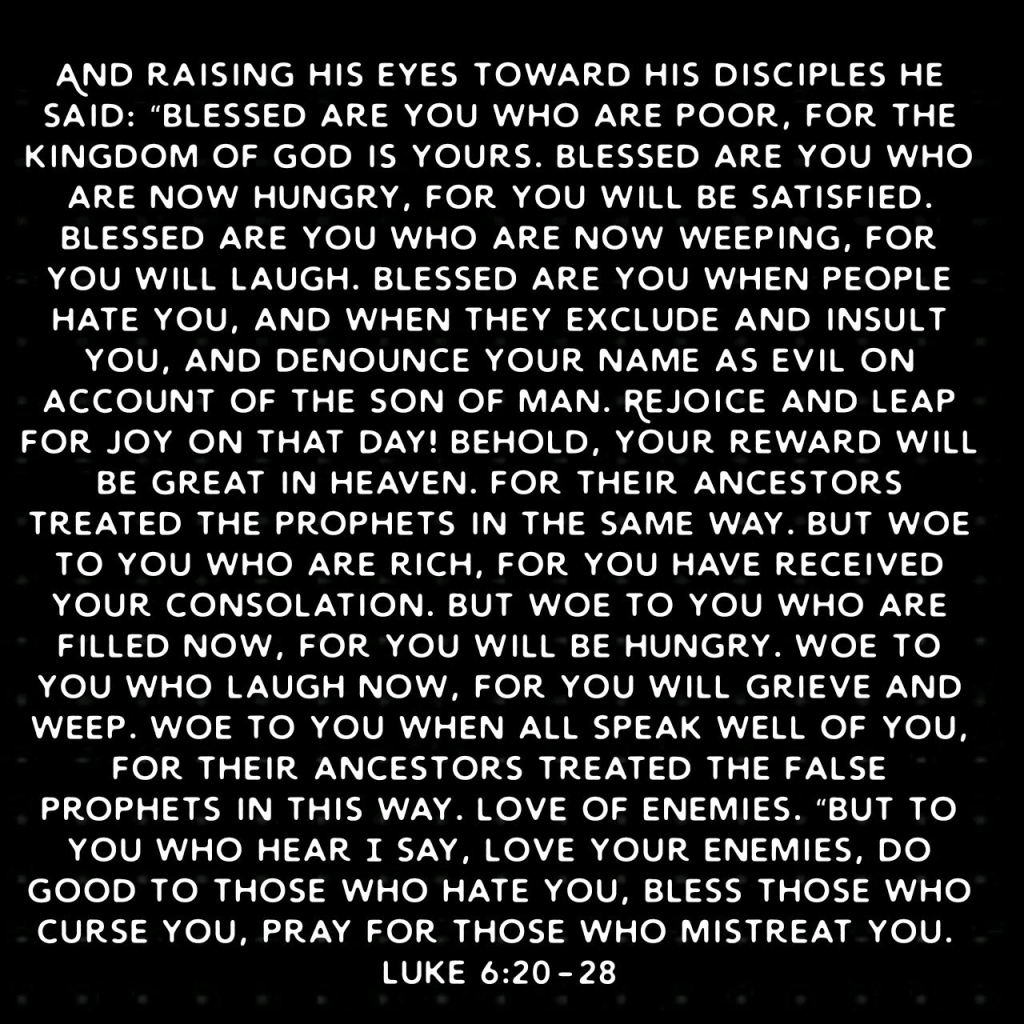
Messiah King Jesus again draws our attention to free will that brings consequences in Luke 6 vs 20-28. Jesus teaches us that although suffering in life as we know it is inevitable because humans make choices; when He returns, we will return to our original Eden Experience before we silly humans were deceived by god-complex peddled by the enemy. Jesus also warns us to not be fooled by the nature of things now as evidence of the existence of self-fulfilment.
Now that we have built a case around choice, what sound advice can we glean from God’s Holy Word to help us not fall for our internal bias, emotions, unhealed trauma, sin-corrupted agendas, lack of knowledge, and insecurity parading behind god-complex?
One of the very first Bible verses I learned by heart is Proverbs 3 vs 5-6. This simple but highly effective truth has stood me in good stead, especially where I have messed up and need help.

Because good, evil and consequences are self-evident, and it is blatant that we are not choosing well, it helps us to humble ourselves to the Moral Argument. Accepting that morality cannot be decreed by ourselves as we are too conditioned by our lived experiences to be objective agents draws us towards God as THEE Moral Agent. This gives me peace because God’s Word is filled with his Promises of blessing, which is God’s Nature and Desire for us. We, sadly, are the fools who try to go it alone, only to discover that somehow we hit that wall of consequences repeatedly.
THE MORAL ARGUMENT:
1. If God does not exist, there is no objective, culture-transcending moral duties.
2. There are objective, culture-transcending moral duties.
3. Therefore, God exists.
‘AQUINAS’ FIVE PROOFS FOR THE EXISTENCE OF GOD’: https://open.library.okstate.edu/introphilosophy/chapter/aquinass-five-proofs-for-the-existence-of-god/
Deuteronomy 30 vs 19:
“I call heaven and earth to witness against you today that I have set before you life and death, the blessing and the curse. So choose life so that you may live, you and your descendants.”- GOD

 #Hayibo