

When we use the term “unreasonable,” we are referring to something that goes beyond what is expected to be rational, logical, and sensible. This can include actions or results that exceed what is considered “common sense”. It is important to recognize when something is unreasonable, as it can negatively impact us and those around us. By understanding this concept, we can strive to make more informed and thoughtful decisions in our daily lives.
Susan Biali Haas, M.D., is an award-winning physician who speaks and writes about stress management, burnout prevention, mental health, wellness and resilience. Susan tells us what types of behaviour are unreasonable, saying:
- “Those you can’t have a reasonable conversation with; they somehow twist your words or totally confuse you and then tell you that you’re the one who doesn’t know how to communicate
- People who make subtly or overtly demeaning comments or say cutting things to you disguised as a “joke.”
- Those that don’t respect boundaries and seem to enjoy stepping all over one after you’ve placed it
- The types that aren’t willing to consider your point of view or listen to your side of things (or just stare at you blankly, or laugh, or explode when you try to explain “how you feel”)
- Bullies
- Verbal or emotional abusers (these can also range from subtle to overt)
- Manipulators
- Liars
- People who leave you feeling bad, sad, shaky, or feeling sick in the pit of your stomach
- “Crazymakers,” a.k.a. people who provoke you into acting crazy or unbalanced (and love making you feel like there’s something wrong with you when you do), when your behaviour across the rest of your life is proof that you’re not
- The excessively charming who are too good to be true and have an ulterior motive.”- https://www.psychologytoday.com/us/blog/prescriptions-life/201201/dont-try-reason-unreasonable-people
Messiah King Jesus runs into some unreasonable people, as we see in John 11 vs 36-37.
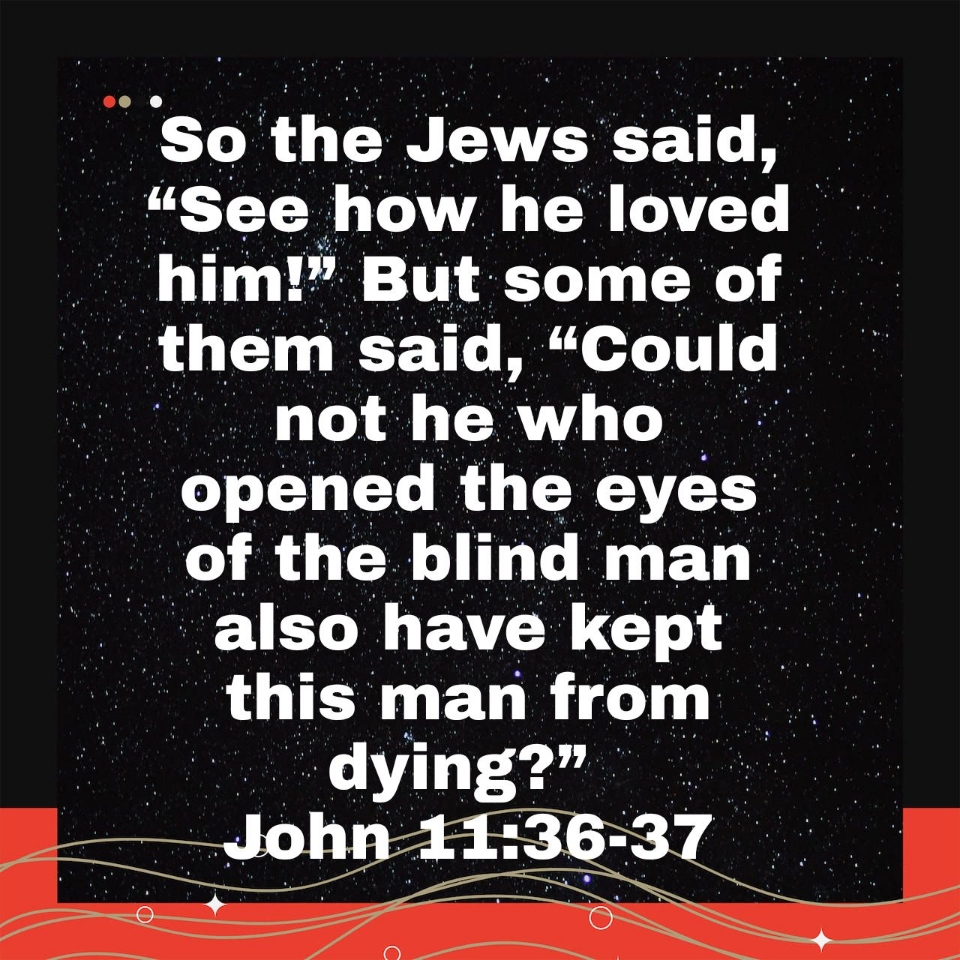
Jesus has just lost his friend, Lazarus, and he feels for his family and friends. In this account, the shortest verse in the Holy Bible exists. ‘Jesus wept’- John 11 vs 35. Biblical scholars point out that Jesus wept not only for Lazarus’s death but also because of people’s unbelief.
Looking at John 11 vs 36-37, the unreasonable complainers answer their questions. They mention that Jesus has healed a blind man, so they should have asked, “Why was Jesus doing what He was doing?” It stands to reason that Jesus can heal the blind and raise a dead man. So what can we glean from this compelling text about unreasonableness?
Why do we egotistically think we have any say in how God conducts Himself?
The answer lies in our deluded idea that we have control. Yes, God gave us dominion over the earth- Genesis 1 vs 26- but that dominion operates within and under the Supremacy of God’s rulership. We have boundaries that God will not give up for us, as He is the Creator, and we but dust with the privilege of leadership within parameters. Our ego wants us to believe we are in control, but we need just see the effect of natural disasters to be reminded that we are not all that.
In John 11 vs 36-37, these unreasonable people judge Jesus based on their perspectives, forgetting that Jesus is God’s Chosen who has performed many miracles and they have performed none.
Why do we feel the need to try to assess God? I believe that our control issues struggle to let go and trust God.
But, despite ourselves, God has steadily worked through humanity to achieve His Salvation Plan, which is freely available to anyone who wants to be saved by choosing Jesus as Lord and Saviour.
The question we each need to face is whether we can climb off our high horse of self, admit that we don’t have all the answers, confess our character flaws, and ask God to help us overcome them.

 #Hayibo