

Can we be honest together, for a stretch?
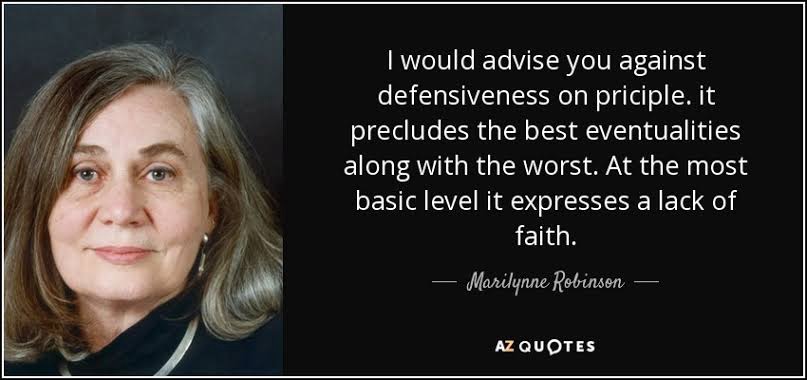
I struggle with defensiveness. Do you?
I know why I react defensively.
Trauma in my childhood have left imprints on me that flare up from time to time. As I walk with Jesus, doing things His Way, I find that my need to be validated and heard doesn’t have as strong a pull on me.
Recently, I had to drive to a funeral; roughly forty-five minutes. Along the way I encountered two traffic-police roadblocks inspecting vehicle and drivers’ licenses. It was an interesting moment for me. My familial panic rose up. This panicked reaction is the imprint from years prior of struggling in addiction resulting, often, in expired licenses. I could feel my mind working overtime preparing excuses. Then, I remembered that my licences were up to date, and I hadn’t broken any traffic laws. I was good. I didn’t need to get all up in the feels of defence-ready.
Driving away it stunned me how truly honest Paul is when saying, Romans 7 vs 14-17, “The trouble is with me, for I am all too human, a slave to sin. I don’t really understand myself, for I want to do what is right, but I don’t do it. Instead, I do what I hate. But if I know that what I am doing is wrong, this shows that I agree that the law is good. So I am not the one doing wrong; it is sin living in me that does it.”
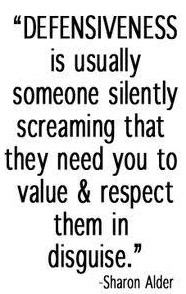
Sadly, the world picks on us while we are defenseless children, as was the case with me, which creates imprints in our mind that left unaddressed become a pattern we view the world through. In my case, my angry defensiveness birthed from trauma, spilled out into self-harm through addiction, promiscuity, and resistance to authority.
How does your defensiveness manifest in your life?
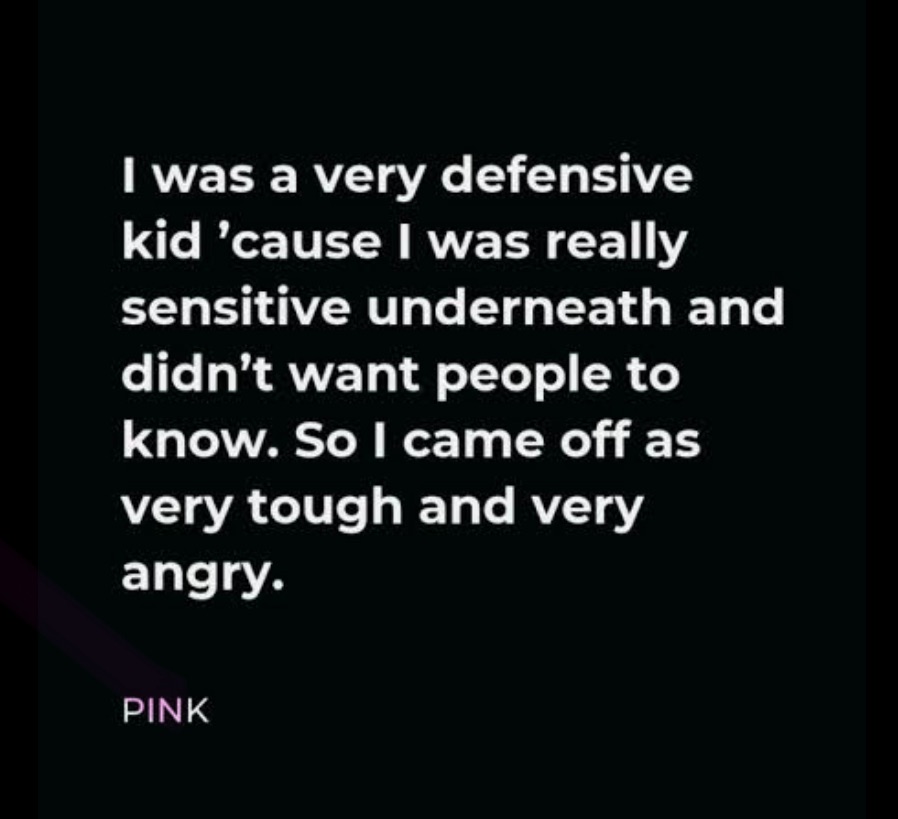
Fortunately, God’s magnificent Holy Word is filled with characters and histories of people acting in defensiveness that we can learn from. It is critical to surrender defensiveness to grow in our relationship with Jesus.
Our defensiveness lessens our ability to fall in love with God, and resistant to obeying Him.
One such person in the Bible that was defensive is Jacob. Remember, Jacob wrestled with an angel. Theological scholars believe that Jacob wrestled Jesus. This appearance of Jesus wrestling Jacob is known as a theophany- appearance of Jesus before He was born. This shows us that Jesus is God and has always been, even before He came as God in flesh.
Genesis 42 vs 38 is typical of defensiveness and displays Jacob placing his trauma above trusting God.

Can we hear ourselves in Jacob’s response?
Delving deeper into Jacob’s response to Reuben (the eldest son who had sex with Jacob’s concubine), Genesis 42 vs 38, ‘Enduring Word’ draws our attention to defensiveness.
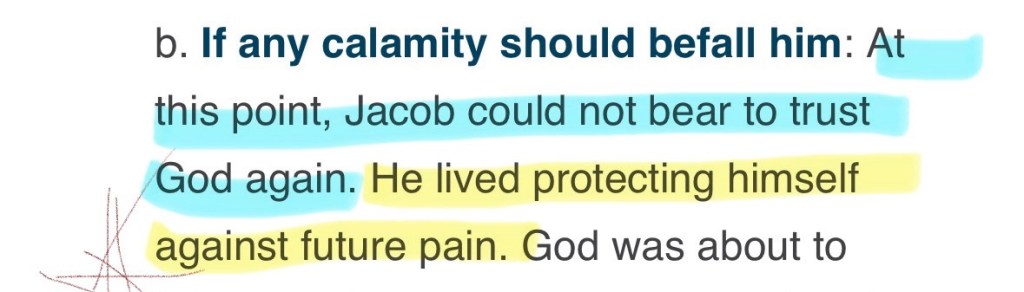
How many things have we not surrendered to God because our trauma response of defensiveness has become an identity we use to beat ourselves and others with?
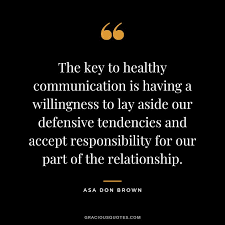
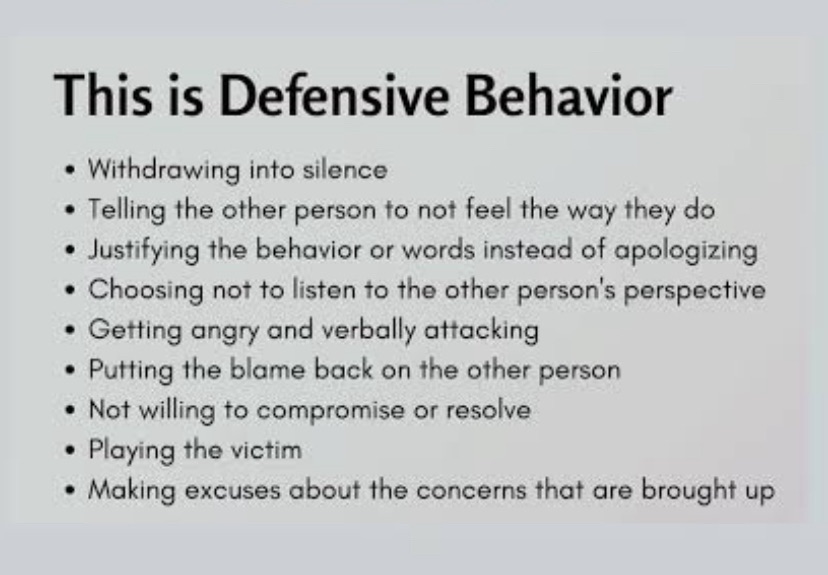
To help us learn from God’s Word and how God turns bad for good, let’s first look at the characteristics of defensiveness.
What are the factors that cause defensiveness in us?
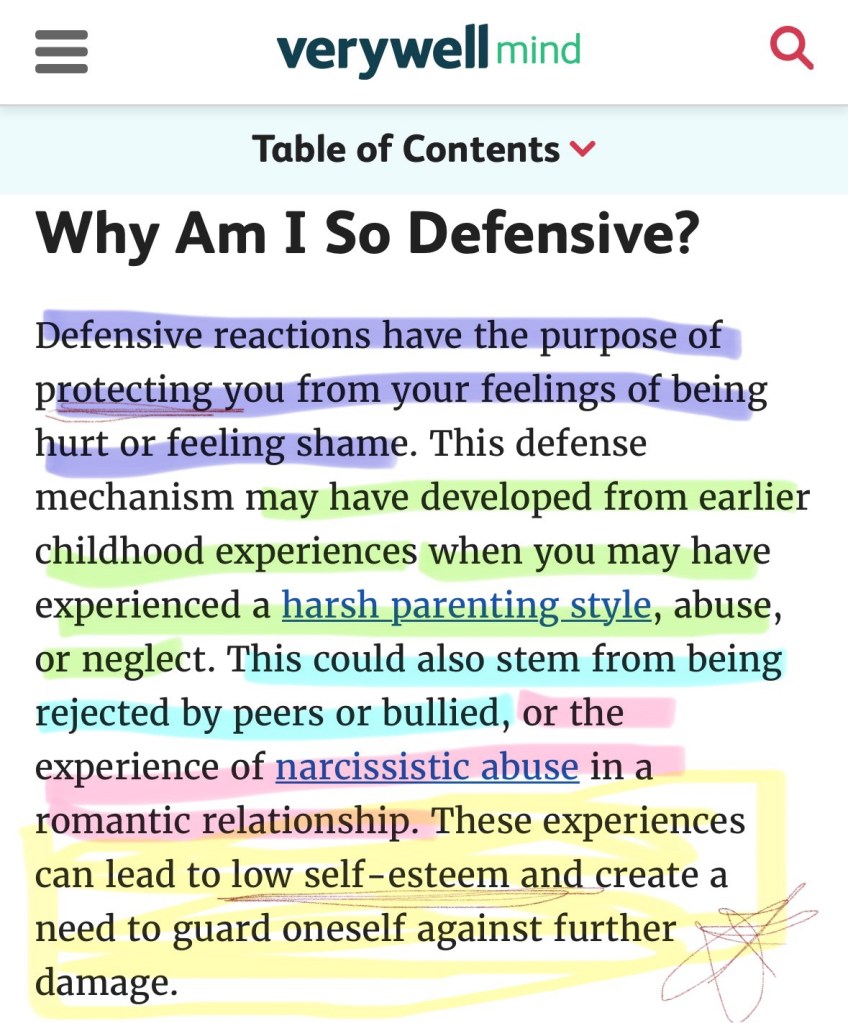
Can we see how past experiences have made us see ourselves less than how God sees us, and how our self-esteem prevents us from trusting God?
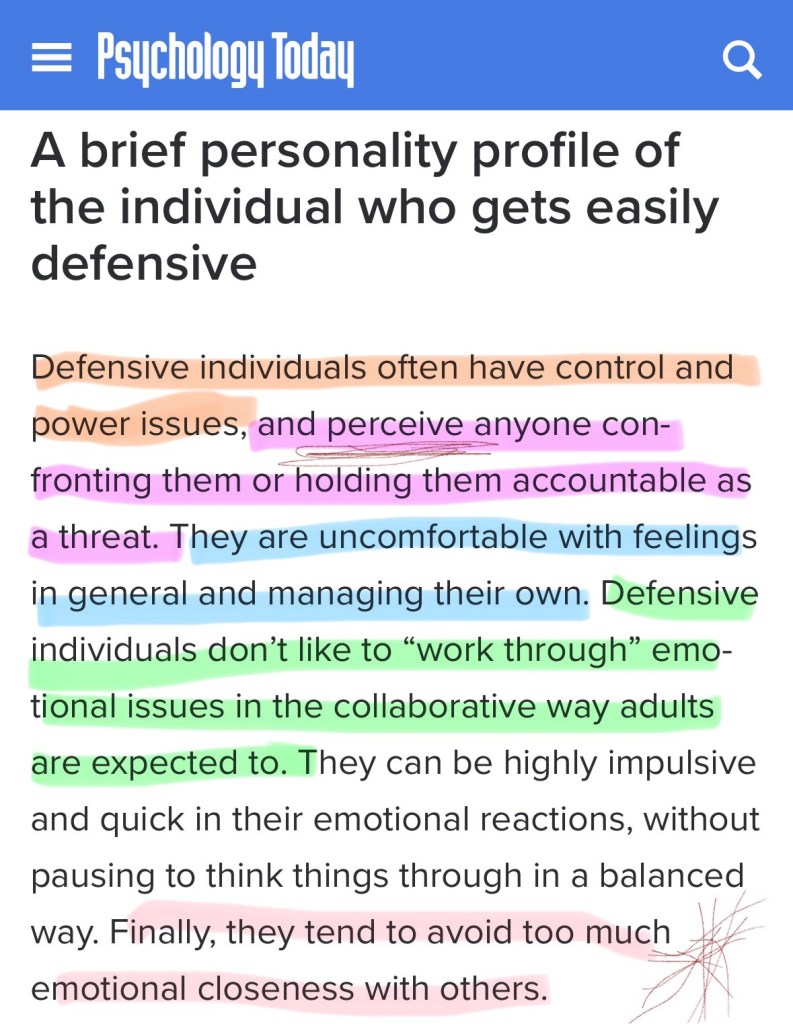
Can we see ourselves in these profiles from ‘VeryWellMind’ and ‘Psychology Today’, and how our need to control stops us from giving God control?
We definitely see Jacob’s defensiveness all over these profiles, don’t we?
So how do we surrender through prayer to God AND put into action practices to overcome our trauma response of defensiveness?
‘States of Wellness Counseling’ offers four tips to confront defensiveness.
To quote….
1. Accept your defensiveness
Again, becoming defensive is a normal human experience. The first step in being able to take back control from your defensiveness is to be accepting that this emotion will occur at times. Is it a pleasant emotion? Nope. But it is common and does not mean something is wrong with you for feeling defensive at times.
When we push against unpleasant emotions, there is no winning.
2. Practice becoming aware of your defensiveness in the moment
The biggest progress you can make is noticing when you become defensive. Like notice it when it’s actually happening. Defensiveness is such a knee-jerk reaction that it’s easy to miss. And it’s hard to stop before it happens. That’s ok.
With practice, you can retrain your brain to recognize this emotion when it is occurring. Sometimes, naming the defensiveness is all that will be needed to stop being defensive in that moment. You’ll know it’s your brain trying to protect you from a painful thought and be able to set it aside.
3. Acknowledge it and own it – Aloud
By naming it aloud, it helps the other person to know that you are aware of feeling defensive and give some patience while you explain your side of things.
Some statements you can use are:
“I’m feeling defensive because that was not my intention.”
“I’m feeling defensive because I’m worried you think of me poorly.”
“While I know you may not mean it this way, I’m feeling defensive because…”
4. Allow the other person the opportunity to clarify
Please, please, PLEASE for the love of the world, allow other people to clarify what they are saying. This is especially important when feeling defensive.
Repeat after me: “I cannot read minds. I am not a mind reader.”
You’ve accepted the fact that you will experience defensiveness at times. You’ve increased your ability to recognize it in the moment and let the other person know what you are feeling. Now, it’s time to allow the other person to clarify what they said. Give them space and patience to further share what they are thinking or feeling. -https://www.statesofwellness.com/blog/how-to-stop-being-defensive
Daryl R. Van Tongeren, September 12, 2022, writes for ‘Greater Good Magazine’ regarding defensiveness, to quote, “A harsh truth about being human is that we’re naturally defensive—and our defensiveness comes out in a few ways. First, we have a desire to be right. We want our views about the world to be validated by other people. Humility is an underrated but highly important human virtue. People prefer a partner or friend who is humble, partly because it signals trust and dependability. To make progress intellectually as a society or as individuals, we have to admit what we know—and, more importantly, what we don’t know—and be curious, open to new ideas, and willing to listen.” -https://greatergood.berkeley.edu/article/item/four_ways_to_cool_down_your_defensiveness
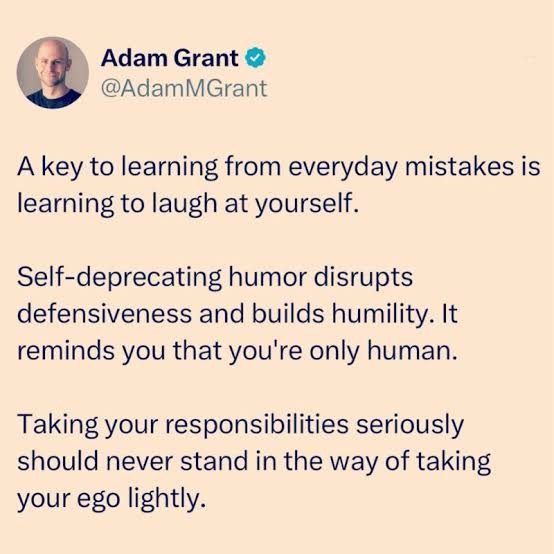
Jacob, like ourselves, was so consumed by his negative events that he didn’t realise he had sub-consciously made his negative experiences a god in his mind by not surrendering them to GOD. By holding onto those events Jacob was inadvertently saying to God, “This pain is more than I trust You to turn it for good.”
Don’t we say the same thing to God?
Our identifying with trauma as the measurement of who we are blinds us from noticing that God loves us so much that He gave Jesus to reconcile us.
‘Enduring Word’, on Genesis 42 vs 38, delves into the prophetic archetype of Jesus that Joseph symbolised. Jacob would soon discover how futile his defensiveness was when he’d go to Egypt and discover Joseph wasn’t dead.
How many times in our lives have we missed out on something amazing by holding onto self-protective defensiveness?

God humbled Himself by coming as a lowly person (not a rich domineering king or president), suffered every rejection, mistrust, cancel-culture, and had every reason to be defensive. Yet, Messiah King Jesus allowed Himself to be crucified for our sin. I think, that if ANYONE can help us face the reasons we are defensive, and to overcome them, it’s Jesus. Jesus trusted God’s Purpose above His circumstances. Let’s let Jesus work in us to do the same.

 #Hayibo