

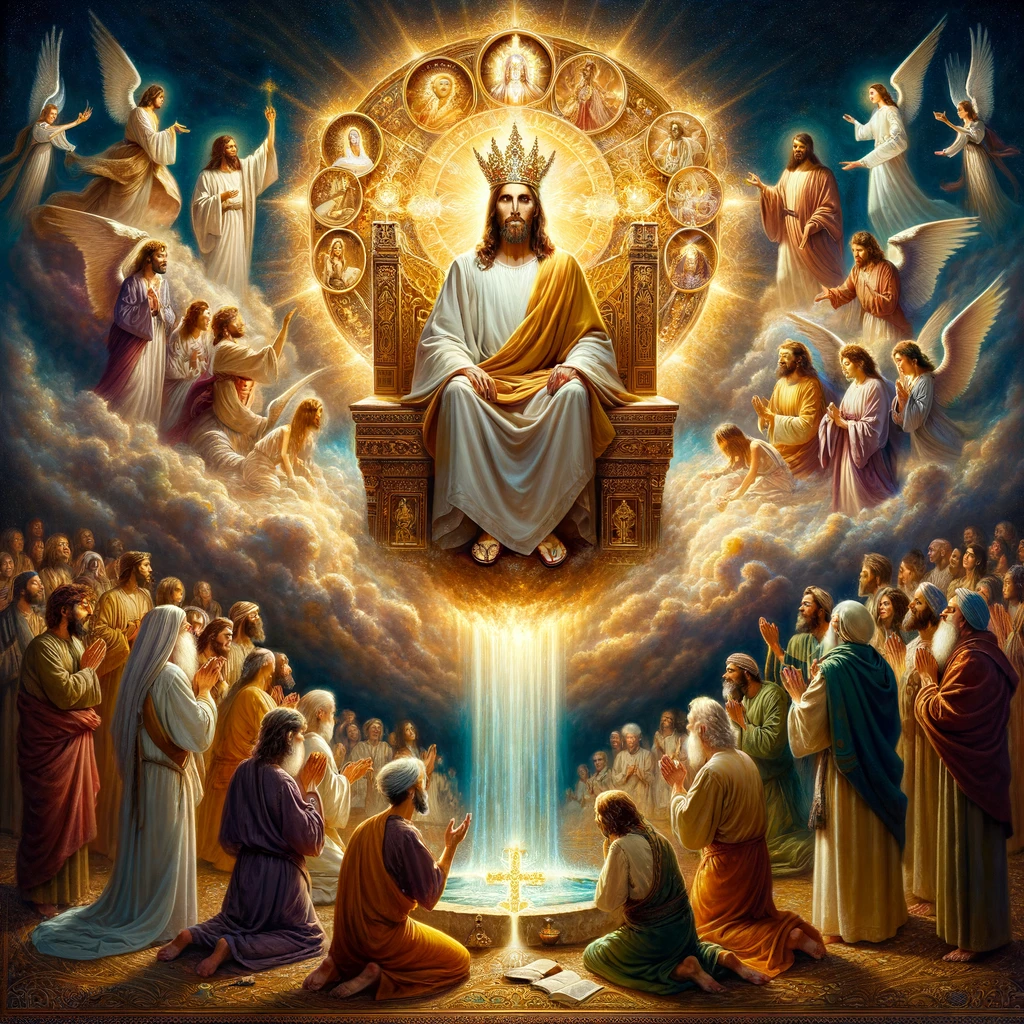
New Ageism is a “spiritual” movement characterised by syncretic beliefs, blending elements of Eastern mysticism, Western esotericism, and personal spirituality. It centres on subjective experience, personal empowerment, and the interconnectedness of all things, often portraying the divine as impersonal and humanity as inherently divine.¹ Paul Heelas describes it as “detraditionalised spirituality,” replacing traditional religious authority with self-interpreted individual spiritual autonomy.² I remember in the years of being a new ageist that I felt so confused, but performed some social interpretation of “spirituality” to fit in.
One of the primary appeals of New Ageism lies in its adaptability and inclusivity, making it accessible to a wide audience. Philip Goff notes that “New Age spirituality allows individuals to construct a tailor-made worldview, accommodating their unique personal preferences.“³ However, this flexibility comes at the cost of coherence, as its amalgamation of disparate beliefs often leads to internal contradictions.⁴ Douglas Groothuis critiques this, stating, “New Age philosophy collapses under logical scrutiny because it attempts to reconcile mutually exclusive ideas, such as pantheism and personal divinity.“⁵ Similarly, Christopher Partridge observes that its eclecticism reduces spirituality to a consumer product, where the sacred becomes a commodity for personal gratification.⁶
From an academic perspective, New Ageism has been critiqued for its relativistic approach to truth. Steve Bruce argues that “the movement’s focus on subjective experience undermines any objective claims about reality, leading to a fragmented and ultimately unstable worldview.“⁷ Alister McGrath points out that this relativism stands in stark contrast to Christianity’s assertion of objective, universal truth as revealed in Scripture.⁸ Amy Orr-Ewing adds that “Christianity offers a historically grounded and verifiable faith, while New Age spirituality often rests on speculative and unverifiable claims.“⁹
Theologically, New Ageism diverges significantly from Christian doctrine, particularly in its portrayal of God and humanity. Peter Jones highlights that “New Age thought frequently redefines God as an impersonal force, diminishing the relational aspect central to the Christian understanding of God.“¹⁰ Norman Geisler emphasises that “the concept of self-divinity in New Ageism directly contradicts the biblical doctrine of human sinfulness and the need for salvation through Christ.“¹¹ These deviations extend to practices, with the Bible explicitly warning against divination, astrology, and spiritism, which are often embraced within New Age practices (Deut. 18:10-12).¹²
Christianity offers a coherent counter to New Ageism by affirming the authority of Scripture and the uniqueness of Jesus Christ as the only way to God (John 14:6).¹³ J.P. Moreland argues that “Christianity provides an objective framework for truth, addressing the existential needs New Ageism seeks to fulfil through subjective and ultimately unsatisfying means.“¹⁴ Furthermore, Walter Martin asserts that “Christianity confronts the consumerism of New Age spirituality with a call to self-sacrifice and devotion to God.“¹⁵
Another key difference lies in the focus on transformation. New Ageism often promotes self-realisation and enlightenment through internal exploration, but Christianity emphasises transformation through surrender to God.² Corinthians 5:17 declares, “If anyone is in Christ, the new creation has come: The old has gone, the new is here!“¹⁶ Carl Trueman explains that “Christianity confronts the inward focus of New Age spirituality with the outward call to worship God and serve others.“¹⁷ Alister McGrath underscores that Christianity provides a coherent narrative of creation, fall, redemption, and restoration, which New Ageism lacks.¹⁸
In addressing the appeal of New Ageism, Timothy Keller suggests that Christians should highlight how the gospel uniquely fulfils humanity’s deepest longings for meaning, identity, and purpose.¹⁹ Alvin Plantinga adds that Christianity’s coherence and rationality provide a foundation for belief that is lacking in New Age thought.²⁰ Finally, Os Guinness calls for Christians to engage with New Age adherents through respectful dialogue, demonstrating the transformative power of the gospel.²¹
A Prayer for Discernment and Truth

Heavenly Father,
We seek Your wisdom in a world of conflicting beliefs. Give us discernment to recognise Your truth and courage to stand firm. Protect us from being misled by ideas that promise fulfilment but draw us away from You.
Lord, we pray for those exploring paths like New Age spirituality. Reveal Yourself as the personal, loving God who transforms hearts through Jesus Christ. May they find peace and purpose in surrendering to You.
Strengthen us to share Your truth with compassion and grace, reflecting Christ’s light in all we do. Thank You for Your unchanging Word and faithful presence.
In Jesus’ Holy name,
Amen.
References

1. Paul Heelas, The New Age Movement: The Celebration of the Self and the Sacralisation of Modernity (Oxford: Blackwell, 1996), 19.
2. Ibid., 28.
3. Philip Goff, The New Spirituality: An Introduction to Progressive Belief in the 21st Century (New York: Routledge, 2008), 47-49.
4. Christopher Partridge, The Re-Enchantment of the West, Vol. 1: Alternative Spiritualities, Sacralisation, Popular Culture and Occulture (London: Bloomsbury, 2004), 85.
5. Douglas Groothuis, Unmasking the New Age: Is There a New Religious Movement Trying to Transform Society? (Downers Grove: IVP Academic, 1986), 45.
6. Ibid.
7. Steve Bruce, Religion in Modern Britain (Oxford: Oxford University Press, 1995), 103-105.
8. Alister McGrath, Christian Theology: An Introduction (Oxford: Wiley-Blackwell, 2020), 259-261.
9. Amy Orr-Ewing, Why Trust the Bible? (Nottingham: Inter-Varsity Press, 2005), 78.
10. Peter Jones, The Gnostic Empire Strikes Back: An Old Heresy for the New Age (Phillipsburg: P&R Publishing, 1992), 56.
11. Norman Geisler and Ron Rhodes, When Cultists Ask: A Popular Handbook on Cultic Misinterpretations (Grand Rapids: Baker Books, 1997), 102.
12. The Holy Bible, New International Version (Grand Rapids: Zondervan, 2011), Deut. 18:10-12.
13. The Holy Bible, John 14:6.
14. J. P. Moreland, Love Your God With All Your Mind: The Role of Reason in the Life of the Soul (Colorado Springs: NavPress, 2012), 94.
15. Walter Martin, The Kingdom of the Cults (Minneapolis: Bethany House, 2003), 268.
16. The Holy Bible, 2 Corinthians 5:17.
17. Carl Trueman, The Rise and Triumph of the Modern Self: Cultural Amnesia, Expressive Individualism, and the Road to Sexual Revolution (Wheaton: Crossway, 2020), 82-84.
18. Alister E. McGrath, The Twilight of Atheism: The Rise and Fall of Disbelief in the Modern World (New York: Doubleday, 2004), 198-199.
19. Timothy Keller, Making Sense of God: An Invitation to the Skeptical (London: Hodder & Stoughton, 2016), 62.
20. Alvin Plantinga, Warranted Christian Belief (Oxford: Oxford University Press, 2000), 113.
21. Os Guinness, Fools’ Talk: Recovering the Art of Christian Persuasion (Downers Grove: IVP Academic, 2015), 98-100.

 #Hayibo