

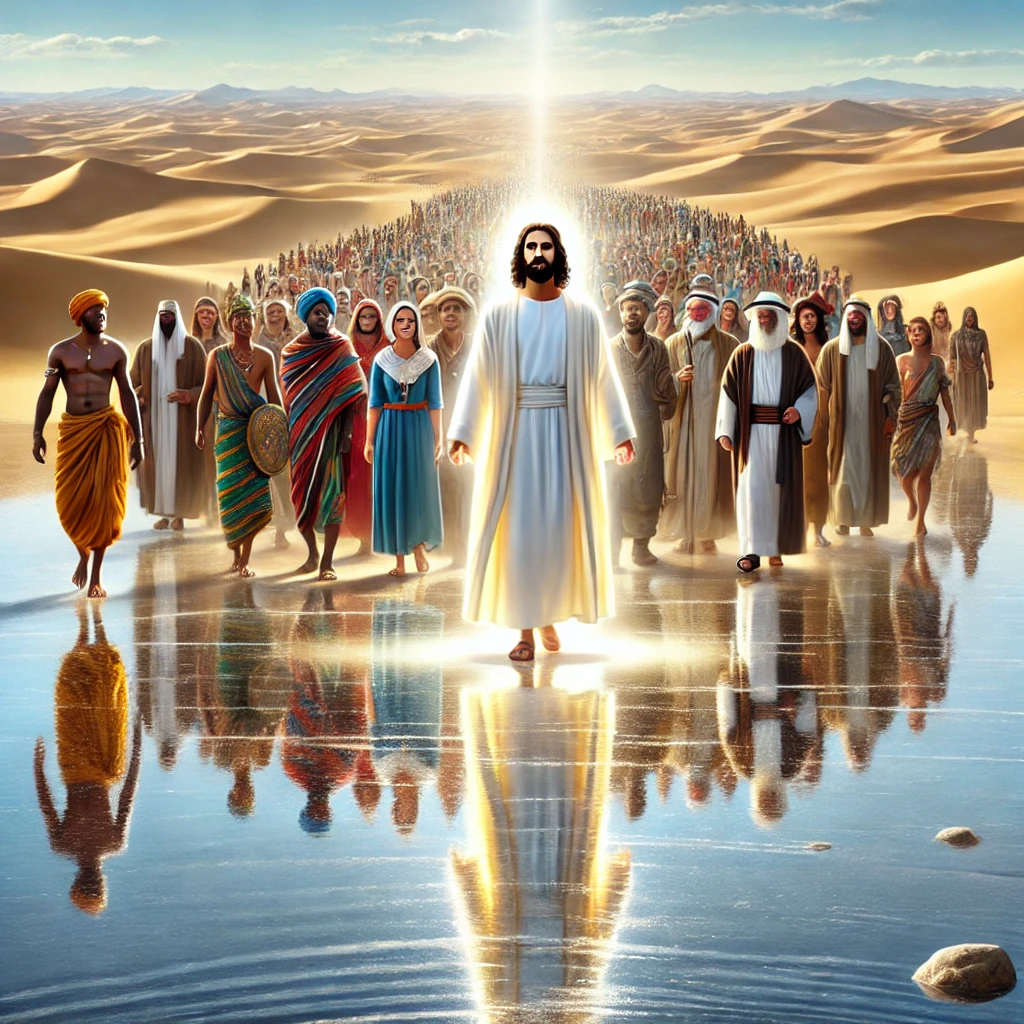
In our contemporary world, navigating morality often feels like wandering in a vast, uncharted wilderness. Moving from moral dysfunction in my own life towards Christ-likeness has taken many turns. However, I have a lot to thank the Christian version of the 12 Steps of Recovery for. This methodology guided me into getting honest about my conditioning that drove my moral disabilities. The program also guided me into what I needed to unlearn, relearn, and practice to be a better human. Do I fail? I am human am I not? This journey of introspection revealed how personal conditioning often leads to ethical blind spots, underscoring the broader challenges of navigating morality in a culture shaped by subjective values. Sadly, the ethical frameworks that once provided clarity seem to have been discarded, leaving us searching for meaning in a desert of relativism. Moral relativism—the idea that morality is relative to cultural, individual, or situational contexts—dominates much of modern ethical thought. For instance, modern debates around issues like justice, identity, and ethics often reveal the fragility of moral systems rooted in human opinion rather than divine truth. While it promises tolerance and liberation, it often results in ethical ambiguity and indecision. So here we stand, gazing at what seems to be an oasis of moral clarity, only to find it’s a mirage.¹ In simpler terms, a moral mirage is when something appears right in the moment but ultimately leads to harm or confusion because it lacks a solid foundation.
Relativism: A polite guide with no map.
Moral relativism is often divided into descriptive and normative forms. Descriptive relativism observes that different cultures hold diverse moral codes. Normative relativism takes this further, claiming no single moral standard can be universally applied.² On the surface, this seems polite—“You do you!” might be its motto. But Alasdair MacIntyre warns that this approach leaves us fragmented, morally and practically: “We have lost our comprehension, both theoretical and practical, of morality.”³ Relativism may aim to respect diversity, but it sacrifices the ability to critique harmful practices. Is this really tolerance, or are we just lost?⁴ These ethical ambiguities point to a deeper issue identified by philosophers like Alasdair MacIntyre, who warns of the consequences of moral fragmentation in a society untethered from absolute truths.
Psychologists provide insight into the behavioural consequences of relativism. Albert Bandura’s work on moral disengagement highlights how individuals justify unethical behaviour: “Through moral justification, detrimental conduct is made personally and socially acceptable by portraying it as serving socially worthy purposes.”⁵ In a relativistic society, such justifications become widespread, eroding personal accountability. Jonathan Haidt’s Moral Foundations Theory argues that relativism undermines shared moral values like fairness and care, which are essential for societal cohesion.⁶ Without these anchors, people often rationalise self-serving behaviours at the expense of communal well-being. Philip Zimbardo’s research in The Lucifer Effect reveals how situational and systemic factors exacerbate moral decay: “Good people can be induced, seduced, and initiated into behaving in evil ways.”⁷ Relativism, by dismissing universal moral boundaries, creates environments where such decay thrives. It’s like building a house on sand—the structure might look fine initially, but without a solid base, it will eventually collapse when the storms come. While MacIntyre critiques relativism from a philosophical lens, psychologists like Albert Bandura and Jonathan Haidt provide empirical evidence of its impact on individual and societal behavior.
Sociology mirrors these findings by showing the societal impact of relativism. Emile Durkheim’s concept of anomie describes the normlessness that arises when societies lack shared values: “Anomie is a state where social norms are confused, unclear, or simply not present.”⁸ This breakdown fosters individualism over community, weakening the social fabric. Francis Fukuyama’s exploration of trust links moral decay to the erosion of social capital, as shared moral frameworks are replaced by fragmented, individualised ethics.⁹ Christian Smith adds to this critique, arguing that relativism contributes to what he calls “moralistic therapeutic deism,” a shallow ethical framework focused on personal happiness over moral truth.¹⁰ This psychological understanding complements sociological perspectives, such as Emile Durkheim’s concept of anomie, which highlights the societal risks of a weakened moral fabric. As Durkheim suggests, the absence of shared moral values fosters fragmentation, emphasizing the urgency of rediscovering a unified ethical foundation—one that Christian teachings can provide with clarity and stability.
Moral clarity ahead, or is that just another mirage?
Many of us have experienced moments of questioning where to anchor our values, especially when societal norms seem to change overnight. Charles Taylor describes the spiritual dryness of this moral wilderness as “the eclipse of all goals beyond human flourishing.”¹¹ By prioritising autonomy and fulfilment over shared ethics, society loses its connection to transcendent purpose.¹² Miroslav Volf calls this the “loss of embrace”—our inability to reconcile with others in meaningful ways due to a lack of shared moral vision.¹³ Sarah Coakley further suggests that the fragmentation of moral frameworks reflects a deeper spiritual disconnection. Without God as our guide, the wilderness feels endless, the mirages multiplying.¹⁴
Critics like Stanley Hauerwas argue that the Church must resist the “world’s accommodation to the status quo” and serve as a countercultural guide.¹⁵ Mercy Amba Oduyoye supports this, highlighting how Christian theology rooted in justice and care can illuminate our moral path.¹⁶ Their insights remind us that faith provides not just a map but also a destination.
Look, a signpost! Wait, that’s just a cactus.
Research reveals how shared moral visions transform communities. Korie L. Edwards found that African-American Christians rooted in religious traditions exhibited stronger commitments to justice and ethical action.¹⁷ Similarly, Chaeyoon Lim and Robert Putnam observed that religious networks enhance life satisfaction, creating resilience even in fragmented societies.¹⁸ René Padilla adds that biblical morality, centred on justice and humility, provides a steady compass amidst relativism’s shifting sands.¹⁹ Grace Ji-Sun Cho and Kara Root argue that healing and reconciliation in Christ allow us to navigate ethical complexities without losing sight of justice.²⁰
The call to rediscover our moral compass is not about returning to rigid dogmatism but embracing a framework rooted in God’s unchanging nature. As Tom Gell notes, relativism often “sidesteps moral responsibility,” leaving us paralysed in the face of moral dilemmas.²¹ Georgia Warnke agrees, warning that relativism undermines social criticism by failing to provide a foundation for addressing systemic injustice.²² Research further shows that societies with strong, shared ethical frameworks—often rooted in religion—report lower levels of corruption, greater trust, and more cohesive communities.²³ In contrast, relativism weakens these bonds, increasing polarisation and ethical inconsistency.²⁴
If relativism is a mirage, Christian ethics offer the living water needed to thrive in the wilderness. Biblical principles of justice, humility, and mercy not only guide individuals but also build stronger communities, offering hope in a fractured world.²⁵ Faith reminds us that moral clarity is not an illusion but a gift from the One who created us.²⁶
Exit this way, but only if you trust the mapmaker.
The wilderness, while barren, is also a place of testing and growth. Like the Israelites wandering in the desert, we are called to trust God’s guidance even when the path ahead seems unclear. The ethical wilderness of relativism may appear to promise freedom, but it often leads to greater confusion. The question is not simply academic—it is transformative. Will we continue chasing the mirage, or will we follow the compass of God’s truth? The decision to seek truth is not merely philosophical; it is the way to flourish.
In a world of shifting moral frameworks, Jesus offers an unchanging anchor of truth. As the Apostle Paul affirms, “Jesus Christ is the same yesterday and today and forever” (Hebrews 13:8). Unlike philosophies that bend to societal pressures, Jesus embodies truth, declaring, “I am the way, the truth, and the life” (John 14:6). His teachings transcend cultural trends, providing a higher, eternal standard.
The story of the adulterous woman (John 8:1-11) reveals Jesus’ balance of grace and holiness. He neither condones sin nor succumbs to legalism but calls her to transformation: “Go and sin no more” (John 8:11). This response highlights a morality rooted in divine wisdom, free from human distortions.
Proverbs reminds us, “Trust in the LORD with all your heart, and do not lean on your own understanding” (Proverbs 3:5). Jesus, as the Word made flesh (John 1:14), aligns our moral vision with God’s eternal truth, overcoming illusions of human ideologies. His light cuts through darkness: “The light shines in the darkness, and the darkness has not overcome it” (John 1:5).
In a world desperate for clarity, Jesus provides a path of righteousness grounded in God’s unchanging truth, offering the freedom found only in Him: “You will know the truth, and the truth will set you free” (John 8:32). This is not just about following rules but about entering a relationship with Jesus, who transforms our hearts to love what is good and true. Choosing to follow Jesus means stepping out of the confusion of moral mirages and into the clarity and freedom of His eternal truth—will you take that step today?”
Prayer

Heavenly Father,
As we navigate the moral wilderness of our time, help us to see clearly and discern Your truth amidst the confusion. Guide us with Your Word, which is a lamp to our feet and a light to our path. Let us not be led astray by the mirages of relativism but instead anchor ourselves in Your unchanging character. Give us the courage to live out justice, mercy, and humility in a world desperate for moral clarity. May we trust You, our Divine Mapmaker, and walk the path of righteousness You have set before us.
In Jesus’ Holy name,
Amen.
References

1. “Moral Relativism.” Ethics Unwrapped. Accessed January 9, 2025. https://ethicsunwrapped.utexas.edu/glossary/moral-relativism#:~:text=Normative%20moral%20relativism%20is%20the,cultures%20cannot%20rightfully%20condemn%20it.
2. MacIntyre, Alasdair. After Virtue: A Study in Moral Theory. Notre Dame, IN: University of Notre Dame Press, 1981.
3. Horvat, William. “Unveiling Moral Relativism: Understanding Its Dynamic Nature.” LinkedIn. Accessed January 9, 2025. https://www.linkedin.com/pulse/unveiling-moral-relativism-understanding-dynamic-nature-horvat-uccmc#:~:text=Ethical%20Ambiguity%20and%20Conflicts:,%2C%20hindering%20cohesive%20decision%2Dmaking.
4. Nietzsche, Friedrich. On the Genealogy of Morality. Edited by Keith Ansell-Pearson. Translated by Carol Diethe. Cambridge: Cambridge University Press, 1994.
5. Bandura, Albert. Moral Disengagement: How People Do Harm and Live with Themselves. New York: Worth Publishers, 2016.
6. Haidt, Jonathan. The Righteous Mind: Why Good People Are Divided by Politics and Religion. New York: Pantheon, 2012.
7. Zimbardo, Philip. The Lucifer Effect: Understanding How Good People Turn Evil. New York: Random House, 2007.
8. Durkheim, Emile. The Division of Labor in Society. Translated by W. D. Halls. New York: Free Press, 1997.
9. Fukuyama, Francis. Trust: The Social Virtues and the Creation of Prosperity. New York: Free Press, 1995.
10. Smith, Christian. Soul Searching: The Religious and Spiritual Lives of American Teenagers. Oxford: Oxford University Press, 2005.
11. Taylor, Charles. A Secular Age. Cambridge, MA: Harvard University Press, 2007.
12. “Moral Relativism and Its Effects.” Seven Pillars Institute. Accessed January 9, 2025. https://sevenpillarsinstitute.org/moral-relativism-and-its-effects/#:~:text=Today%2C%20moral%20relativism%20seems%20to,tolerance%20are%20two%20different%20concepts.
13. Volf, Miroslav. Exclusion and Embrace: A Theological Exploration of Identity, Otherness, and Reconciliation. Nashville: Abingdon Press, 1996.
14. Coakley, Sarah. God, Sexuality, and the Self: An Essay ‘On the Trinity’. Cambridge: Cambridge University Press, 2013.
15. Hauerwas, Stanley. The Peaceable Kingdom: A Primer in Christian Ethics. Notre Dame, IN: University of Notre Dame Press, 1983.
16. Oduyoye, Mercy Amba. Introducing African Women’s Theology. Sheffield, UK: Sheffield Academic Press, 2001.
17. Edwards, Korie L. “Race, Religion, and Worship: Are African-American Christians More Committed?” Sociology of Religion 70, no. 3 (2009): 262–281. https://doi.org/10.1093/socrel/srp032.
18. Lim, Chaeyoon, and Robert D. Putnam. “Religion, Social Networks, and Life Satisfaction.” American Sociological Review 75, no. 6 (2010): 914–933. https://doi.org/10.1177/0003122410386686.
19. Padilla, René. Mission Between the Times: Essays on the Kingdom. Grand Rapids, MI: Eerdmans, 1985.
20. Cho, Grace Ji-Sun, and Kara K. Root, eds. Becoming Human Again: From Trauma to Healing in Christ. Minneapolis: Fortress Press, 2021.
21. Gell, Tom. “The Folly of Moral Relativism.” LinkedIn. Accessed January 9, 2025. https://www.linkedin.com/pulse/folly-moral-relativism-tom-gell#:~:text=Moral%20relativism%20has%20increasingly%20emerged,pass%20to%20sidestep%20moral%20responsibility.
22. Warnke, Georgia. “Moral Relativism and Social Criticism.” Journal of Philosophy 85, no. 8 (1988): 458–468. https://doi.org/10.2307/2026682.
23. “The Peril of Extremes: Moral Relativism and Ethnocentrism.” The Forge. Accessed January 9, 2025. https://theforge.defence.gov.au/article/peril-extremes-moral-relativism-and-ethnocentrism.
24. Lewis, C.S. The Abolition of Man. New York: HarperOne, 1944.
25. “Arguments For and Against Moral Relativism.” Study.com. Accessed January 9, 2025. https://study.com/learn/lesson/arguments-for-against-moral-relativism.html#:~:text=Opponents%20of%20moral%20relativism%20often,them%20as%20a%20cultural%20value.
26. “Moral Relativism.” CliffsNotes. Accessed January 9, 2025. https://www.cliffsnotes.com/study-notes/23076427.

 #Hayibo