


A wonderful African Proverb states, “A large chair doesn’t make a king.” This African wisdom points out that leadership transcends titles and position. What, then, defines a leader? Leadership is often equated with authority, influence, and visible success. Corporate executives command vast resources, social media influencers boast millions of followers, and political figures shape the trajectory of nations. These metrics, while quantifiable, fail to fully capture leadership’s essence. Can leadership exist without recognition? Is it inherently dependent on followership? And perhaps most critically, is leadership always good?
The Bible offers a radical redefinition of leadership. Jesus declared, “Whoever wants to become great among you must be your servant, and whoever wants to be first must be slave of all” (Mark 10:43–44).¹ In a world that celebrates power, control, and dominance, this principle of servant leadership appears paradoxical. Yet, it provides a model that prioritises humility, service, and enduring impact over temporary accolades.
The idea that leadership requires followers is intuitively appealing. John Maxwell famously said, “If you’re leading and no one is following, you’re just taking a walk.”² This perspective reflects the relational nature of leadership, where influence is shared between leaders and followers. Yet, history and theology challenge this narrow view. Consider Jesus Christ after His crucifixion. Many of His disciples, disillusioned, returned to their former lives (John 21:3).³ By Maxwell’s definition, was He no longer a leader? Hardly. Jesus remained “King of Kings and Lord of Lords,” His authority unaffected by human perception (Revelation 19:16).⁴
This paradox is mirrored in secular contexts. Vincent van Gogh, who died impoverished and unacknowledged, shaped the trajectory of modern art.⁵ Similarly, Norman Borlaug, often called the father of the Green Revolution, saved over a billion lives through his agricultural innovations, yet he remains unknown to many.⁶ Ronald Heifetz terms such cases “adaptive leadership,” where leaders address systemic challenges even when their efforts go unrecognised in their lifetimes.⁷ These examples challenge the notion that leadership is synonymous with recognition, suggesting instead that its essence lies in enduring legacy.
Twenty years ago, my counsellor asked me, “If you died today and everyone hated you, could you die having loved yourself?” At the time, my self-worth hinged on external validation. Over the years, I have reflected on this question, understanding that true leadership often involves rejection and obscurity. This realisation aligns with Jesus’ warning: “If the world hates you, keep in mind that it hated me first” (John 15:18).⁸ Paul, one of the most influential figures in Christianity, endured beatings, imprisonment, and ridicule, yet his leadership shaped the early Church (2 Corinthians 11:24–28).⁹ Leadership rooted in obedience to a higher purpose often transcends societal approval.
Leadership is not always virtuous. Adolf Hitler, a figure of immense influence, led millions into destruction, demonstrating how leadership divorced from morality can devastate.¹⁰ Joanne Ciulla observes, “Leadership without ethics is manipulation, not inspiration.”¹¹ This perspective underscores the importance of aligning leadership with moral principles. Proverbs 11:14 highlights that “Where there is no guidance, a people falls, but in an abundance of counsellors there is safety.”¹² True leadership must prioritise ethics, selflessness, and the well-being of others. Daniel Goleman’s work on emotional intelligence reinforces this idea, identifying self-awareness and empathy as critical qualities for effective leaders.¹³
Ethics, however, must be paired with humility. Jesus exemplified this through His act of washing His disciples’ feet, a moment that redefined leadership as service (John 13:14–15).¹⁴ Similarly, Dietrich Bonhoeffer argued that genuine leaders do not seek to make followers dependent on them but empower them to lead themselves.¹⁵ This principle resonates with Robert Greenleaf’s concept of servant leadership, which centres on the growth and well-being of others.¹⁶
Parents are perhaps the most overlooked leaders. They influence their children profoundly, shaping their moral and emotional growth. Daniel Siegel describes parents as “attachment figures,” responsible for nurturing resilience and self-worth.¹⁷ This form of leadership often goes unrecognised yet has a lifelong impact. Moreover, individuals like Wangari Maathai and Harriet Tubman demonstrate how leadership transcends traditional paradigms. Maathai’s Green Belt Movement empowered African women, transforming both communities and landscapes.¹⁸ Tubman’s bravery in leading enslaved individuals to freedom exemplifies leadership rooted in courage and sacrifice.¹⁹
Leadership also begins internally. Stephen Covey defines personal leadership as “keeping your vision and values before you and aligning your life to them.”²⁰ Paul highlights this in 1 Corinthians 9:27, stating, “I discipline my body and keep it under control.”²¹ Internal discipline fosters authenticity, enabling leaders to inspire others through integrity. Max Weber’s concept of charismatic authority reinforces the importance of personal conviction, though it warns against the dangers of unchecked power.²²
Resilience is a hallmark of enduring leadership. Florence Nightingale, initially criticised for her methods, persisted in her mission to revolutionise healthcare, eventually earning widespread respect.²³ This quality is mirrored in biblical leaders like Moses and Jeremiah, whose initial attempts at leadership were met with resistance.²⁴ Similarly, the writings of Howard Gardner highlight the moral courage required to shape societal values through leadership.²⁵
The modern workplace provides additional insights. A 2021 study by Deloitte found that organisations with leaders prioritising employee well-being reported 23% higher productivity rates.²⁶ This aligns with the teachings of Adam Grant, who argues that generosity and humility foster long-term success.²⁷ Such findings affirm that servant leadership, though countercultural, has tangible benefits in organisational contexts.
Leadership is not static but evolves through collaboration. Frances Hesselbein, former CEO of the Girl Scouts, noted, “Leadership is a matter of how to be, not how to do.”²⁸ This perspective underscores the importance of adaptability and continuous growth. Malcolm Gladwell’s work on social tipping points further illustrates how small acts of leadership can catalyse significant societal change.²⁹ Similarly, Elaine Graham explores how leaders can navigate uncertainty through faith and relational trust.³⁰ The Bible offers profound examples of perseverance and divine reliance in figures like Nehemiah, who rebuilt Jerusalem despite fierce opposition.³¹ Leaders like Esther further demonstrate the power of courage and timing, using their positions to deliver their people (Esther 4:14).³²
Leadership, when grounded in biblical principles, does not merely aim to achieve success but to create lasting impact. It is a calling that transcends titles and accolades, requiring selflessness, moral courage, and reliance on God’s guidance.³³
Prayer
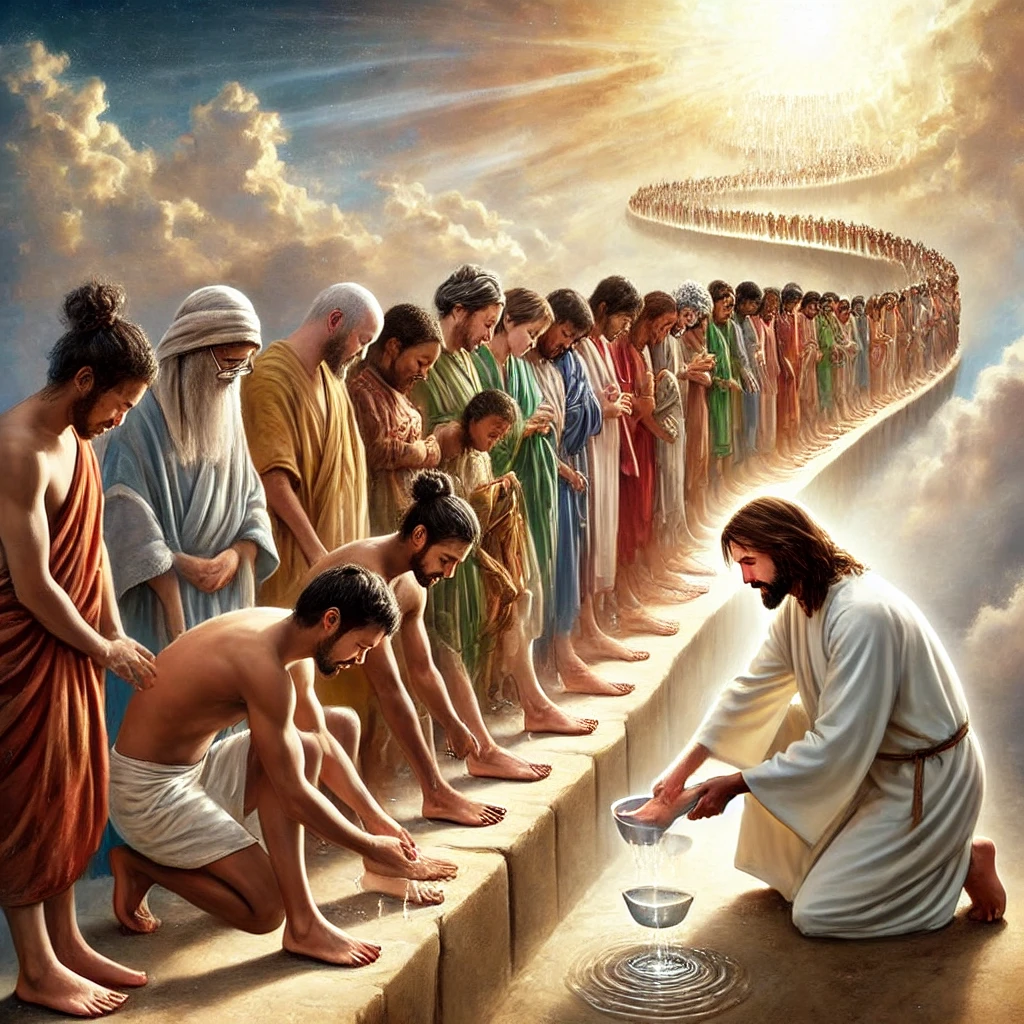
Lord Jesus, our ultimate example of leadership, we turn to You for guidance and inspiration. You taught us that leadership is not about power but about serving others, not about recognition but about fulfilling the mission entrusted to us. Help us to lead with humility, integrity, and courage, following Your example in all things. May we inspire others to grow, to seek truth, and to live for Your glory. Transform our hearts so that we may first lead ourselves before we attempt to lead others. May our leadership reflect Your eternal values, leaving a legacy of hope and faith.
In Your Holy Name King Jesus,
Amen.
References

1. Mark 10:43–44, English Standard Version.
2. John C. Maxwell, The 21 Irrefutable Laws of Leadership (Nashville: Thomas Nelson, 2007), 3.
3. John 21:3, English Standard Version.
4. Revelation 19:16, English Standard Version.
5. Vincent van Gogh, “Letters to Theo,” accessed January 5, 2025, https://www.vangoghgallery.com/letters.
6. Norman Borlaug, “The Green Revolution,” accessed January 5, 2025, https://www.nobelprize.org/prizes/peace/1970/borlaug.
7. Ronald A. Heifetz, Leadership Without Easy Answers (Cambridge: Harvard University Press, 1994), 14.
8. John 15:18, English Standard Version.
9. 2 Corinthians 11:24–28, English Standard Version.
10. Jeffrey Pfeffer, Leadership BS: Fixing Workplaces and Careers One Truth at a Time (New York: HarperBusiness, 2015), 45.
11. Joanne B. Ciulla, The Ethics of Leadership (Belmont: Wadsworth, 2003), 9.
12. Proverbs 11:14, English Standard Version.
13. Daniel Goleman, Emotional Intelligence: Why It Can Matter More Than IQ (New York: Bantam Books, 2005), 45.
14. John 13:14–15, English Standard Version.
15. Dietrich Bonhoeffer, Life Together (New York: Harper & Row, 1954), 48.
16. Robert K. Greenleaf, Servant Leadership: A Journey into the Nature of Legitimate Power and Greatness (New York: Paulist Press, 2002), 28.
17. Daniel J. Siegel and Mary Hartzell, Parenting from the Inside Out (New York: TarcherPerigee, 2013), 16.
18. Wangari Maathai, Unbowed: A Memoir (New York: Anchor Books, 2007), 198.
19. Harriet Tubman, “Biography of a Freedom Fighter,” National Park Service, accessed January 5, 2025, https://www.nps.gov/hatu.
20. Stephen R. Covey, Principle-Centered Leadership (New York: Simon & Schuster, 1991), 30.
21. 1 Corinthians 9:27, English Standard Version.
22. Max Weber, Economy and Society (Berkeley: University of California Press, 1978), 241.
23. Florence Nightingale, “Letters from Scutari,” accessed January 5, 2025, https://www.florence-nightingale.co.uk.
24. Howard Gardner, Leading Minds: An Anatomy of Leadership (New York: Basic Books, 1995), 78.
25. Malcolm Gladwell, The Tipping Point (Boston: Little, Brown and Company, 2000), 35.
26. “2021 Global Human Capital Trends,” Deloitte Insights, accessed January 5, 2025, https://www.deloitte.com/humancapitaltrends.
27. Adam Grant, Give and Take: Why Helping Others Drives Our Success (New York: Penguin Books, 2013), 45.
28. Frances Hesselbein, Hesselbein on Leadership (San Francisco: Jossey-Bass, 2002), 56.
29. Vincent J. Miller, Consuming Religion (New York: Bloomsbury, 2003), 47.
30. Elaine Graham, Transforming Practice: Pastoral Theology in an Age of Uncertainty (Eugene: Wipf & Stock, 2002), 212.
31. Nehemiah 4:6–9, English Standard Version.
32. Esther 4:14, English Standard Version.
33. Dietrich Bonhoeffer, The Cost of Discipleship (New York: Simon & Schuster, 1995), 92.

 #Hayibo