

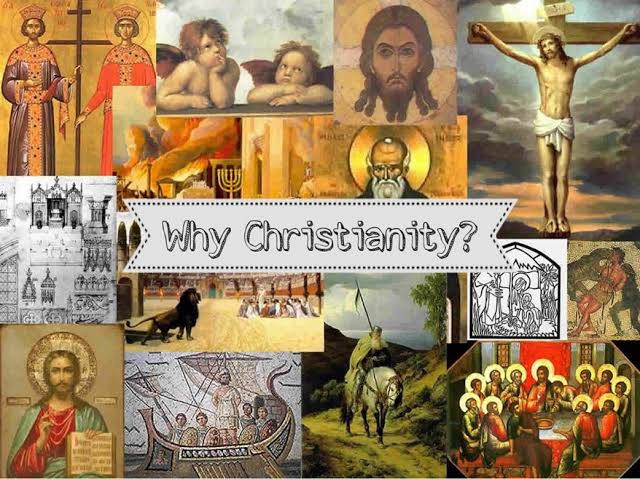
The claim that Christianity represents the ultimate truth is bold yet profoundly reasonable. It is not a matter of blind faith but the culmination of reasoned inquiry across history, philosophy, science, psychology, anthropology, archaeology, literature, economics, and additional academic fields. Christianity’s truth claims are validated by scholars from diverse perspectives—Christian, secular, and adherents of other religions—while competing worldviews and religious systems often fall short in providing the same level of coherence, evidence, and transformative power.
Historical Integrity
Christianity’s historical claims are pivotal to its assertion of truth. Unlike many religions, Christianity is deeply rooted in specific historical events, primarily the life, death, and resurrection of Jesus Christ. Bart D. Ehrman, an agnostic historian, affirms, “The evidence for Jesus’ existence is overwhelming for any historian with a fair mind.”¹ Scholars Gary Habermas and Michael Licona argue that the resurrection is one of the most well-attested events of antiquity, supported by multiple independent sources, including those hostile to Christianity.²
Jewish historian Josephus refers to Jesus as “a doer of wonderful works” who was condemned to the cross under Pontius Pilate.³ Roman historian Tacitus corroborates, stating, “Christus… suffered the extreme penalty during the reign of Tiberius.”⁴ E.P. Sanders, a secular historian, acknowledges that the disciples’ unwavering belief in the resurrection fueled the early Christian movement: “That Jesus’ followers (and later Paul) had resurrection experiences is, in my judgment, a fact.”⁵
Other religions often lack such rigorous historical underpinnings. Islam, for example, reveres Jesus as a prophet but relies on accounts written centuries after his time.⁶ Hinduism and Buddhism, in contrast, are largely based on philosophical and mythological narratives that resist historical verification.⁷ Christianity’s openness to scrutiny and archaeological validation sets it apart.
Philosophical Coherence
Christianity offers a robust framework for addressing life’s most profound questions: Why do we exist? What is the basis for morality? What is our ultimate purpose? Alvin Plantinga contends, “Christian theism provides a far better explanation for the reliability of our cognitive faculties than naturalism.”⁸ William Lane Craig’s defence of the moral argument underscores this coherence: “If God does not exist, objective moral values do not exist. But objective moral values do exist. Therefore, God exists.”⁹
In contrast, atheism struggles to provide a foundation for morality. Friedrich Nietzsche admitted, “There are no moral facts at all” without God.¹⁰ Eastern philosophies such as Buddhism, while focusing on detachment from desire and suffering, often fail to address humanity’s longing for justice, relational connection, and personal redemption.¹¹ Søren Kierkegaard, a Christian existentialist, contrasts this with Christianity’s relational focus: “Christianity is not a doctrine; it is life.”¹²
Islam’s emphasis on divine transcendence often leaves little room for the personal relationship with God that Christianity uniquely offers.¹³ Hinduism’s cyclical view of existence, rooted in karma, struggles to provide ultimate hope or resolution for suffering, a gap Christianity addresses through the redemptive work of Christ.¹⁴
Scientific Compatibility
Christianity has historically inspired scientific exploration by providing a worldview that assumes an orderly, intelligible universe. Francis Bacon, the father of the scientific method, declared, “A little philosophy inclineth man’s mind to atheism; but depth in philosophy bringeth men’s minds about to religion.”¹⁵
Modern scholars echo this sentiment. Francis Collins, the Christian geneticist who led the Human Genome Project, observed, “The God of the Bible is also the God of the genome.”¹⁶ John Lennox, a mathematician, argues that the fine-tuning of the universe points to a Creator: “The universe is governed by laws that are mathematically precise, and such order suggests intention.”¹⁷
Hindu cosmology, with its infinite cycles, contradicts the Big Bang theory, which points to a universe with a definite beginning—consistent with the Christian account of creation.¹⁸ Atheism, while relying on scientific materialism, struggles to explain the existence of natural laws or why the universe is intelligible. Physicist Paul Davies admits, “Science can proceed only if the scientist adopts an essentially theological worldview.”¹⁹
Psychological Insight
Christianity uniquely addresses humanity’s emotional and spiritual needs, offering hope, meaning, and forgiveness. Viktor Frankl, a Holocaust survivor and psychologist, observed, “Life is never made unbearable by circumstances, but only by lack of meaning and purpose.”²⁰ Christianity provides this meaning through the redemptive love of God and the promise of eternal life.
Paul Vitz critiques Freud’s atheistic perspective, arguing that belief in God is psychologically healthy and fulfils intrinsic human desires.²¹ Carl Jung, though not a Christian, recognised the transformative power of Christian symbols on the psyche.²² Similarly, Martin Seligman’s research in positive psychology demonstrates the psychological benefits of gratitude, hope, and forgiveness—all core Christian values.²³
Buddhism’s focus on detachment, while emotionally valuable, often fails to resonate with humanity’s longing for relational connection.²⁴ Atheism, which reduces human beings to biological mechanisms, strips life of meaning, failing to explain individualism and authentic spiritual encounters.²⁵ Christianity, by contrast, embraces human relationality and purpose, offering a holistic framework for psychological well-being.²⁶
Anthropology and Cultural Impact
Christianity’s cultural adaptability and transformative impact are unmatched. Lamin Sanneh highlights how Christian missionaries preserved local cultures, stating, “Christian missions have preserved local traditions rather than erasing them.”²⁷ Anthropologist Andrew Walls observes, “Christianity has been translated into more languages and adapted to more cultures than any other faith.”²⁸
In contrast, Islam is often tied to specific cultural and political structures, limiting its adaptability.²⁹ Hinduism’s caste system historically restricted social mobility and equality.³⁰ Christianity’s emphasis on the intrinsic worth of every individual, grounded in the imago Dei, has inspired movements for human rights, education, and justice.³¹
Archaeological Evidence
Archaeological discoveries repeatedly affirm the Bible’s historical reliability. The Dead Sea Scrolls validated the textual accuracy of the Old Testament.³² The Pool of Bethesda, once dismissed as myth, was excavated and found to match John’s Gospel account.³³ Sir William Ramsay, initially sceptical, declared Luke’s writings “unquestionably accurate” after his archaeological studies.³⁴
In contrast, other religious texts often lack such external corroboration. The Qur’an’s historical claims, for instance, are difficult to verify archaeologically.³⁵ Hindu and Buddhist scriptures, focused on spiritual truths, are not rooted in verifiable historical contexts.³⁶
Literature and the Arts
The Bible’s literary depth and thematic unity are unparalleled. N.T. Wright writes, “The Bible is a single, coherent narrative culminating in the life, death, and resurrection of Jesus.”³⁷ Harold Bloom, a secular critic, though misinformed in his opinion, calls the Bible the “greatest work of Western imagination.”³⁸
C.S. Lewis marvelled at the Psalms, calling them “a poetry that can only have come from the heavens.”³⁹ Even Richard Dawkins, a vocal atheist, acknowledges the Bible’s cultural significance: “The Bible is a foundational work of literature and culture.”⁴⁰ Other religious texts, while influential, lack the Bible’s coherence and transformative narrative power.
Economics and Human Flourishing
Christianity’s principles have shaped economic systems that promote human flourishing. Max Weber argues in The Protestant Ethic and the Spirit of Capitalism that Christian theology inspired the work ethic foundational to modern economies.⁴¹ Adam Smith, heavily influenced by Christian values, described the market as guided by “an invisible hand.”⁴²
Hinduism and Buddhism, with their focus on detachment, often hinder economic progress.⁴³ In contrast, Christianity’s emphasis on stewardship, dignity, and generosity fosters prosperity and justice. Michael Novak writes, “Christianity teaches the dignity of human labour and its ability to transform the world for good.”⁴⁴
Christianity stands out for its historical authenticity, philosophical coherence, and profound cultural and psychological impact. Its core events—the life, death, and resurrection of Jesus—have withstood scrutiny, while its alignment with science, literature, and archaeology further validates its claims. Christianity continues to transform and inspire, offering timeless truth and hope for humanity.
A Prayer for Truth

Heavenly Father,
We thank You for the beauty and truth found in Christianity, a faith that transforms hearts, minds, and societies. As we explore Your Word and works, open our hearts to understanding, deepen our faith, and inspire us to live with purpose. May this exploration draw others closer to You and reveal the truth of Your love and grace. Thank you for the work of scholars that help us understand why Your Word is accurate and sound. Bless their work and lives.
In Jesus’ Holy name,
Amen.
References

1. Bart D. Ehrman, Did Jesus Exist? (New York: HarperOne, 2012).
2. Gary Habermas and Michael Licona, The Case for the Resurrection of Jesus (Grand Rapids: Kregel, 2004).
3. Flavius Josephus, Antiquities of the Jews, trans. William Whiston (London: Kregel, 1960).
4. Cornelius Tacitus, Annals, trans. J.C. Yardley (Oxford: Oxford University Press, 2008).
5. E.P. Sanders, The Historical Figure of Jesus (London: Penguin Books, 1993).
6. F.E. Peters, Islam: A Guide for Jews and Christians (Princeton: Princeton University Press, 2003).
7. Gavin Flood, An Introduction to Hinduism (Cambridge: Cambridge University Press, 1996).
8. Alvin Plantinga, Where the Conflict Really Lies: Science, Religion, and Naturalism (Oxford: Oxford University Press, 2011).
9. William Lane Craig, Reasonable Faith (Wheaton: Crossway, 2008).
10. Friedrich Nietzsche, The Will to Power, trans. Walter Kaufmann (New York: Vintage, 1967).
11. Søren Kierkegaard, The Sickness Unto Death (London: Penguin Classics, 2004).
12. Al-Ghazali, The Incoherence of the Philosophers, trans. Michael Marmura (Provo: Brigham Young University Press, 1997).
13. Francis Bacon, The Advancement of Learning (Oxford: Clarendon Press, 1605).
14. Francis Collins, The Language of God: A Scientist Presents Evidence for Belief (New York: Free Press, 2006).
15. John Lennox, God’s Undertaker: Has Science Buried God? (Oxford: Lion Hudson, 2009).
16. Paul Davies, The Mind of God: The Scientific Basis for a Rational World (New York: Simon & Schuster, 1992).
17. Gavin Flood, An Introduction to Hinduism (Cambridge: Cambridge University Press, 1996).
18. Viktor Frankl, Man’s Search for Meaning (Boston: Beacon Press, 2006).
19. Paul C. Vitz, Faith of the Fatherless: The Psychology of Atheism (San Francisco: Ignatius Press, 1999).
20. Carl Jung, Psychology and Religion (New Haven: Yale University Press, 1938).
21. Martin Seligman, Flourish: A Visionary New Understanding of Happiness and Well-being (New York: Atria Books, 2011).
22. Peter Harvey, An Introduction to Buddhism: Teachings, History and Practices, 2nd ed. (Cambridge: Cambridge University Press, 2013).
23. Thomas Nagel, Mind and Cosmos: Why the Materialist Neo-Darwinian Conception of Nature Is Almost Certainly False (Oxford: Oxford University Press, 2012).
24. Mark R. McMinn and Timothy R. Phillips, eds., Care for the Soul: Exploring the Intersection of Psychology and Theology (Downers Grove: InterVarsity Press, 2001).
25. Lamin Sanneh, Translating the Message: The Missionary Impact on Culture (Maryknoll: Orbis Books, 1989).
26. Andrew Walls, The Missionary Movement in Christian History: Studies in the Transmission of Faith (Maryknoll: Orbis Books, 1996).
27. Karen Armstrong, Islam: A Short History (New York: Modern Library, 2002).
28. Diana L. Eck, India: A Sacred Geography (New York: Harmony, 2012).
29. Geza Vermes, The Dead Sea Scrolls: Qumran in Perspective (London: SCM Press, 1981).
30. William Albright, The Archaeology of Palestine and the Bible (Baltimore: Johns Hopkins University Press, 1932).
31. John McRay, Archaeology and the New Testament (Grand Rapids: Baker Academic, 1991).
32. William Ramsay, The Bearing of Recent Discovery on the Trustworthiness of the New Testament (London: Hodder & Stoughton, 1915).
33. Harold Bloom, The Western Canon: The Books and School of the Ages (New York: Harcourt Brace, 1994).
34. Richard Dawkins, The God Delusion (London: Bantam Press, 2006).
35. N.T. Wright, Scripture and the Authority of God (London: SPCK, 2005).
36. C.S. Lewis, Reflections on the Psalms (New York: Harcourt, 1964).
37. Max Weber, The Protestant Ethic and the Spirit of Capitalism (New York: Routledge, 1930).
38. Adam Smith, The Wealth of Nations (London: Methuen & Co., 1776).
39. Deirdre McCloskey, Bourgeois Virtues: Ethics for an Age of Commerce (Chicago: University of Chicago Press, 2006).
40. Michael Novak, The Spirit of Democratic Capitalism (Lanham: Madison Books, 1982).
41. Arthur Brooks, Who Really Cares: The Surprising Truth About Compassionate Conservatism (New York: Basic Books, 2006).

 #Hayibo