


John 4:52 reads, “Then he enquired of them the hour when he got better.” It’s such a simple line. At first glance, almost unnecessary. After all, the nobleman’s son is healed, why should the exact time matter?
And yet, I find myself oddly captivated by this verse. The nobleman, fresh from witnessing a miracle, is asking for the hour. He wants to know when the healing happened. My initial reaction is laced with my own ingrained activism: does it matter? The child lives. Move on. Celebrate. Act.
But before I can rush off into a practised tyraid of judgemental histrionics, the Holy Spirit stops me. Arrests me, even. Gently, He reminds me of something profoundly human, “Aren’t we all like that? Wanting to know when God intervened.” Reconstructing the events. Searching for clues. Looking for the divine fingerprints on the timeline of our lives.
It’s funny how easy it is to sneer at someone else’s questions until we remember our own.
Truthfully, the nobleman’s enquiry doesn’t weaken the Gospel account. It deepens it. This is one of those moments that reveals the emotional honesty of Scripture. If this were bravado or propaganda, the nobleman would have been presented as flawlessly faithful. But John doesn’t do that. He includes this very human curiosity. He lets us see a man trying to piece together the puzzle of providence.
And just like that, I find myself smiling. Because even as I read about Jesus transcending space and time to heal a dying boy, I am being taught by the Spirit, who transcends space and time to reach me. The God who moved across distance in John 4 is moving across time zones, centuries, and psychological defences to teach me now, in this exact moment, that I too am part of the nobleman’s journey. I too ask, “When did it happen, Lord? Was that You?”
How remarkable that the Creator of time is not offended by our questions about the tick of the clock; the hour.
The Gospel of John consistently reveals moments of what theologians call Christological disclosure; those flashes in the narrative where Jesus is revealed as far more than a prophet or healer. In John 4:50, He simply says, “Your son lives,” and the healing occurs at that exact hour, even though Jesus is nowhere near the boy physically.
This moment, though quiet, is theologically seismic. As Craig Keener explains, “The miracle shows Jesus’ authority to heal by a mere word, irrespective of distance, reinforcing the Johannine theme that Jesus’ word carries divine power.”¹
Such authority over time and space is not a trait of prophets or miracle-workers alone, it belongs to God. As Gerald O’Collins writes, “Jesus is God’s eternal, beloved Son who has become human while remaining who He already was, in order to accomplish our salvation.”²
It is this Jesus, Word made flesh, who speaks from afar and heals in the moment. The nobleman’s enquiry about the hour doesn’t interrupt the flow of faith, it marks its deepening. D.A. Carson notes, “The man believed before the healing… but now believes more fully, his faith has grown as the word is vindicated by the sign.”³
We believe, then we see. And in seeing, we believe even more.
The timing matters not because God needs to prove Himself, but because we long to understand. God allows it. John doesn’t rebuke the nobleman for asking. Instead, He lets the details unfold. John gives room for awe to grow. Jesus speaking and healing happens though displaced from the subject- the boy- is not the behaviour of a detached deity, but of a sovereign Saviour who dignifies our humanity.
The God who made time is not trapped by it. Nor is He insulted by our longing to find Him within it.
What if our curiosity, rather than a threat to faith, is part of how God builds it?
What if, like the nobleman, we’re not doubting when we ask, “When did it happen?”— we’re worshipping. We’re honouring the invisible hand that interrupted despair. We’re looking for the hour not because the miracle depends on it, but because we do.
God moves outside of time, but He meets us within it, patiently, precisely, and always with purpose.
Practical Steps

If Jesus truly holds time in His hands, if He rules over the hour of our healing, the silence of delay, and the unfolding of purpose, then our faith cannot be merely sentimental. It must become practised. Here are some grounded ways to live in the tension between mystery and trust.
1. Ask honest questions, but anchor them in worship.
The nobleman asked when the healing occurred, not to test Jesus, but to marvel at Him. His curiosity was not rebellion; it was reverence. Like him, we can ask, “Was that You, Lord?” without shame.
As theologian Karen Kilby reminds us,
“Christian theology must retain space for unknowing, not to avoid inquiry, but to acknowledge that mystery is not a gap in understanding but a posture before God.”⁴
2. Track the fingerprints of grace.
Reflect on your past not just as memory, but as testimony. Ask, When did peace come? When did despair shift? Journaling or spiritual direction can help name the “hour it happened,” building confidence in God’s activity through time.
African theologian Mercy Amba Oduyoye writes,
“To theologise from lived experience is to stitch divine grace into the fabric of ordinary days.”⁵
3. Let delay deepen, not dissolve, your faith.
Jesus didn’t rush to the nobleman’s house. He gave a word and required a walk. Likewise, we’re often sent back to ordinary life carrying nothing but a promise.
Jürgen Moltmann insists,
“The promise of God creates its own future. Hope is not a pause between event and fulfilment, but the power by which we live toward what is not yet.”⁶
4. Remember: God meets us in time, not just beyond it.
We often imagine God only at the cosmic scale, but Christ steps into human chronology. He honours our clocks, our moments, our asking.
As systematic theologian Keri Day puts it,
“The God who transcends is also the God who attends, the One who shows up in the detail, not just the grand design.”⁷
5. Celebrate the hour, but trust the silence too.
If Jesus is Lord of the hour that changes everything, He is also Lord of the hours that seem unchanged. Faith isn’t only proven by the miracle, but by what we do when time feels slow.
Prayer
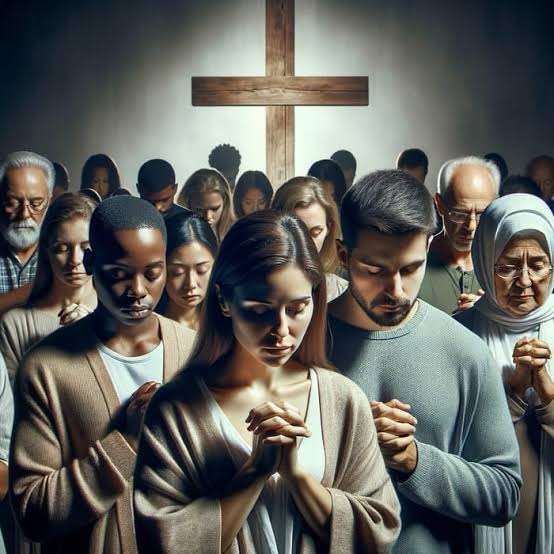
Father God, Lord of time and space,
You move beyond our limits, yet meet us within them. You do not scorn our questions, but use them to draw us closer. When we ask, “Was that You?”, teach us to see with faith. When we seek the hour, let it become a moment of awe, not doubt. May our longing for understanding deepen our trust. And may every question lead us back to You, The One who heals, speaks, and holds all things together.
In Your Holy Name King Jesus
Amen.
References

1. Craig S. Keener, The Gospel of John: A Commentary, Vol. 1 (Peabody, MA: Hendrickson, 2003), 639.
2. Gerald O’Collins, Christology: A Biblical, Historical, and Systematic Study of Jesus (Oxford: Oxford University Press, 2009), 112.
3. D. A. Carson, The Gospel According to John (Leicester: Inter-Varsity Press, 1991), 234.
4. Karen Kilby, Boredom and Theology (Notre Dame: University of Notre Dame Press, 2017), 26.
5. Mercy Amba Oduyoye, Introducing African Women’s Theology (Cleveland: Pilgrim Press, 2001), 18.
6. Jürgen Moltmann, The Theology of Hope (Minneapolis: Fortress Press, 1993), 57.
7. Keri Day, Unfinished Business: Black Women, the Black Church, and the Struggle to Thrive in America (Maryknoll: Orbis Books, 2012), 43.

 #Hayibo