

Introduction
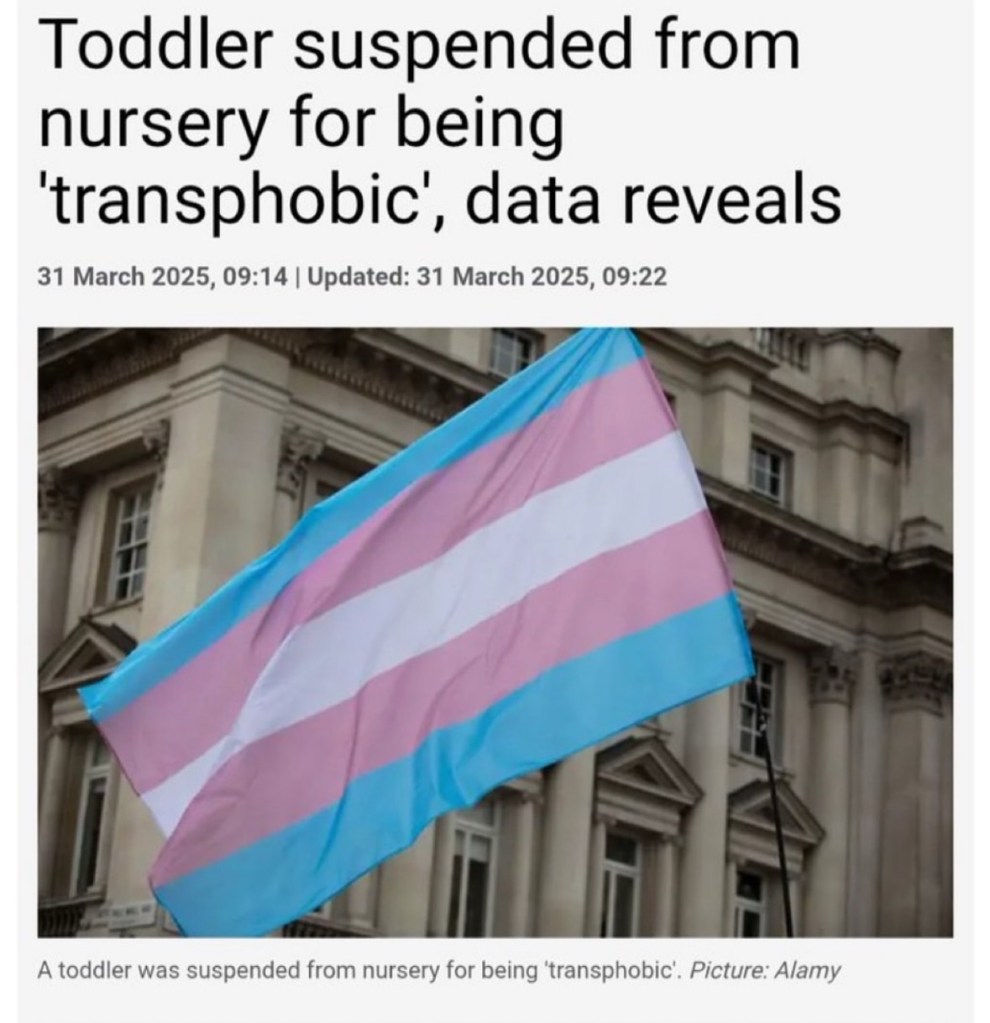
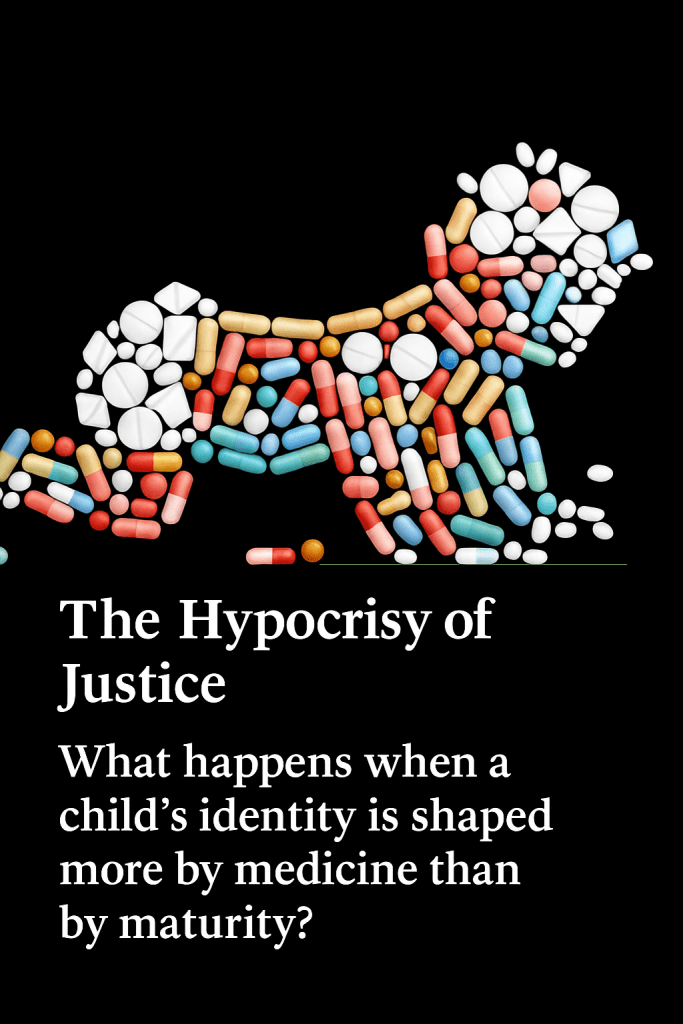
Modern justice systems often pride themselves on safeguarding the vulnerable, especially children. Yet beneath this noble rhetoric lies a glaring inconsistency: children are shielded from coercion when giving testimony in court, but are increasingly permitted, sometimes encouraged, to make irreversible decisions concerning gender transition.
How can both positions claim to be just?
Legal Inconsistencies in Child Protection
In most legal jurisdictions, children are rightly recognised as developmentally immature. Courts make provision for them through closed courtrooms, simplified language, appointed advocates, and trauma-sensitive procedures. This stems from an understanding that children are vulnerable to manipulation, incapable of fully understanding long-term consequences, and require protection—(https://publications.aap.org/pediatrics/article/139/3/e20164008/53469/The-Child-Witness-in-the-Courtroom).
However, in matters of gender identity, the same children are suddenly treated as autonomous moral agents. The Bell v. Tavistock ruling in the UK (2020) highlighted this tension. Initially, the High Court ruled that minors under sixteen were unlikely to understand the long-term risks of puberty blockers, calling their informed consent into question. Though the ruling was later overturned, it revealed deep professional concern regarding medicalised gender transition for minors.¹
In Australia, the case of Re Alex (2004) further exemplified this paradox. A 13-year-old child diagnosed with gender dysphoria sought court approval for hormone treatment. The court classified it as “special medical treatment,” requiring judicial oversight due to the profound and irreversible nature of the intervention.² Yet, in many other contexts, such caution is absent.
A wide array of scholars, men and women from diverse ethnic and disciplinary backgrounds, have criticised the inconsistency and the danger it presents to vulnerable youth:
• Dr Paul W. Hruz, American paediatric endocrinologist:
“Children lack the neurocognitive maturity to understand the long-term risks of hormonal transition. Informed consent is not ethically possible in such cases.”³
• Prof Miroslav Djordjevic, Serbian gender surgeon:
“These patients were misled. They did not understand what they were consenting to. Many now want reversal surgery, but the damage is already done.”⁴
• Dr Kathleen Stock, British philosopher and feminist:
“Affirmation-only approaches bypass the complexity of child development. We risk leading vulnerable children down paths they cannot possibly understand.”⁵
• Dr Sabelo Ndlovu-Gatsheni, Zimbabwean decolonial thinker:
“The global South must not uncritically absorb Western ideologies of identity and childhood. Our concepts of personhood are rooted in collective dignity, not radical autonomy.”⁶
• Dr Erica Anderson, transgender psychologist and former WPATH board member:
“We are moving too fast. Young people are being medicalised without adequate safeguards. This is not responsible care, it is experimentation.”⁷
The diversity of these voices underscores a growing consensus: justice must include caution, especially when the vulnerable are at stake. That is not bigotry, it is moral prudence.
The Irreversible Consequences
Once a child begins gender transition, whether socially, hormonally, or surgically, reversal becomes extraordinarily difficult. Puberty blockers affect bone density, brain development, and fertility. Cross-sex hormones may result in permanent physiological changes. Many young adults who detransition speak of deep regret, confusion, and betrayal by the medical systems that fast-tracked their transition—(https://pmc.ncbi.nlm.nih.gov/articles/PMC9578106/); (https://pmc.ncbi.nlm.nih.gov/articles/PMC9315415/).
The contradiction is stark: minors are not permitted to vote, get tattoos, consume alcohol, or marry, but they are allowed to alter their endocrine systems and future fertility for life.
Is this not hypocrisy cloaked in compassion?
A Christian Response: Justice with Moral Clarity
From a biblical standpoint, justice is more than legal procedure, it is covenantal protection. Scripture does not romanticise children, but neither does it abandon them to adult ideologies. Jesus’ warning remains sobering: “If anyone causes one of these little ones who believe in Me to stumble, it would be better for them to have a large millstone hung around their neck and be drowned in the depths of the sea” (Matthew 18:6).
Christian theology teaches that children are image-bearers in formation. They are to be nurtured, protected, and led, not subjected to experimentation or indoctrination. The church has a prophetic role to play in exposing legal fictions masquerading as rights.
As Timothy Keller reminds us:
“Justice in the Bible is not merely legal, it is relational, restorative, and rooted in the righteousness of God.”⁸
True justice protects children not just from predators, but from ideologies that demand adult decisions from immature hearts. The Christian call is to advocate peace (Romans 12:8) with truth, not peace at the price of a child’s future.
Conclusion
We cannot call a legal system just if it protects children from coercion in a courtroom while permitting them to be pressured into medicalisation in a clinic. We cannot invoke the language of dignity while erasing the future of the very children we claim to serve. This is the hypocrisy of justice, and it must be named.
Christians must not be silent. They must speak, not with fear, but with compassion and conviction, defending children, confronting lies, and calling a broken system back to the justice of God.
Practical Application: Living Truthfully in a Culture of Compromise

1. Protect the Children in Your Circle
Be vigilant. Whether you’re a parent, teacher, pastor, or mentor, pay attention to what children are being taught, at school, online, or even through policies in your workplace. Stand up early and consistently when something feels off. Children need boundaries, not blind affirmation.
2. Refuse False Peace
Romans 12:18 calls us to live peaceably if possible, but not at the expense of truth. Don’t confuse tolerance with love, or silence with virtue. Speak the truth in love, even when it disrupts social comfort or cultural expectations.
3. Engage Legally and Locally
Write to your MP or local representative. Support policies and school boards that uphold biological reality and parental rights. Join or start a prayer group that prays specifically for judges, doctors, and policymakers.
4. Stay Informed and Discerning
Educate yourself with solid, global, and diverse sources, don’t just rely on what’s trending. The truth often requires a deeper search, and wisdom demands voices from across the spectrum of experience.
5. Anchor Your Conscience in Christ
Remember: you are not called to win popularity, but to bear faithful witness. Let Christ, not culture, shape your moral courage. Justice without truth is not justice at all.
Prayer

Righteous Father,
You are the defender of the weak and the God of truth. Today we grieve a world where justice is distorted and children are unprotected. Forgive our silence. Strengthen us to speak with love and stand with courage. Make Your Church a sanctuary of truth and a shield for the vulnerable. Let us not make peace with evil, but bear witness to Your righteousness. In Christ’s name we find hope, strength, and wisdom.
In Your Holy Name King Jesus,
Amen.
Bibliography

¹ Bell v. Tavistock and Portman NHS Foundation Trust [2020] EWHC 3274 (Admin). https://www.judiciary.uk/judgments/bell-v-tavistock-and-portman-nhs-trust/
² Re Alex: Hormonal Treatment for Gender Identity Disorder [2004] FamCA 297 (Australia). https://jade.io/article/68068
³ Paul W. Hruz, “Deficiencies in Scientific Evidence for Medical Management of Gender Dysphoria,” The Linacre Quarterly 87, no. 1 (2020): 34–42. https://doi.org/10.1177/0024363919884799
⁴ Miroslav Djordjevic, quoted in Madeleine Kearns, “Sex-Change Regret: Gender-Affirming Surgery Isn’t the Solution,” National Review, October 8, 2019. https://www.nationalreview.com/2019/10/sex-change-regret-gender-affirming-surgery-isnt-the-solution/
⁵ Kathleen Stock, Material Girls: Why Reality Matters for Feminism (London: Fleet, 2021).
⁶ Sabelo J. Ndlovu-Gatsheni, Decoloniality as the Future of Africa (New York: Routledge, 2022).
⁷ Erica Anderson, quoted in Laura Meckler and Ariana Eunjung Cha, “Psychologist Who Backed Youth Gender Care Expresses Regret,” The Washington Post, April 17, 2022. https://www.washingtonpost.com/health/2022/04/17/transgender-teens-gender-therapy/
⁸ Timothy Keller, Generous Justice: How God’s Grace Makes Us Just (London: Hodder & Stoughton, 2012).

 #Hayibo