

Introduction: When a Match Thinks It’s a Tree

I have been a Christian for 22 years. Most of that time, I simply went along with what pastors, teachers, prophets, evangelists, even other Christians, told me. I knew less than nothing, bar the incredible, real-life, lived experiences I’ve had encountering God.
Due to my minimal knowledge, I was easily taken in by good speakers and fascinating ideas. Fortunately, God brought me along a path guided by solid Christian academics who have taught me how to understand His Word more accurately. But it gets tough. Deciphering fact from fiction is no easy task.
What alarms me is this: why would anyone want to distort God’s Word when God is the BIG BOSS, the One who sees and hears everything, the One to whom all creation must answer? God is far bigger and more powerful than anything else. This means that come Judgement Day, reckoning is inescapable. That simple truth makes me sweat the small things, because I do not want God to shake His head at me for distorting His Word to suit my agenda. Goodness knows that contending with my fallen human nature is enough to bear for this lifetime. Besides, who has the time to cook up an idea that is not well supported by God’s Word, and the credible, time-tested scholars who have laboured for decades to understand the Bible rightly?¹
So I’ve adopted the stance of “student.” Not only is it honest as I am a literal student, but it is also an act of humility. I accept that we are all forever learning. A rough estimate of how long it would take one person to read every book ever written is 217,000 years.² That should settle it: none of us knows everything.
The point is that I have learned to fact-check. And not to feed my confirmation bias. As the Bereans did, I check to see if things align with Scripture.³ I seek answers that reflect both the complexity and simplicity of God’s Word. And I’ve learned that complexity must never alter simplicity. Academic study can deepen the gospel, but it can never rewrite it. We have to remember: many in Jesus’ day were not scholars. This tells us that if we complicate the simple beauty of the gospel, we may be veering off into something Scripture never intended to say.
You know, like trying to turn a matchstick into a tree, forgetting that the function of a match is not to become a tree, but to spark a fire. A tree cannot start a flame. It must be stripped, struck, and ignited by design. Some teachings are like matchsticks: they create a flash, but leave no warmth. They’re clever, even impressive, but they burn out in moments and leave the soul cold. God’s Word, by contrast, is a tree, it roots, it nourishes, it remains. You don’t carry it in your pocket to show off. You plant it in your life, and it becomes shade, fruit, and shelter over time.
So here is a match leading to the Tree…

Footnotes
1. J. I. Packer, Knowing God (InterVarsity Press, 1973), 69; R. C. Sproul, Everyone’s a Theologian: An Introduction to Systematic Theology (Reformation Trust Publishing, 2014), 12.
2. This estimate is based on average reading speed calculations cross-referenced with global publishing statistics.
3. Acts 17:11–12 (ESV); see also D. A. Carson, Exegetical Fallacies (Baker Academic, 1996), 17.

Where Is the Line Between Sound Interpretation and Dangerous Heresy?
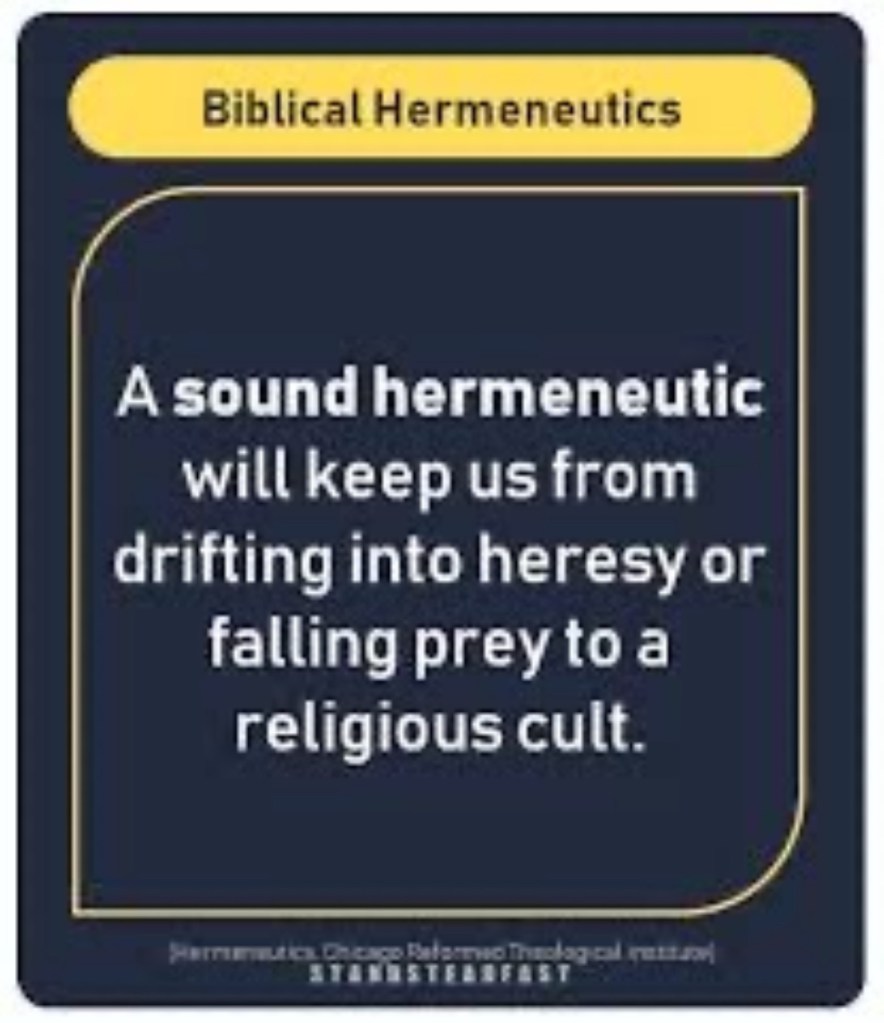
The line is crossed when human reasoning begins to revise, rather than reveal, the truth of Scripture.
1. When Simplicity Is Scorned
“For I decided to know nothing among you except Jesus Christ and Him crucified.” (1 Corinthians 2:2)
When theologians begin to treat this as too naïve or insufficient for modern culture, and seek to upgrade it with philosophical flair, they lose the gospel.⁴
2. When Reason Overrides Revelation
God invites us to reason: “Come now, let us reason together, says the Lord…” (Isaiah 1:18).
But reason must always remain subordinate to revelation. The moment we echo the serpent’s question, “Did God really say?”, we move from reverence into rebellion.⁵
3. When Mystery Is Eliminated
Christian doctrine contains divine mystery, not contradiction. The Trinity, the Incarnation, the Resurrection. These are not to be simplified, but revered. When theology attempts to collapse mystery into logic, it risks reducing majesty and inflating man.⁶
4. When the Bible Is Used, Not Obeyed
The Bible is not a toolkit for theological manipulation. It is a sword to be obeyed (Hebrews 4:12). Scripture should never be co-opted to serve academic novelty or personal affirmation. It is God’s Word, not man’s canvas.⁷
5. When Complexity Drowns the Cross
The deeper one studies the gospel, the more its simplicity is affirmed, not dismantled. We are saved by grace through faith, not through intellectual clarity or denominational nuance (Ephesians 2:8–9). The thief on the cross never attended seminary. Peter was a fisherman.⁸ The gospel must remain accessible to children, prisoners, unlettered labourers, and scholars alike.

Footnotes
4. John Stott, Basic Christianity (IVP Books, 1958), 33.
5. Kevin J. Vanhoozer, Is There a Meaning in This Text? The Bible, the Reader, and the Morality of Literary Knowledge (Zondervan, 1998), 89.
6. Wayne Grudem, Systematic Theology: An Introduction to Biblical Doctrine (Zondervan, 1994), 234–36.
7. Graeme Goldsworthy, According to Plan: The Unfolding Revelation of God in the Bible (IVP Academic, 2002), 135.
8. R. C. Sproul, Everyone’s a Theologian, 45; see also John Owen, The Work of the Holy Spirit (Banner of Truth Trust, 1674 [2004]), 201.

The Bible Has an Ending. That’s the Point.
Another foundational safeguard is this: the Bible is a complete revelation. We are not waiting for an update, amendment, or modernised sequel. When the canon was closed, it was because Christ had come, the Spirit had been given, and the apostolic witness was complete.⁹
God’s Word does not evolve with culture, nor does it reinterpret itself according to the whims of any generation. It ends with a solemn warning:
“I warn everyone who hears the words of the prophecy of this book: if anyone adds to them, God will add to him the plagues described in this book…”
(Revelation 22:18)
The Apostle Jude echoes this by calling the faith “once for all delivered to the saints” (Jude 3), not to be adjusted, expanded, or diluted.¹⁰
We are not promised new revelations. What we are promised is the Holy Spirit, who brings to remembrance the words of Christ, illuminates Scripture, and leads us deeper into truth, not beyond it.¹¹
No new theology. No mystical secrets. No angelic upgrades.
Only a deeper understanding of what God has already said.

Footnotes
9. Michael J. Kruger, Canon Revisited: Establishing the Origins and Authority of the New Testament Books (Crossway, 2012), 254–56.
10. The Westminster Divines, Westminster Confession of Faith (1646; repr., Banner of Truth Trust), 1.6.
11. John Owen, The Work of the Holy Spirit, 221–22; Sinclair B. Ferguson, The Holy Spirit (IVP Academic, 1996), 74.

A Catalogue of Heresies: Lies That Sound Like Learning

To help myself, and others, discern between biblical truth and persuasive deception, I began compiling a catalogue of heresies. What became immediately clear is that heresy is rarely loud. It whispers. It flatters. It sounds insightful. It often comes dressed in intellectual robes or spiritual authority.
And yet, as history shows, heresy is usually a subtle deviation from orthodoxy that grows into full-blown distortion.¹²
Whether ancient or modern, false doctrine shares a common thread: it redefines what God has clearly revealed.
The early Church Fathers did not ignore this. They fought for truth. Councils such as Nicaea (325 AD), Chalcedon (451 AD), and Constantinople (381 AD) were convened to protect the Church from subtle lies that crept in with the appearance of wisdom.¹³
But heresy didn’t stop in the patristic age.
Today we face new-old errors:
• The Prosperity Gospel, promising wealth as evidence of faith
• Universalism, denying God’s judgment
• LGBTQ-affirming theology, reinterpreting biblical categories of sin, love, and identity
• The Kenotic heresy, suggesting Christ emptied Himself of divinity
• And speculative teachings like date-setting eschatology, driven more by fear than faith
Each one echoes older distortions condemned long ago.
So, to serve as a warning and a study tool, here is a basic, but curated resource:
This document categorises heresies by theological focus, Trinitarian, Christological, Soteriological, Ecclesiological, Moral, and provides their historical origins, core errors, and why they contradict the gospel.¹⁴ It is not exhaustive, but it is faithful.

Footnotes
12. Harold O. J. Brown, Heresies: Heresy and Orthodoxy in the History of the Church (Hendrickson Publishers, 1984), 15.
13. J. N. D. Kelly, Early Christian Doctrines (HarperOne, 1978), 231–45; Leo Donald Davis, The First Seven Ecumenical Councils (325–787): Their History and Theology (Liturgical Press, 1983), 112.
14. Robert A. J. Gagnon, The Bible and Homosexual Practice: Texts and Hermeneutics (Abingdon Press, 2001), 18; David W. Jones and Russell S. Woodbridge, Health, Wealth, and Happiness (Kregel, 2011), 101; Michael J. McClymond, The Devil’s Redemption: A New History and Interpretation of Christian Universalism (Baker Academic, 2018), 67.

Beware the Clever Lie

In the garden, Satan did not burn the Scriptures, he simply questioned them. “Did God really say?”¹⁵ The devil’s most effective strategy has never been violence but subtlety: twisting holy truth with just enough sophistication to make it seem divine.
Today, many Christians are not losing faith because of atheism, they’re losing it to eloquent deception dressed in theological robes. The danger is not always rebellion. It is redefinition.¹⁶ When clarity is traded for nuance, and truth for “conversation,” we may not realise we’ve been deceived until the anchor is gone.
Paul warned Timothy that a time would come when people would accumulate teachers to suit their own passions and “turn away from listening to the truth and wander off into myths.”¹⁷ That time is not coming. That time is now.
And so the call is simple, though it will cost us everything: cling to the Word. Read it as a child. Study it as a servant. Preach it as a prophet. Guard it as a soldier. It is enough.
Not because it makes you clever. But because it makes you free.¹⁸

Footnotes
15. Genesis 3:1 (ESV).
16. Kevin Vanhoozer, The Drama of Doctrine: A Canonical-Linguistic Approach to Christian Theology (Louisville: Westminster John Knox Press, 2005), 304.
17. 2 Timothy 4:3–4 (ESV).
18. John 8:31–32 (ESV).

Practical Application
Test everything.
This is not a call to abandon theology. We need deep, faithful study. But study that kneels, study that does not try to impress the world, but illuminate the Word. The danger is not depth, but detachment. The deeper we go, the more we should find Christ, not complexity for its own sake.
Before you share it, preach it, believe it, or build your life on it, test it. If a theology requires a dictionary before it reveals Jesus, question it. If a doctrine demands mental gymnastics but weakens obedience, lay it down. If a teaching claims to go “beyond” the Scriptures, leave it behind.
Return to the Gospels.
Return to the letters.
Return to the Psalms and Prophets.
Learn to hear the rhythm of God’s voice through what He has already spoken. Surround yourself with voices that fear God more than they fear complexity. Ask questions, yes, but do not admire the answers more than the Word itself.
Do not let the sophistication of others silence the simplicity of your faith.
For in the end, God is not looking for academic citations beside your name. He is looking for fruit.

Prayer

Father God,
Judge of all deception, defender of the humble, we come to You with open hands.
Your Word is pure, but we have clouded it with our cleverness.
Your Spirit is faithful, but we have followed voices that flatter, not convict.
Forgive us for admiring shadows when the Light was near. Cleanse us from craving brilliance more than obedience.
Let Your Word burn in us again, not because it is complex, but because it is Yours. Teach us to test all things, and cling to Christ alone.
In Your Holy Name King Jesus,
Amen.


Bibliography

Brown, Harold O. J. Heresies: Heresy and Orthodoxy in the History of the Church. Hendrickson Publishers, 1984.
Carson, D. A. Exegetical Fallacies. 2nd ed. Baker Academic, 1996.
Davis, Leo Donald. The First Seven Ecumenical Councils (325–787): Their History and Theology. The Liturgical Press, 1983.
Ferguson, Sinclair B. The Holy Spirit. IVP Academic, 1996.
Gagnon, Robert A. J. The Bible and Homosexual Practice: Texts and Hermeneutics. Abingdon Press, 2001.
Goldsworthy, Graeme. According to Plan: The Unfolding Revelation of God in the Bible. IVP Academic, 2002.
Grudem, Wayne. Systematic Theology: An Introduction to Biblical Doctrine. Zondervan, 1994.
Jones, David W., and Russell S. Woodbridge. Health, Wealth, and Happiness: Has the Prosperity Gospel Overshadowed the Gospel of Christ? Kregel, 2011.
Kelly, J. N. D. Early Christian Doctrines. Revised ed. HarperOne, 1978.
Kruger, Michael J. Canon Revisited: Establishing the Origins and Authority of the New Testament Books. Crossway, 2012.
McClymond, Michael J. The Devil’s Redemption: A New History and Interpretation of Christian Universalism. Baker Academic, 2018.
Owen, John. The Work of the Holy Spirit. 1674. Reprint, Banner of Truth Trust, 2004.
Packer, J. I. Knowing God. InterVarsity Press, 1973.
Sproul, R. C. Everyone’s a Theologian: An Introduction to Systematic Theology. Reformation Trust Publishing, 2014.
Stott, John. Basic Christianity. IVP Books, 1958.
Vanhoozer, Kevin J. Is There a Meaning in This Text? The Bible, the Reader, and the Morality of Literary Knowledge. Zondervan, 1998.
———. The Drama of Doctrine: A Canonical-Linguistic Approach to Christian Theology. Louisville: Westminster John Knox Press, 2005.
The Westminster Divines. The Westminster Confession of Faith. 1646. Reprint, Banner of Truth Trust.

 #Hayibo