


I found it curious that David Guzik cites Bruce in Enduring Word just before Jesus tests Philip in John 6:5–7. Bruce makes a geographical statement so profound that skipping past it would cost the reader the theological depth of the moment. He writes: “The ‘high ground’ is the sharply rising terrain east of the lake, well known today as the Golan Heights. From there one overlooks the level plain east of the river and the lake.”- https://enduringword.com/bible-commentary/john-6/
This is significant. From a literal mountain, Jesus sees what no disciple can: the approaching multitude and the approaching crisis. It is from this elevated perspective that Jesus tests Philip, not to shame him, but to reveal the limits of human logic and the abundance of divine provision.
And it truly was a test, logistically, economically, and spiritually. The closest towns like Bethsaida and Capernaum would have been over an hour’s walk, with no centralised bakery large enough to feed thousands. Bread was baked daily in homes, not mass-produced. Two hundred denarii, roughly eight months’ wages, could not have bought enough food for each person to have even a morsel.¹ Human perception met its edge.
This teaches us something vital: divine calling often starts from a mountain of vision but moves into a valley of responsibility and faith. Jesus sees the crowd. He sees the hunger. And still, He asks His disciple to participate. Why? Because the work of God always begins where the strength of man ends.
I have experienced this same kind of miraculous provision.
When I entered my first long-term rehabilitation, I misread the requirements. I paid for three months’ care instead of the minimum six. Upon arrival at ‘Healing Wings Rehabilitation Centre’ in Mozambique, I was informed of my error. I had no means to address it. And yet, I remained for a year and a half. Someone paid the fees. Counsellors bought me soap. Someone funded my medical care. To this day, I still have no idea who did it.
God made a way.
I’m not alone.
There is the story of Kateryna Vechkanova, a Ukrainian woman who, fleeing war and with no secure plans, was offered an unexpected academic opportunity in the U.S., a place was opened, sponsors stepped in, and every logistical gap was filled.² Or Rolland and Heidi Baker, who testify to feeding hundreds of orphans in Mozambique when they had barely enough food for ten.³ Or the unnamed woman who emptied her last $50 into a church offering and received an anonymous check that same day for five times the amount.⁴ These are not tales of prosperity gospel excess. These are signs of a God who lifts His eyes.
During my stay at ‘Healing Wings’, I remember a moment of embarrassing immaturity. I had no money in my tuckshop account. I watched others eat chocolates and chips, day after day, and it tortured me. In frustration, I cried out, “Why aren’t You providing for me, God?” It was the voice of the masses wanting signs, bread, and benefits, blind to what was already being given.
God responded, not with chocolate, but with a question.
“Does My love for you diminish or grow more if you have chocolate or not?”
That question cut deep. I realised in that moment that provision is not the same as pampering, and abundance is not always tangible. God was giving me therapy, protection, recovery, and healing. I just didn’t like the flavour. That’s when I began to understand that lack and luxury are both temporary. Love is not.
Theologian Christa McKirland argues that dependence is not a flaw, it is the very design of our relationship with God. Flourishing is found not in independence but in trusting God for what we lack.⁵ Others, like Nicholas Wolterstorff, remind us that justice and provision go hand in hand, not in abstract ideals, but in concrete acts of care rooted in divine love.⁶
This moment in John 6 is not just a miracle story, it is a Messianic reenactment. Jesus echoes Moses by feeding people in the wilderness. The crowd recognises it and tries to make Him king (John 6:15). But Jesus retreats, not because He is afraid, but because true provision cannot be politicised. He will not be crowned by bread-fed masses. His kingship is on another mountain entirely- Calvary.
Jesus Still Lifts His Eyes
Nine years clean. Eight years celibate. Living in a beautiful apartment furnished by grace. Blogging theology. Working in a stable career. Studied a fully paid-for Bachelor’s degree. Now enrolled in a Master’s. My blog’s readership may be small, but my writing is credible thanks to God. I evangelise because He teaches me. I testify because I have seen too much to stay silent.
He lifts His eyes.
He sees the crowd.
He sees me.
And still today, when I am overwhelmed by numbers, statistics, deadlines, bills, or expectations, I remember that Jesus did not panic on the mountain. He tested Philip, not to defeat him, but to deliver him into a deeper trust.
Conclusion
‘Ain’t No Cake, Nor ‘Nuf Bread Either’ is a deliberate play on the misquoted cliché, “Let them eat cake.” Often attributed to Marie Antoinette during the French Revolution (though falsely), the phrase has come to symbolise the radical disconnection between political power and the suffering poor. It captures the absurdity of offering luxury where necessity is absent, a theme eerily echoed in today’s global inequality. As historian Ruth Scurr explains, even the myth of the quote endures because it so aptly expresses the arrogance of elite detachment from the masses’ need.⁷
This is the tension we confront in John 6 between power that serves self and power that sees others. Jesus stands on a mountain, lifts His eyes, and sees the multitude not with disdain or superiority, but with compassion. He doesn’t ignore their hunger, nor does He romanticise it. He meets it. But first, He asks Philip a question that echoes down the centuries: “Where shall we buy bread, that these may eat?”
Philip, like so many of us, answers from a cost perspective.
Don’t we still do that?
In the modern world, the question is not can we provide, but what will it cost; and to whom? Global economic systems still allocate dignity according to purchasing power. Humanism, though well-intentioned, has fractured under the weight of its promises. Sociologist Saskia Sassen argues that modern capitalism has expelled vulnerable communities from access to land, food, and security.⁸
Economist Thomas Piketty has demonstrated that wealth continues to accumulate in the hands of the few.⁹ Meanwhile, Branko Milanović reveals that geography, not merit, remains the most accurate predictor of economic outcome.¹⁰ The disparity is not accidental. It is engineered. And the result? Nor ‘nuf bread either.
This is precisely why Timothy Keller’s Generous Justice is so vital. He dismantles the myth of moral superiority with gospel precision:
“When Christians who understand the gospel see a poor person, they realize they are looking into a mirror… In other words, when Christians who understand the gospel see a poor person, their hearts must go out to him or her without an ounce of superiority or indifference.”¹¹
We are reminded, cake or bread, chocolate and chips, or none, are not the defining treaty of God’s love. If we have been saved by undeserved grace, as Keller points out, then we should be kicking down the doors that continue to force revolution by placing value on who gets and who doesn’t. Jesus does not ask Philip the question because He lacks ideas. He asks because He is forming the man. He is shaping the disciples’ theology of provision, dependence, justice, and kingship.
The world still asks, “How much would it cost?”
Jesus still asks, “How far can you trust?”
And what Jesus demonstrates from the mountain is that heaven does not mirror human logic. It doesn’t function according to scarcity models or elitist control. The kingdom of God does not begin with what we can afford, but with what God already sees. He lifted His eyes. That single line in John 6 teaches us everything we need to know about divine perception: while we calculate based on distance, deficit, and delay, Jesus sees wholeness, hunger, and holy possibility.
This is the kingdom ethic the world still cannot grasp: that in God’s economy, you don’t qualify by climbing, you’re fed by sitting down.
So yes, there still ain’t no cake. And rarely is there ‘nuf bread either. But we were never meant to live by cake or bread alone. We live by the Word made flesh, broken and multiplied for us all. The true revolution began not with gold or might, but with five loaves, two fish, and one Saviour who still sees, still provides, and still lifts His eyes.

Practical Application
1. Examine Your “Philip Reflex”:
This week, reflect on areas where your instinct is to respond to need with cost analysis rather than compassion. Where are you tempted to say, “It’s too much”, when Jesus might be inviting you into a miracle of provision, whether financial, emotional, or spiritual?
2. See the Crowd as Jesus Did:
Ask God to lift your eyes to see those around you not as burdens but as bearers of sacred need. Let this change how you give, pray, post, and speak. Justice begins with perception.
3. Be Someone’s Loaf Today:
You may not be able to feed five thousand, but you can be someone’s single loaf. Look for one person in your community, church, workplace, or online circle who needs provision, physical or spiritual, and offer what you have. Miracles begin with ordinary offerings.

Prayer
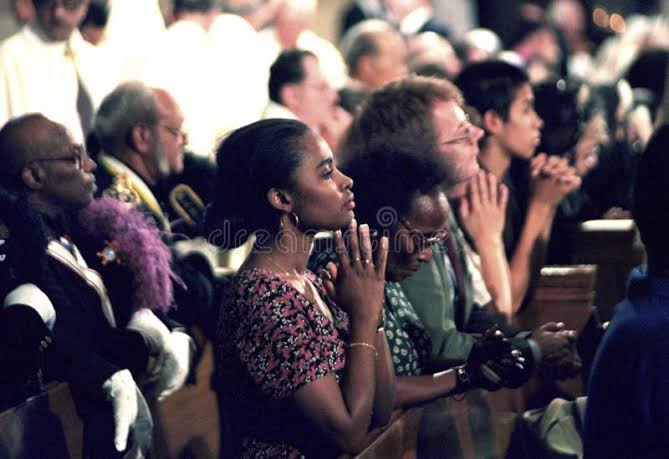
Lord Jesus,
You lifted Your eyes and saw the crowd. Help me to lift mine, not to wealth, not to fear, but to need. Teach me not to count what it costs before I ask what You require. Remind me that I was once the hungry one, and You fed me.
May I be bread for someone today. May I trust You with the little I have, because You are still the God who multiplies.
In Your Holy Name King Jesus,
Amen.


References

1. F.F. Bruce, in David Guzik, Enduring Word Bible Commentary, John 6:5–7.
2. La Sierra University, “Kateryna’s Story: Last-Minute Miracles and God’s Provision.” lasierra.edu
3. Rolland and Heidi Baker, Always Enough: God’s Miraculous Provision among the Poorest Children on Earth (Minneapolis: Chosen Books, 2003).
4. “5 Stories of Miraculous Provision,” premierchristianity.com
5. Christa McKirland, “God’s Provision, Humanity’s Need,” Reformed Journal, 2023. reformedjournal.com
6. Nicholas Wolterstorff, Justice: Rights and Wrongs (Princeton: Princeton University Press, 2008), 84.
7. Ruth Scurr, Fatal Purity: Robespierre and the French Revolution (New York: Metropolitan Books, 2006), 48–49.
8. Saskia Sassen, Expulsions: Brutality and Complexity in the Global Economy (Cambridge: Harvard University Press, 2014), 27.
9. Thomas Piketty, Capital in the Twenty-First Century (Cambridge: Belknap Press, 2014), 71–72.
10. Branko Milanović, “Global Inequality of Opportunity: How Much of Our Income is Determined by Where We Live?” Review of Economics and Statistics 97, no. 2 (2015): 452–460.
11. Timothy Keller, Generous Justice: How God’s Grace Makes Us Just (New York: Riverhead Books, 2010), chap. 5, Perlego.

 #Hayibo