

I will be the first to admit, it deeply frustrates me that all my life I have worked merely to survive. Granted, addiction cost me millions of rands, twenty-two years of my life (both in and getting out), and countless hours in therapy just to arrive at the simple but profound truth: I am allowed to be alive.
Though my life is immeasurably better now, thanks to Jesus, the daily grind of trying to outrun the stronghold of inflation on something as simple as food is anything but the green pastures of Psalm 23. To speak honestly, painfully honestly, despite my sincere attempts to honour Jesus in all I do, as best as I know how, I still feel ruled. Ruled by schedules, bills, the need to appease a boss in order to keep my job, and ruled by my country’s grotesquely corrupt government. And all indicators seem to point to it getting worse.
Yes, by South African standards I am considered middle class. And yes, by global standards I am better off than most. But that does not answer the deeper question that has haunted me: Are our lives meant to be so ruled?
This morning, as God often does, the Holy Spirit stirred something seemingly unrelated: a thought about monarchies. I confess, I am not a monarchist, nor am I enthralled by celebrity culture. I’m on the opposite end of the spectrum, where idolising other human beings strikes me as absurd. It borders on comedy to watch flawed people idolise other flawed people. So when the Spirit nudged me to consider monarchies, especially with my tongue-in-cheek suspicion of royal titles, it caught my attention.
I began researching history to see if it was possible to trace the first human who ever declared themselves royal. Who was arrogant enough to claim they were cut so far above the rest of humanity that they deserved worship, taxes, titles, and thrones? What I found intrigued me, not only historically, but spiritually.
Unbeknownst to me, once I had read that bit of information, I stepped into my Father’s Presence. There, the Holy Spirit led me to John 6. What unfolded was something deeper than information, something revelatory. Like hot lava, my spirit sat stunned at the stark contrast between Jesus as the divine Shepherd-King and every self-proclaimed human ruler in history.
But God was not done. He took me even deeper.
(Profound Short Film: https://www.facebook.com/share/r/1C1jeaMcES/?mibextid=wwXIfr)

From Divine Claims to Economic Thrones: A Brief History of Kingship
The origin of monarchy cannot be traced to a single individual, but rather to a global pattern of rulers who began claiming divine endorsement for their authority. In ancient Egypt, Narmer (c. 3100 BCE) is considered the first pharaoh to unify the land under a kingship that was mythologically bound to the gods, particularly Ra and Horus.¹ In Sumer (Mesopotamia), kings like Gilgamesh were said to rule by divine decree.² These claims to divinity or divine selection created the illusion of sacred legitimacy, however Scripture says these were counterfeits. “I am the Lord, and there is no other; besides Me there is no God” (Isaiah 45:5). Earthly kings may have invoked the names of gods, but their thrones were built upon borrowed glory.
This trend repeated across early China, India, and the Americas. What emerged was a psychological pattern: people accepted these self-proclaimed rulers because they feared chaos and longed for order. Monarchs filled that need by combining religious pagan susperstition, spectacle, and coercion, often casting themselves as father-figures or mediators between heaven and earth.³
Theologically, the Bible offers a piercing diagnosis. When Israel demanded a king in 1 Samuel 8, God said, “They have rejected Me from being king over them.”⁴ Monarchy, in its fallen form, was a substitution of human glory for divine rule, a move rooted in pride and insecurity. Echoing Isaiah 14, it is the spirit of Lucifer that says, “I will ascend above the heights… I will make myself like the Most High.”⁵

Jesus in John 6: The Shepherd Who Doesn’t Crown Himself
In stark contrast stands Jesus in John 6, feeding the five thousand not as a performance for power, but as a shepherd leading people into rest:
“Then Jesus said, ‘Make the people sit down.’ Now there was much grass in the place. So the men sat down, in number about five thousand.”⁶
David Guzik points out the deliberate allusion to Psalm 23: He makes me lie down in green pastures.⁷ Jesus is not just feeding bodies, He is establishing a kingdom of restful order, not imperial rule.
Importantly, those who came under Jesus’ order received Jesus’ provision.⁸ This wasn’t coercive; it was invitational. Jesus doesn’t build His kingdom through spectacle or fear but through surrender and faith.

The Rise of Merchant Kings: Revelation 18 and Economic Rule
Then came a deeper shock. The Spirit drew me to Revelation 18:23:
“And never again will the light of a lamp shine in you, and never again will the voice of the bridegroom and bride be heard in you; for your merchants were the great and prominent men of the earth, because all the nations were deceived and misled by your sorcery.”⁹
This is the judgment of Babylon, not a single city, but a global system of power and commerce. The Greek term for “merchants” (emporoi) refers to elite traders; economic monarchs.¹⁰ Scholar G.K. Beale explains that Babylon represents a seductive world order built on wealth, luxury, and spiritual deception.¹¹ Its downfall is total because its rule was counterfeit.
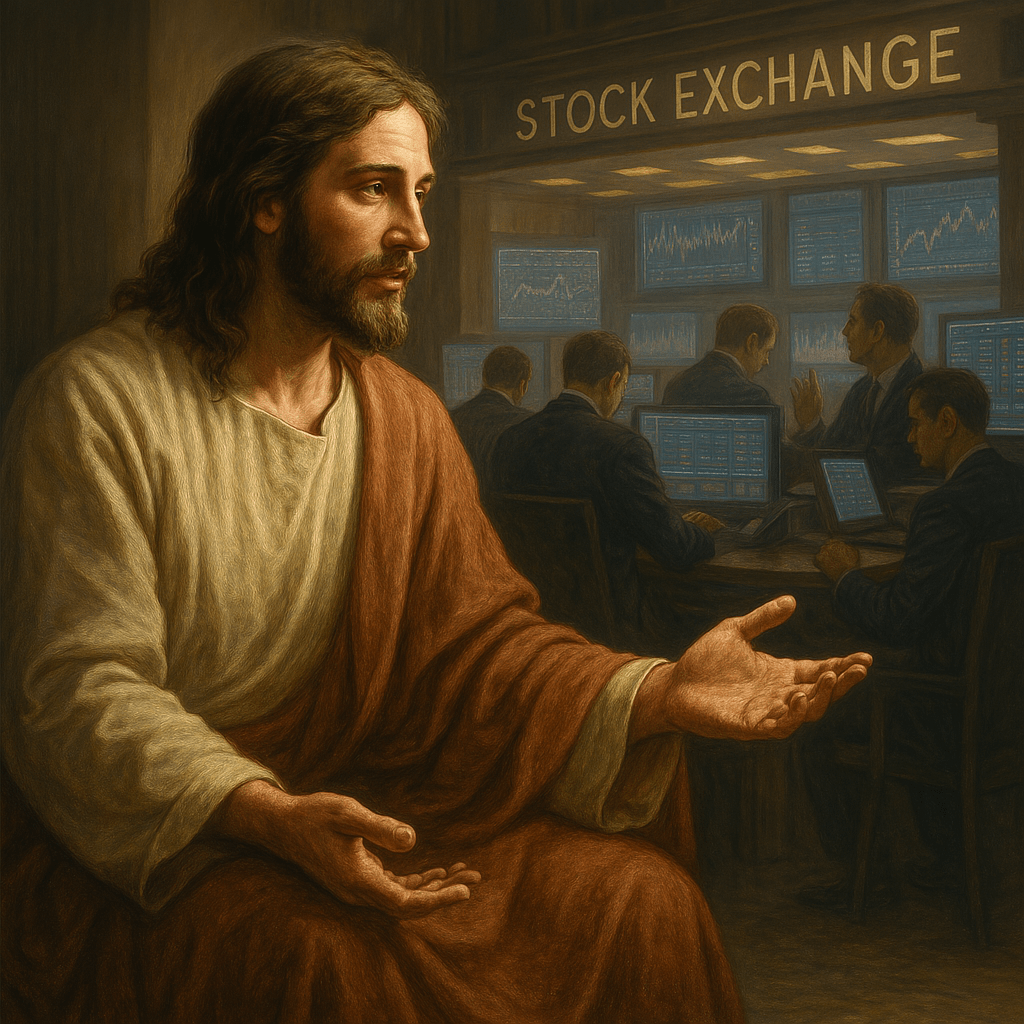
Today, kings wear suits and run hedge funds. They shape inflation, manipulate supply chains, and tell us what we can and can’t afford. The stock market has replaced the throne, and the myth of freedom conceals a new kind of servitude. Philosopher Jacques Ellul argued that modern economics is not morally neutral, it is spiritual power veiled in secularism.¹²

Why We Still Crave Kings
Despite revolutions and democracies, monarchies, literal and figurative, persist because human beings long for perceived symbolic stability. Psychologist Carl Jung saw kingship as an archetype; a deep psychological symbolic bias of order, protection, and legacy.¹³ Even when we reject monarchs, we elevate influencers, CEOs, and politicians to royal status in our hearts.
Biblically, this hunger points to a misplaced longing for God’s rule. We were created to be led, not by tyrants, but by the Shepherd-King who leads us into rest. Until we return to Him, we will continue to crown false rulers, whether they sit on thrones or appear in Forbes.

Conclusion: Resting in the Only True Kingdom
We are witnessing the collapse of counterfeit kingdoms. Revelation 18 foretells it. John 6 contrasts it. Psalm 23 invites us out of it.
Jesus never crowned Himself. He never manipulated a market. He never demanded loyalty through fear. He simply told us to sit down, and when we did, we were filled.
In a world obsessed with ascending thrones, the only throne worth kneeling before is the one occupied by a Shepherd.

Practical Application: Living Under the True King
1. Re-evaluate your loyalties
Ask yourself: who or what truly rules my life? Is it fear of poverty, desire for success, political allegiance, or Christ’s call to rest and trust?
2. Observe your reactions to systems
When faced with rising costs, broken politics, or job pressure, are you responding from panic or peace? Learn to sit down in the grass, trusting the Shepherd who provides.
3. Simplify where possible
Choose rhythms of life that honour God’s rest and resist Babylon’s pace. Sabbath is revolutionary resistance.
4. Support kingdom values in business and society
Whether you lead a company or support one, uplift transparency, justice, generosity, and integrity, subverting Babylon with Christ’s rule.
5. Disciple others into freedom
Share this message with those enslaved by modern monarchies, consumerism, burnout culture, idolised leadership. Show them Jesus’ green pastures.

Prayer

Lord Jesus,
You are the only King worth following.
Forgive me for bowing to the stock market kings, the deadlines, the applause, and the fear of not having enough. Teach me to sit where You tell me to sit.
Lead me beside still waters. Dismantle the counterfeit kingdoms in my heart.
I want You, Shepherd of my soul, to be my only source of rest and rule.
In Your Holy Name of King Jesus,
Amen.
References

1. Ian Shaw, The Oxford History of Ancient Egypt (Oxford: Oxford University Press, 2000), 71.
2. Samuel Noah Kramer, The Sumerians (Chicago: University of Chicago Press, 1963), 102.
3. Mircea Eliade, The Sacred and the Profane (New York: Harcourt, 1957), 211–13.
4. 1 Samuel 8:7, ESV.
5. Isaiah 14:13–14, ESV.
6. John 6:10, ESV.
7. David Guzik, Enduring Word Commentary: John 6, https://enduringword.com/bible-commentary/john-6/.
8. Ibid.
9. Revelation 18:23, Amplified Bible.
10. Louw and Nida, Greek-English Lexicon of the New Testament Based on Semantic Domains, 57.120.
11. G.K. Beale, The Book of Revelation: A Commentary on the Greek Text (Grand Rapids: Eerdmans, 1999), 922.
12. Jacques Ellul, The Technological Society (New York: Vintage Books, 1964), 149.
13. Carl Jung, Archetypes and the Collective Unconscious (London: Routledge, 1991), 134.

 #Hayibo