Part A – The Cost of Control: How Reductionism Blinds Us to the Divine
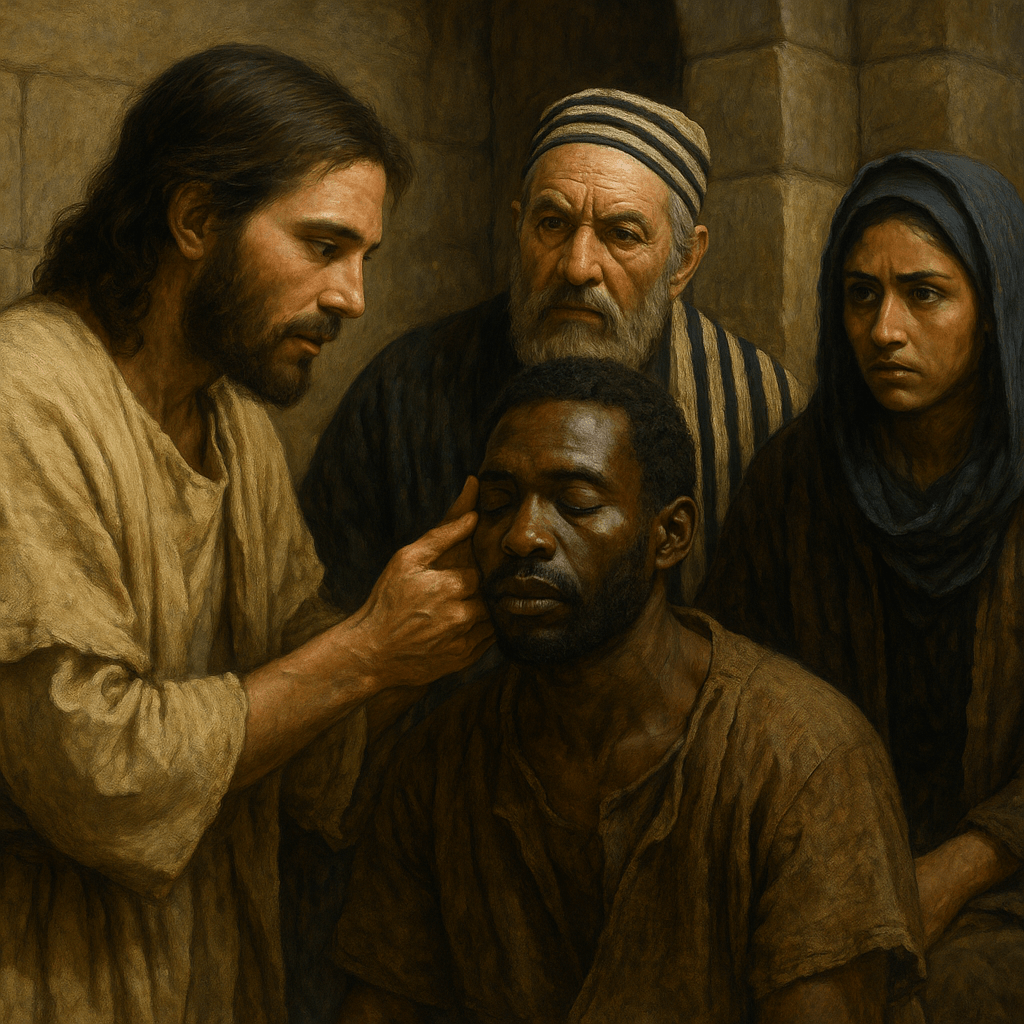
AI (Doc Sage) Generated Picture
Introduction
There is a blindness that runs deeper than the eye can see.
In John 9:13–16, a man who was blind from birth is healed. Sight is restored. Wonder walks among them. But instead of awe, the Pharisees respond with interrogation. A miracle becomes a violation. A man becomes a case study. Jesus becomes a sinner. And the system, desperate to preserve its own certainty, cannot make room for mercy.
“He put clay on my eyes, and I washed, and I see,” the man says.
But what the Pharisees hear is: He broke the Sabbath.
Their reaction is not unique to ancient religion. It’s the soul of reductionism, the collapsing of the complex, the miraculous, and the divine into manageable, explainable, controllable parts. In doing so, they don’t just reduce the miracle.
Jesus healed on the Sabbath. But He didn’t need to. He could have waited a day. The man had been blind since birth, what was one more sunrise?
But Jesus chooses this moment to confront the system. A system built through the bias of interpretation, rather than through the lens of Jesus.
He exposes how what was meant for rest had become a prison of performance. In the hands of the Pharisees, the Sabbath was no longer about freedom, it was about order. A healed man, rather than becoming cause for praise, becomes evidence in a courtroom.
Do I make room for testimonies that don’t fit my categories of control?
What miracles have I dismissed because they arrived outside my expectations?
Jesus doesn’t violate the Sabbath; He reveals it. But a theology built on fear cannot handle freedom.
Pic. Credits: Facebook
When God Doesn’t Match Our Morality
“This man is not from God,” they said, “because He does not keep the Sabbath.”
Here, reductionism reveals its deepest sin: it projects our dysfunction onto God. The Pharisees can only conceive of divinity within the borders of their tradition. So when God acts outside their framework, they do not expand the frame, they reduce the God.
This is epistemic fallacy, as philosopher Roy Bhaskar calls it, mistaking what we know for what is.¹ Jesus becomes “a sinner” not because He is, but because He doesn’t act like them. We still do that. We put people, doctrines, denominations, and perspectives into boxes. And then we justify why those boxes are rightly “othered”.
Have I reduced God to my political preference?
My denomination’s rules? My wounds? My comfort zone?
When Law Replaces Biblical Love
Reductionism is the religion of control. It thrives where mercy threatens power.
The interpreter uses law to become a way to keep God at arm’s length; predictable and contained. But Jesus keeps trespassing. Healing where He shouldn’t. Touching who He shouldn’t. Forgiving without permission. We see it all the time, Calvinists against Arminianism, Western Orthodoxy versus Eastern Orthodoxy, left versus right, east versus west, and “those people” versus ourselves. We then bully with the categorised expectations of our man-made boxes, and flagellate eachother when we don’t fit the prescriptions. Yet, Jesus shows us a different way. He shows us Himself as The Way. We ask, “What would Jesus do?” but we seldom follow how He does it. We try fit His what into our how.
The Pharisees did so too by wanting to uphold the law their way. Jesus wants to uphold the image of God in the man.
Do I use theology to secure my authority or to reflect God’s mercy?
The System Can’t See the Miracle
Their entire framework rests on logic:
God honours the Sabbath. Jesus “breaks” the Sabbath. Therefore, Jesus is not from God.
But in that logic, they become blind. Because Jesus didn’t break the Sabbath, He fulfilled it. He didn’t nullify the law, He restored its telos: life, liberation, wholeness.²
And yet… they cannot see Him. Not because He isn’t shining, but because they are staring through a lens of control.
Have I mistaken control for clarity?
Am I clinging to a structure that once served God, but now obstructs Him?
Seeing with Other Eyes
African, Asian, and Indigenous theologians have long challenged the West’s tendency to flatten faith into systems and formulas. In Public Theology in Africa, scholars Sayer and Paris critique Western theology for “colonising the imagination,” reducing sacred mystery into intellectualism.³
Similarly, Eastern and ecofeminist scholars like Gunaratne and Ariel Salleh resist the Cartesian worldview that sees life as machine, arguing instead for relational, embodied knowing.⁴
The Global South invites us to see God not as concept, but as encounter. Not as a rulebook, but as resurrection.
Whose stories have I dismissed because they don’t come in “the right form”?
Whose theology have I ignored because it makes mine feel incomplete?
The Man Sees. The System Doesn’t.
In the end, the healed man stands in the light.
He doesn’t have perfect theology. He can’t explain the mechanism. But he knows this:
“I was blind. Now I see.”
The Pharisees, by contrast, cannot rejoice. Their system depends on blindness.
And so they cling to control, losing God in the process.
Am I willing to lose control to gain vision?
Or will I cling to my categories, even if it means I miss the miracle?
Pic. Credits: GeeksforGeeks
Practical Application
Ask God to reveal where your theology might be shaped more by fear than freedom. Make space to listen to testimonies that challenge your assumptions.
Read theological works from Global South, feminist, or non-Western voices.
Reflect on moments where your pursuit of “rightness” may have cost you relationship.
Invite the Holy Spirit to disrupt any structures that limit how you see God.
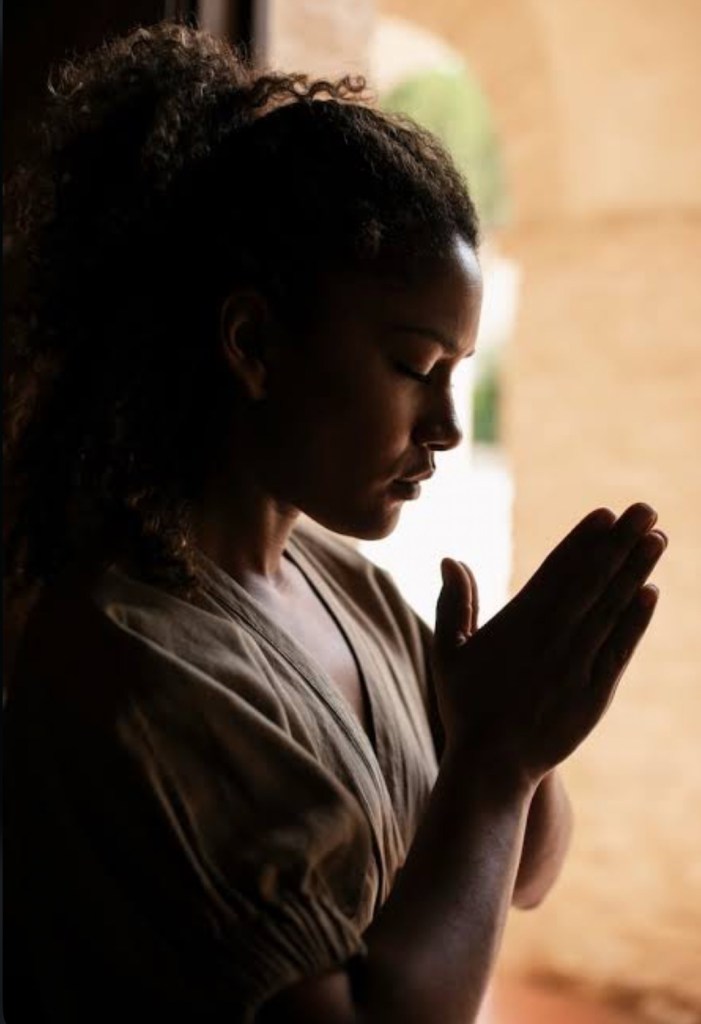
Pic. Credits: FreePik
Prayer
Lord,
You are not small.
You are not containable.
You are not manageable.
I confess the ways I have reduced You to rules, rituals, and systems I can control.
I have clung to certainty, when You called me to trust.
I have stared at the clay, and missed the miracle.
Break open my logic.
Heal my assumptions.
Make me blind to control and awaken me to Your glory.
4. D. Shelton A. Gunaratne, “The Dao of the Press: A Humanocentric Theory,” Hampton Press Communication Series, 2005; Ariel Salleh, Ecofeminism as Politics: Nature, Marx, and the Postmodern (London: Zed Books, 1997).
Lessons learned in God's Holy Word
Love Jesus
BTh
Biblical Counsellor
Author: ‘Bedroom Called Rainbow'
☎️: (+27) 817719162,
📧: arionstylist1@gmail.com
View all posts by Arion J Bezuidenhout






 #Hayibo