
When Silence Speaks Louder Than Truth
“His parents said these things because they feared the Jews, for the Jews had already agreed that anyone who confessed Jesus to be the Christ would be put out of the synagogue.”
– John 9:22 (ESV)
There are silences that protect. And there are silences that betray.
John 9:19–23 does not merely offer a historical account of religious intimidation, it exposes a recurring pattern of human behaviour: when the price of truth is social exile, people retreat into silence, even if it means abandoning the miracle before them. The man’s parents had seen their son blind his whole life. Now, healed, standing in the glow of a new world, they should have erupted with gratitude. Instead, they distanced themselves. “He is of age,” they said, passing the burden of truth onto their son while shielding themselves from religious retaliation.
Is this not eerily familiar? How many of us have seen truth clearly and yet looked away, fearing the cost of speaking it aloud? Cancel culture today, like the synagogue culture then, functions not by argument but by threat. You do not need to refute what someone says, only threaten them with exclusion, ridicule, or digital obliteration. The fear of being labelled, misunderstood, or ostracised is enough to keep many quiet.
And yet, the deeper danger is not merely social or reputational. The deeper danger is theological. In shielding ourselves from consequences, we may also shield ourselves from the Christ who stands in our midst.

Cancel Culture as Contemporary Pharisaicalism
Cancel culture is not a modern invention, it is a recycled Pharisaical impulse cloaked in digital robes. In John 9, the religious elite had already “agreed” to excommunicate anyone who dared name Jesus as the Christ. There was no open investigation, no public discernment, no theological humility. The verdict preceded the evidence. This was not discernment; it was control.
Modern cancel culture operates with similar tactics: presumption of guilt, punishment without process, and social shunning masquerading as moral virtue. Philosopher Byung-Chul Han argues that our culture has replaced shame with outrage and repentance with spectacle, resulting in a society “fixated on transparency, control, and purification through exposure.”¹ Cancel culture, in its most virulent form, becomes a pseudo-religious ritual, rooted not in justice, but in scapegoating. René Girard warned that communities often sustain themselves by uniting around a shared victim, casting blame outward to preserve internal coherence.²
This is not just sociological, it is spiritual. The Pharisees, like many today, feared losing authority more than they feared missing God. And so they used the tools of fear, banishment, labelling, and public disgrace, to preserve their fragile power structures. Those same tools are used today not only by political ideologues or media platforms, but even within the Church.
“Who healed your son?” they ask. But they don’t want the answer. They want control.
Cancel culture’s true danger is not that it silences bad actors, it’s that it can so easily silence prophets.
The Psychology of Fear and the Cost of Conformity
The parents of the healed man in John 9 stand as tragic icons of social survivalism. When questioned by the religious elite, they retreat behind silence: “He is of age; ask him.” Scripture makes it plain: “His parents said these things because they feared the Jews” (John 9:22). Fear, not truth, determined their speech. This is not weakness, it is human nature.
Modern psychology confirms this biblical insight. Jonathan Haidt and Greg Lukianoff explain that in societies where safetyism and ideological purity dominate, people adapt by suppressing dissent, not because they agree, but because they fear social exile.³ This aligns with the ancient concept of pluralistic ignorance, where everyone privately disagrees but assumes they are alone in doing so.⁴ People choose silence because they believe speaking out will cost too much.
Philip Rieff observed that the rise of therapeutic culture has substituted truth with affirmation and discomfort with harm.⁵ When disagreement becomes a moral violation, communities rapidly become hostile to anything that doesn’t conform. In such contexts, social fear becomes a tool for manipulating conscience. The synagogue becomes a courtroom. The crowd becomes a jury. The cost of truth becomes unbearable.
Deborah DuCille’s African perspective reminds us that identity, especially in collectivist societies, is negotiated through community.⁶ To be cast out is not just to lose social standing; it is to lose one’s sense of self. Thus, cancel culture operates as a trauma-inducing weapon, shaping identity by threat. And when leaders or institutions wield that weapon to protect their image or ideology, they not only silence voices, they rewrite reality.
What John 9 exposes is chilling: when people fear losing community more than they desire truth, they will quietly betray both.
God Among the Cancelled: The Subversive Power of Jesus’ Presence
Jesus does not rescue the man’s parents from their fear, He honours the courage of their son. The once-blind man becomes the only voice in the chapter willing to speak unfiltered truth: “One thing I do know, that though I was blind, now I see” (John 9:25). That testimony, simple and uncontrollable, threatens the powerful. So they do what cancel culture always does when it cannot contain a narrative, it exiles the witness. “And they cast him out” (John 9:34).
Jesus responds with the same subversion He always does: He goes after the outcast. “When Jesus heard that they had cast him out… He found him” (John 9:35). Christ does not wait inside the synagogue to be recognised by the religious elite, He walks into the margin, the exile, the silence, and brings vision again. This is not merely compassion. It is theological warfare against systems of spiritual exclusion.
Rene Girard identifies this dynamic in his seminal work Violence and the Sacred, arguing that societies maintain their unity by scapegoating individuals who destabilise consensus.⁷ The blind man becomes the scapegoat, cast out not because he sinned, but because his sight unmasked the religious elite’s blindness. In expelling him, they preserved their illusion of control.
Similarly, Byung-Chul Han contends that modern cancel culture, driven by performance and purification, eliminates the “Other” to maintain homogeneity.⁸ It is not sin that provokes exclusion, it is disruption. And nothing disrupts more than unfiltered truth.
Walter Brueggemann sees this moment not only as conflict but as prophetic confrontation. The blind man’s testimony functions as a “counter-testimony” that breaks through dominant theological narratives.⁹ In his courage, he mirrors the prophetic role: to see differently, to speak truth to those who cannot bear it, and to endure exile for it.
And here is the hope: Jesus finds the one who has been cancelled. He does not restore him to the synagogue; He reveals Himself more deeply: “You have both seen Him and it is He who is speaking with you” (John 9:37). This is divine intimacy earned not through compliance but through costly honesty.
True discipleship, then, may mean exile from systems that once defined us. But in the wilderness of cancellation, we are found by the only One whose presence truly sees us.
The Theological Consequences of Control and Exclusion
Cancel culture is not new. In John 9, it merely takes on religious clothing. But its underlying logic remains the same: control the narrative by silencing dissent, and protect institutional power by severing relational presence. The Pharisees could not argue with a miracle, so they targeted the messenger. Their concern was not theological integrity, it was authority preservation.
This religious impulse to silence, exile, and ostracise remains alive today. The fear of losing social credibility, ecclesial approval, or ideological loyalty creates a culture in which honest faith becomes dangerous. As Alan Jacobs notes, “The person who genuinely wants to think will always be a kind of dissenter.”¹⁰ But thinking, and especially testifying, has a cost. In theological contexts, that cost is often relational excommunication.
Philip Rieff warns that modern culture has lost its capacity for sacred order and replaced it with therapeutic agreement.¹¹ In such a world, any discomfort, especially spiritual discomfort, is treated as toxic. Therefore, a voice like the blind man’s, which confronts others with an undeniable act of God, becomes intolerable. It cannot be reasoned with; it must be removed.
Deborah DuCille observes, from an African theological lens, that true relational life must be built upon dignity and mutual recognition, not domination.¹² The blind man’s parents lose their dignity under fear. But their son, in losing social protection, finds theological clarity. The one excluded by man is included by God. This inversion is the heartbeat of the Kingdom.
Jesus deliberately reveals Himself not to the insiders, but to the cancelled. The excommunicated man becomes a recipient of revelation denied to the powerful. God’s truth, in this account, flows not from the pulpit but from the margins.
The lesson is sobering: when we construct religious systems to control, we risk excluding the very presence of God. Cancel culture may preserve orthodoxy in form, but it crucifies the living truth when truth threatens our comfort. And Christ, then and now, remains outside the gates with the outcast, calling them by name.

Practical Application and Theological Challenge
The story of John 9 ends with an unsettling twist: Jesus seeks out the man who has been thrown out. This act of divine pursuit reframes the entire narrative. Jesus is not waiting in the temple; He is walking among the rejected. He does not console the powerful for losing theological control, He confirms the confession of the excommunicated. “Do you believe in the Son of Man?” He asks. When the man responds in faith, Jesus affirms him not merely as healed, but as seen and known (John 9:35–38).
This is not only a biblical moment; it is a missional mandate. In a world obsessed with purity, perfection, and institutional loyalty, the Church must discern whether it is protecting its systems or participating in God’s solidarity with the excluded. Cancel culture may masquerade as justice, but often it is a performance of power, not repentance. True biblical justice never silences testimony, it multiplies witness.
Mary Douglas famously diagnosed cultures of purity as systems that manage social anxiety through exclusion. What is “out of place” must be cast out.¹³ But in the Kingdom of God, it is often the “out of place” that carries the prophetic voice. As René Girard notes, scapegoating mechanisms emerge precisely to suppress disruptive truths.¹⁴ Yet the gospel subverts this: the scapegoat (Jesus) becomes the saviour.
Walter Brueggemann challenges us to recover a prophetic imagination that does not capitulate to dominant narratives but dares to envision a world governed by mercy, truth, and embodied faith.¹⁵ In doing so, we must confront the uncomfortable truth that we, like the Pharisees, can become blind while claiming to defend sight.
So the challenge remains: when we encounter testimony that disrupts our systems, will we cast it out, or will we listen? When voices on the margins speak of divine encounter, will we silence them for the sake of stability, or will we follow Jesus into the places of discomfort, exclusion, and surprise?
Discipleship in an age of ideological volatility requires more than doctrinal precision. It demands relational courage, epistemic humility, and a Spirit-led imagination. As long as our theology seeks to control who belongs, we may fail to see the One who is already present among the expelled.
Conclusion: Let the Healed Speak
At the heart of John 9 lies a piercing irony: the only one who truly sees is the one society refused to recognise. He was born blind, healed, interrogated, abandoned by his parents, excommunicated by religious leaders, yet found, affirmed, and sent by Jesus. The man’s testimony becomes a parable of sight: not only optical, but moral, relational, and theological.
Cancel culture thrives on the illusion that control brings clarity. But the more we silence others to preserve our constructed worlds, the more we descend into epistemic darkness. In John 9, it was the system, not the sinner, that proved blind. Power, privilege, and purity codes blinded the very people meant to shepherd others into truth. Fear replaced faith. Image management replaced intercession. And yet, Christ walked out to the margins to meet the expelled witness.
This narrative is not distant history, it is an interpretive lens for today’s Church and society. When the cost of control outweighs our willingness to listen, we exile Christ afresh. The invitation, then, is to risk our reputations, surrender our need to dominate narratives, and rediscover theology not as institutional certainty but as lived encounter. As Alan Jacobs reminds us, genuine thinking begins when we choose not to fear the person who sees differently.¹⁶ And as Philip Rieff warned, a society that severs truth from sacred authority will inevitably collapse into therapeutic solipsism.¹⁷
Jesus does not force control; He embodies compassion. He does not cancel the confused; He heals the humble. And His Kingdom is still being built by those once silenced, now sent. Let the healed speak.
Prayer
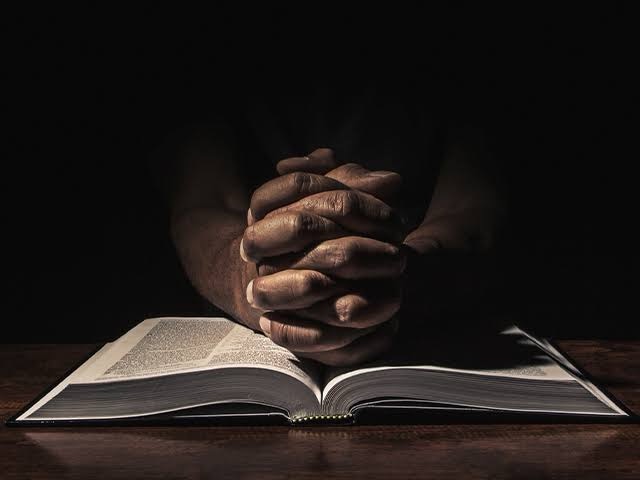
Lord Jesus,
You are the Light who gives sight to the blind and courage to the silenced.
Forgive us when we fear men more than You, when we choose safety over truth, and power over love.
Teach us to see as You see, to speak with grace and conviction, and to welcome the outcast into communion.
May Your Spirit unmask our pride, heal our wounded vision, and make us witnesses who walk in Your truth, even when it costs us everything.
In Your Mighty Name Messiah King Jesus,
Amen.

References
1. Byung-Chul Han, The Expulsion of the Other: Society, Perception and Communication Today (Cambridge: Polity Press, 2018), 45.
2. René Girard, Violence and the Sacred (New York: Bloomsbury Academic, 2017), 20–21.
3. Greg Lukianoff and Jonathan Haidt, The Coddling of the American Mind: How Good Intentions and Bad Ideas Are Setting Up a Generation for Failure (New York: Penguin Press, 2018), 59–64.
4. Alan Jacobs, How to Think: A Survival Guide for a World at Odds (New York: Currency, 2017), 47.
5. Philip Rieff, The Triumph of the Therapeutic: Uses of Faith after Freud (Chicago: University of Chicago Press, 1987), 25.
6. Deborah DuCille, “Relational Life Through an African Lens” (MPhil thesis, University of Pretoria, 2015), 23.
7. René Girard, Violence and the Sacred, trans. Patrick Gregory (Baltimore: Johns Hopkins University Press, 1977), 15–20.
8. Byung-Chul Han, The Expulsion of the Other (Cambridge: Polity Press, 2018), 9–13.
9. Walter Brueggemann, Theology of the Old Testament: Testimony, Dispute, Advocacy (Minneapolis: Fortress Press, 1997), 121.
10. Alan Jacobs, How to Think: A Survival Guide for a World at Odds (New York: Currency, 2017), 18.
11. Philip Rieff, The Triumph of the Therapeutic: Uses of Faith after Freud (Wilmington, DE: ISI Books, 2006), 17–21.
12. Deborah DuCille, “Relational Life Through an African Lens” (MPhil thesis, University of Pretoria, 2015), 23.
13. Mary Douglas, Purity and Danger: An Analysis of Concepts of Pollution and Taboo (New York: Routledge, 1966), 4–6.
14. René Girard, Violence and the Sacred, trans. Patrick Gregory (Baltimore: Johns Hopkins University Press, 1977), 35–39.
15. Walter Brueggemann, The Prophetic Imagination, 2nd ed. (Minneapolis: Fortress Press, 2001), 1–12.
16. Alan Jacobs, How to Think: A Survival Guide for a World at Odds (New York: Currency, 2017), 26–29.
17. Philip Rieff, The Triumph of the Therapeutic: Uses of Faith after Freud (Wilmington, DE: ISI Books, 2006), 18–20.

 #Hayibo