John 10:17–18 and My Half a Day with a Transperson
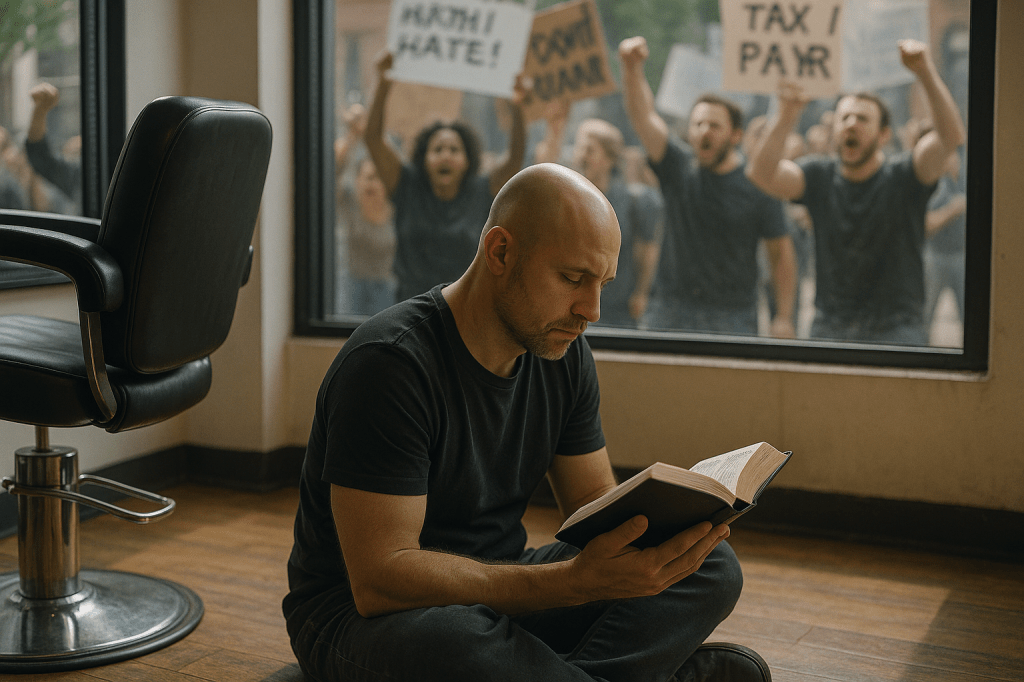
AI (Doc. Sage) Generated Picture
Recently, I had to rescue someone who had made their hair blue in an attempt to go titanium-blonde. It took five hours to correct. The end result? Beautiful. We got lucky: the hair survived the chemical correction required to lift out bands of blue, orange, and brass.
As it would obviously go, I was asked, “Can you tell that I am trans?”
“Yes,” I said. Lovingly, and kind.
“How?”
“Well, I am writing a thesis on Identity Dysphoria, and the research shows that trans people often unintentionally caricature femininity or masculinity based on ideological interpretations of what being a man or woman is.”
“Oh… I thought it was my voice.”
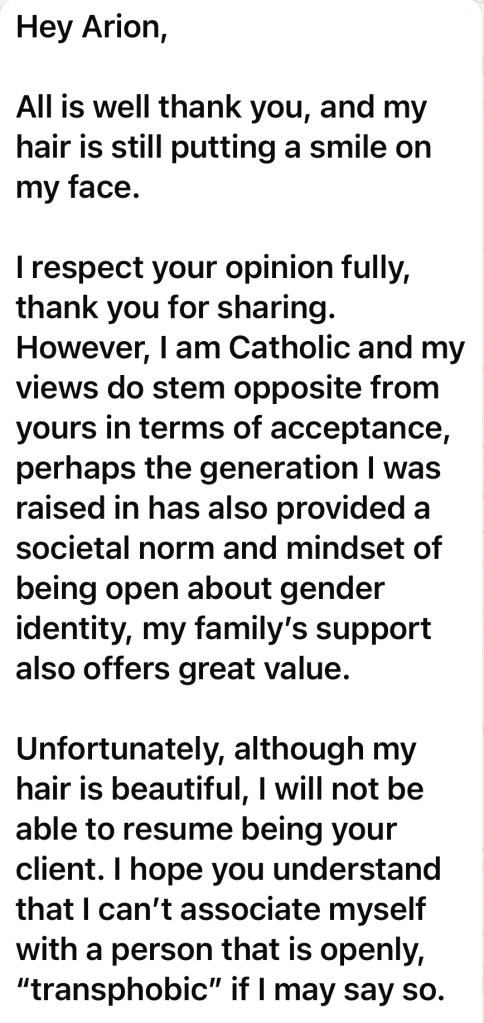
After reflecting on how best to share that I hold views opposite to transgender ideology, I sent a voice note. Kind, gentle, without judgment or attack, I laid down my convictions and offered space to chat further. But I also left room: if this person chose not to continue their hair journey with me, I would respect that, too.
Needless to say, I was called “transphobic.”
Ironic, really, I had just been told I was the “sweetest, kindest, and top-tier stylist” they had ever met. But this was not a case of hate.
What was at play was this: our culture has catechised its sheep into believing that emotional discomfort is equivalent to harm.
This message highlights how identity has become sacred territory, not open to challenge. It highlights a few cultural misnomers:
He frames his Catholicism as affirming, which is not consistent with historic Catholic doctrine, this is a cultural Catholicism, not theological Catholicism.
He mentions generational and familial support, which are emotionally powerful… but not epistemologically authoritative.
And then the real sting: “I can’t associate with a person that is openly transphobic.” That’s a redefinition of phobia: Not fear. Not hate. Just disagreement with sacred self-definition.
Jesus, in John 10, has already defied the identity politics of John 8, dismantled the institutional gatekeeping of John 9, and exploded the performative categories of belonging in John 10. But now, in verses 17–18, we reach the summit:
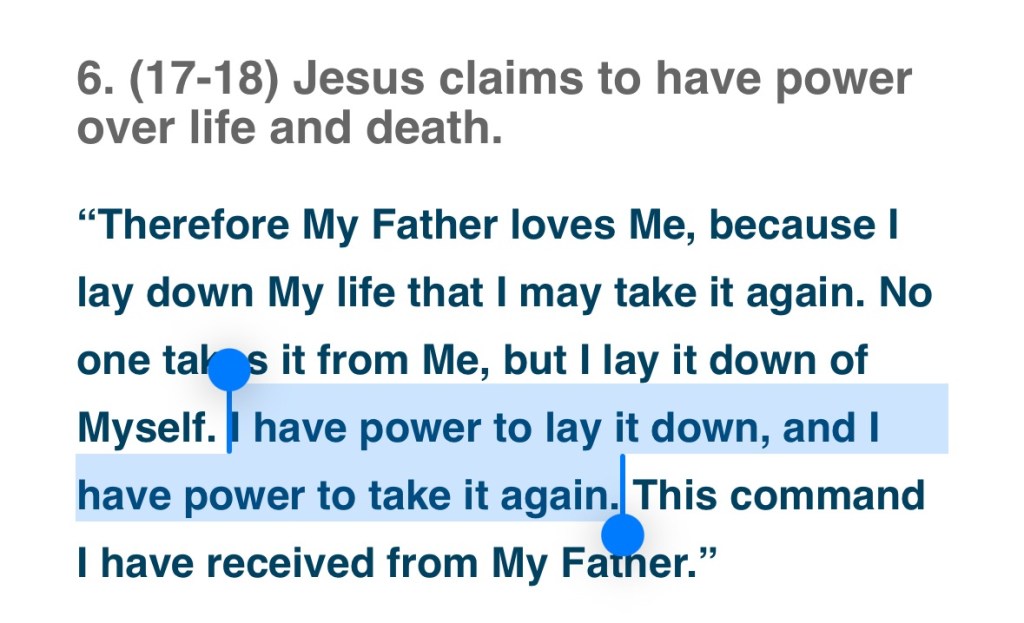
“I lay down My life that I may take it again. No one takes it from Me… I have power to lay it down, and I have power to take it again. This command I have received from My Father.”
This is not weakness. It’s voluntary sovereignty.
Where culture, politics, false religion, and ideology can get us to the grave, only Jesus can get us back out of it.
And here lies the scandal: Jesus is dangerous not because He has power, but because His power is not borrowed.
All other power is ultimately just curated influence. Only Christ holds ontological power over death itself.
This is what makes Jesus, and the truth He embodies, threatening to modern identity ideologies.
When we abandon the givenness of our bodies, we enter the seduction of self-deification.
This often becomes eroticised, turning identity into a source of arousal and self-mirroring. This is evident in phenomena such as autogynephilia, where one becomes sexually aroused by the image of oneself as another gender, a phenomenon shown to occur in both men and women, undermining the idea that such experiences define true identity.¹
Rather than receiving the body as a theological and creational gift, we attempt to construct a new nature by using the language of freedom. But what we actually do is this:
We deny nature while using nature to define our denial.
And so, we become institutionalised into othering ourselves, by using the metrics of pseudo-power to guide us into the grave… simply with a new dress code.
Only Christ, who laid His life down and took it up again, has the power to resurrect not just our bodies, but our true identity.
Pic. Credits: Heredity BioSciences
Practical Application
1. Speak truth with grace, and be ready to lose relationships over it.
Jesus never compromised truth to maintain connection. He laid His life down, not to be liked, but to be Lord. If you hold to biblical anthropology, some will walk away. That’s not failure. That’s fidelity.
2. Don’t confuse emotional discomfort with moral harm.
We live in a world where disagreement is called violence. But as followers of Christ, we know that truth often wounds before it heals (Hebrews 4:12). Stay kind, but stay clear. Love does not lie.
3. Anchor your identity in the One who has power over death.
Trans ideology, and all false identity systems, promise self-reinvention but cannot resurrect what sin has killed. Jesus alone has power to lay down and take up life again. That’s true authority. Anchor your identity in the only One who conquered the grave.
Pic. Credits: The KJV Store
Prayer
Lord Jesus, Good Shepherd and Resurrected King,
Thank You for the power You hold, not only to lay down Your life, but to take it up again. In a culture where identity is performed, politicised, and sexualised, teach us to rest in the identity You bestow.
Forgive us when we seek to be liked more than we seek to be faithful. Give us courage to speak truth in love, even when it costs us relationships or reputation.
For those who walk away from us because we won’t affirm deception, help us to grieve with grace, not bitterness.
May our lives bear witness not just to right doctrine, but to redemptive hope. May our words reflect both conviction and compassion.
And may our trust remain in You alone, the One who holds real power, real identity, and real resurrection.
In Your Holy and Undefeatable Name, Jesus, the Name above all others,
Lessons learned in God's Holy Word
Love Jesus
BTh
Biblical Counsellor
Author: ‘Bedroom Called Rainbow'
☎️: (+27) 817719162,
📧: arionstylist1@gmail.com
View all posts by Arion J Bezuidenhout






 #Hayibo