

I have been reading the Holy Bible diligently for a number of years. This year, I began in the Gospel of John and have only now arrived at chapter thirteen. To say that the Holy Spirit has taught me much would be an understatement. The Spirit’s pedagogy is rarely comfortable; it teaches through dissonance.
Yesterday and today became another such lesson.
I was asked, at the last minute, to collect a colleague and take her to a training event. I obliged, willingly, even joyfully. Yet in the car, when she began speaking about her problems, something in me resisted. I grew quiet. My peace was disturbed. I wanted silence more than empathy.
Later that day, I attended our church’s Team Night. The message? Humble service. The pastor’s words echoed through me: “We get to serve God’s Kingdom.” I realised that, though I had served by giving someone a lift, my inner posture betrayed irritation, not joy. I had missed the moment to speak Jesus into her life, though perhaps the worship music playing in the car did what I could not.
This morning, I opened to John 13 and found myself exposed.
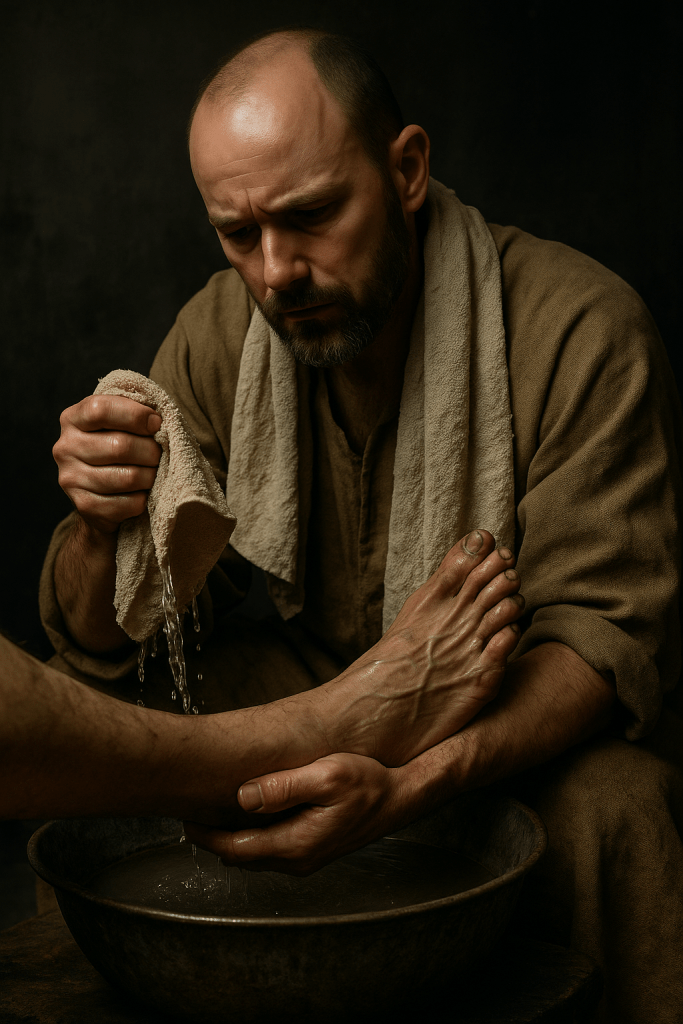
“He rose from supper and laid aside His garments, took a towel and girded Himself. After that, He poured water into a basin and began to wash the disciples’ feet.”
(John 13:4–5)

The Interrupted Christ
Jesus, knowing the cross awaited Him, rose from comfort to cleanse those who would soon abandon Him. His peace was not dependent on tranquillity but obedience. His rest was not disturbed, it was transformed into mercy.
The Enduring Word commentary observes the deliberate symmetry:
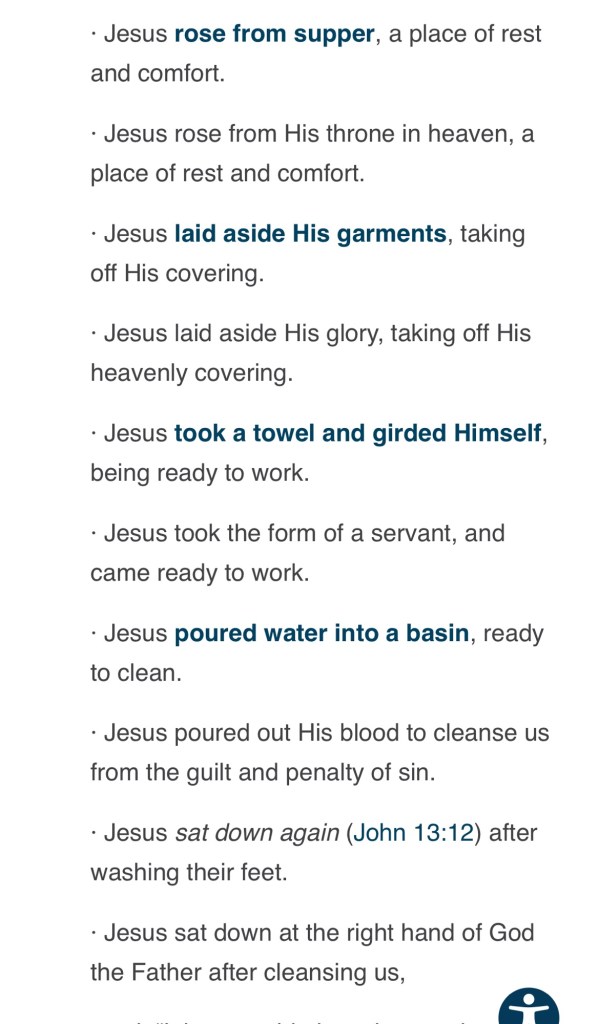
Jesus “rose from supper” as He rose from heaven; “laid aside His garments” as He laid aside His glory; “took a towel” as He took the form of a servant; “poured water” as He poured out His blood.
The act of washing was not a performance of humility; it was revelation in motion, theology kneeling.
The Mirror of the Self
A.W. Tozer once wrote:
“Self is one of the toughest plants that grows in the garden of life. Just when we are sure it is dead it turns up somewhere as robust as ever, troubling our peace and poisoning the fruit of our lives.”
That moment in the car was the mirror of John 13: the basin before me, the self within me. My annoyance revealed not moral failure, but formation in progress. Christ was teaching me that humility is not the natural by-product of salvation; it is its practice.
Modern psychology, from Paul C. Vitz’s critique of selfism to Charles Taylor’s notion of the buffered self, identifies our age’s pathology ; a consciousness insulated from grace. We curate compassion but fear contamination by others’ pain. We perform service for applause yet recoil from servanthood’s cost. The basin has become decorative, not sacramental.
The Spirit’s Method
The Holy Spirit, however, instructs through interruption.
He teaches by confrontation, not convenience.
My discomfort was not a failure of temperament but a divine summons, a holy exposure of my resistance to grace.
Romans 8:26 reminds us that “the Spirit intercedes for us with groanings too deep for words.” Sometimes those groanings are not within us but around us, in the voice of a weary colleague, in the tension between peace desired and love demanded.
A Culture Allergic to Servanthood
We inhabit a culture that confuses self-expression for freedom and self-assertion for dignity. We curate lives of aesthetic compassion while insulating ourselves from the friction of the real. We seek a peace that never bends, a faith that never stoops. But a Christianity without kneeling is only anthropology with hymns.
In Jesus’ basin, all social hierarchies dissolve.
There is no influencer or inferior, no boss or employee, only the God who kneels.
In that inversion lies the scandal of the Gospel: divinity revealed through humility.
The Call to the Basin
John 13 ends not in sentimentality but in commission.
“If I then, your Lord and Teacher, have washed your feet, you also ought to wash one another’s feet.”
It is here that faith collides with flesh. The call to “wash feet” in the twenty-first century may not involve basins or towels, but it will always involve surrender.
It means driving a colleague who drains you. Listening when you’d rather scroll. Choosing service over serenity.
To follow Christ is not to preserve one’s peace but to participate in His love.
The basin waits, in the car, the office, the home, the street corner, wherever pride still demands to be seated at the table instead of kneeling at another’s feet.
Reflective Prayer
Lord Jesus,
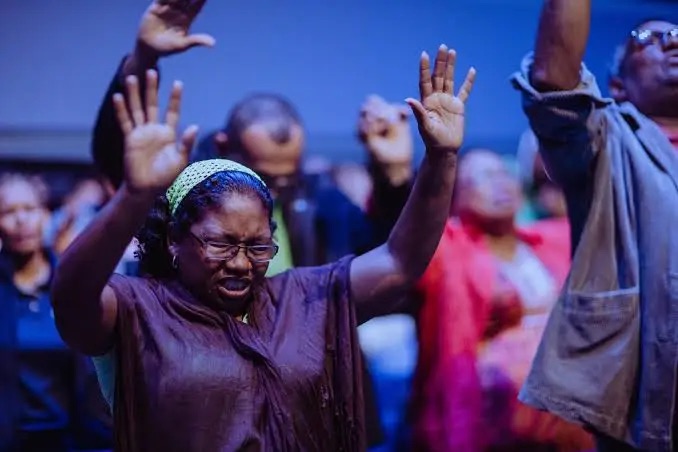
You rose from rest to serve, laid aside glory to wash dust from unworthy feet. Teach me to see the basin before me, in the interruptions, the irritations, the moments I resist.
Strip from me the garments of self, and clothe me again with humility. May I learn that true peace is not the absence of disturbance, but the presence of Your love.
In Your Holy Name Lord Jesus,
Amen.

 #Hayibo