


Introduction
There is something profoundly divine about a secret. Not the sort that manipulates, but the kind that guards. Not deceit, but discretion. Not silence born of fear, but silence born of reverence. When we keep a secret, we do something that matter cannot. Atoms can contain information, but they cannot conceal it. Data can encrypt itself, but it cannot choose to hide.
Secrecy requires intention.
Even Jesus kept divine timing veiled until the appointed hour.
Throughout His ministry, He spoke in parables, disclosed fragments of His mission, and often warned His disciples not to tell anyone who He truly was. Only near the end did He reveal, with startling clarity, that He would be crucified (Mark 8:31; Matthew 16:21). This was not reluctance, it was reverence. It was the holy restraint of One who knew that revelation without readiness becomes ruin. His secrecy was not deception but divine mercy, truth wrapped in time, waiting for hearts prepared to bear its weight.
Secrets demand a mind that knows both what it knows and when it should not be said. And that, perhaps, is one of the clearest evidences that we are made in the image of God.
Moreover, revelatory secrecy becomes more than social etiquette; it becomes a sacred echo of divine wisdom.
Just as Jesus withheld revelation until its proper moment, so too the human soul, made in God’s image, holds within it the mysterious tension between concealment and disclosure. To keep a secret rightly is to participate in God’s communicative nature, to mirror His discernment in revealing truth only when it heals rather than harms. Augustine called this ordo amoris, the right ordering of love; Aquinas framed it as discretio, the moral intelligence that guards truth in proportion to charity. In both, discretion is not cowardice but communion, a reflection of the God who conceals mysteries only to unveil them in love’s appointed hour.

The Divine Logic of Concealment
Scripture is unapologetic about God’s right to withhold.
“The secret things belong to the LORD our God, but the things revealed belong to us…” (Deuteronomy 29:29).
God’s hiddenness is not neglect; it is moral precision.
Augustine wrote that God’s mystery is an act of mercy, “hidden from the wise and revealed to babes,” to protect truth from being distorted by pride.¹ Divine concealment is therefore not deception, but divine timing.
If revelation is the music of God, then secrecy is its silence, the pause between notes that gives the melody its meaning.
When Concealment Becomes Virtue
Thomas Aquinas taught that discretion is a branch of prudence, that the wise do not expose all they know, because knowledge ungoverned by love becomes cruelty.²
Secrecy, then, is not an evasion of truth but its moral governance.
To hold a confidence in trust, to protect another’s dignity, or to guard sacred knowledge from desecration, these are acts of ordered love. Aquinas goes further: deceit is sin because it violates reality; but concealment, when ordered to charity, upholds reality. It mirrors God’s own covenantal nature, the God who hides Moses in the cleft of a rock so that revelation may not destroy him.
The Modern Crisis of Overexposure
Our culture has made confession compulsory and privacy suspect.
In a world addicted to transparency, Hannah Arendt warned that truth cannot survive in an atmosphere where everything is exposed.³
To reveal all is not honesty, it is disfigurement. For truth to remain whole, something must remain veiled. Foucault traced how the medieval confessional, once a sacred space of voluntary disclosure, became a mechanism of social control.⁴
In our age, that ritual has metastasised: the self must now confess online, broadcast its pain, parade its virtue. The holy discretion of secrecy has been replaced by the surveillance of exposure.
We no longer keep secrets because we have lost the interior life that makes noble secrets and mystery possible.
The Distinction: Divine Mystery vs. Human Manipulation
Not all secrecy is sacred. There is secrecy that protects, and secrecy that poisons.

To discern rightly is to imitate God’s pattern: concealment for redemption, never for control.
Christ and the Sacred Secret
Jesus Himself is the mystery unveiled and veiled at once, the Word made flesh, and yet, the Word no man has seen fully. He spoke in parables not to obscure truth, but to protect it from mockery until the hearer was ready. He revealed glory through suffering, divinity through servanthood, and resurrection through death.
Even His silence before Pilate was revelatory, the infinite refusing to dignify the finite’s presumption to judge. Thus, Christ redefines secrecy.
The Incarnation is God’s greatest secret kept and revealed. He conceals His power so that love, not fear, might win us. He hides glory beneath humanity so that humanity might find glory in Him.
The Sacred Art of Keeping
To keep a secret rightly is to act theologically. It is to echo the discretion of the Creator, who does not reveal everything at once. It is to honour the mystery of another, resisting the modern compulsion to expose.
It is to participate in the humility of God, a God who keeps and reveals with equal wisdom. We must therefore recover the sacred art of hiddenness. Not the secrecy of shame, but the sanctity of restraint.
Not the concealment of deceit, but the quiet reverence of what must not yet be spoken. For in the end, secrecy itself may be a form of worship: the soul’s silent agreement that some truths are too holy for display.

Reflective Question
What if the secrets you carry, the ones born not of guilt but of grace, are not barriers between you and God, but echoes of His own?

Practical Application
The practice of secrecy must always bow to love.
Protective and revelatory secrecy guard dignity and timing, the kind of discretion that mirrors God’s own patience with revelation. Manipulative secrecy, by contrast, fractures trust, infects relationships, and breeds hiddenness where healing should dwell.
To live honourably in the hidden spaces means asking: Does my silence protect love or preserve ego?
In a world addicted to exposure, restraint can be worship. In a world that hides corruption, transparency can be redemption.
Wisdom, then, is not about always revealing or always concealing, it is about discerning whose glory the secret serves.
Before we speak, or stay silent, may we first remember that the God who sees in secret (Matthew 6:6) is also the One who searches the heart (Psalm 139:1).
Our secrets are safest when surrendered to Him.
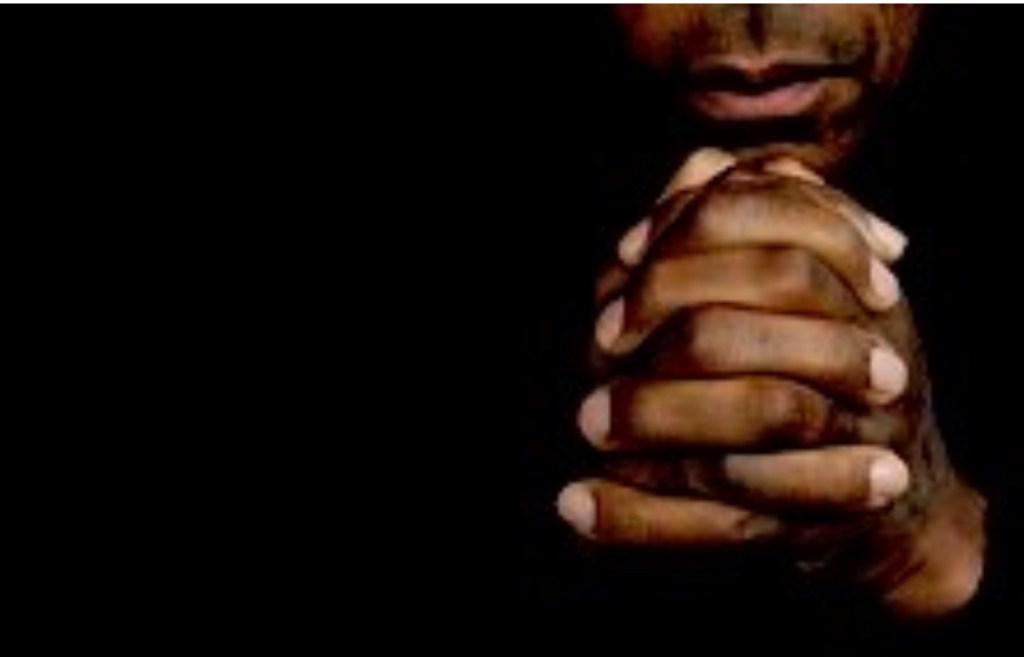
Prayer
God,
Teach us to honour what is unseen.
Give us discernment to know when to speak and when to keep silence, when to protect and when to reveal.
Search our hearts for motives that twist truth into control, and cleanse the shadows where fear hides from love.
May our hidden places become holy places, where trust is born, wounds are tended, and Your secret wisdom is made known in gentleness.
Let every secret in us either serve Your love or die in Your light.
In Your Holy, Magnificent, Glorious, and Powrrful Name King Jesus,
Amen.
Track to listen to:

Footnotes
1) Augustine, The City of God, trans. Henry Bettenson (London: Penguin Classics, 2003), XIX.18.
2) Thomas Aquinas, Summa Theologica, I–II, Q.111, Art.1.
3) Hannah Arendt, “Truth and Politics,” in Between Past and Future (New York: Viking Press, 1968).
4) Michel Foucault, Discipline and Punish: The Birth of the Prison, trans. Alan Sheridan (New York: Vintage, 1995), 194–200.

 #Hayibo