

Fringe doesn’t have to sit lonely in the theatre, it can step into the play.


Discovering the Roots of the Fringe
It was a quiet day in the salon when the Holy Spirit snuck up on me, the way He often does, not with trumpets, but with a question.
A question about the fringes.
Not the fringes I cut (otherwise known as bangs, thank you, Westernised marketing). But the fringes in society, the places where people stand when the centre has either annoyed them, or they’ve rejected the centre.
God pressed me gently, then firmly:
“Write to the fringes.”
And I realised how seldom we do.
We have women’s ministries, men’s ministries, prison ministries, children’s ministries, LGBTQ ministries, poverty-alleviation ministries… and yet almost no ministry to the fringe thinkers, the misfits, the pattern-seers, the early adopters, the people who dismantle norms and often get punished for it.
We quietly file them under “wackos” and move on. Which is ironic, given that half of civilisation was built by fringe minds.
Thank God for Velcro.
Thank God for Abraham.
My own journey from fringe to centre wasn’t glamorous. My brand of fringe was “anti-conformity,” or so I told myself. But underneath the neon rebellion was a far more subversive truth, I didn’t fit into the stereotype I thought I was supposed to be.
The stereotype felt violent.
So I chose counter-violence, throwing out the baby, the tub, the bathwater, and possibly the plumbing.
How well did that go?
Well, I ended up in therapy, then rehab, then a brief stay in a psych ward after another suicide attempt.
I kept trying to be radical enough, loud enough, neon enough, obnoxious enough, until my own freedom swallowed me whole.
Ironically, it was volunteering at a homeless feeding scheme that dismantled my liberal fantasy. I thought “free choice” meant “doing whatever I want.”
But watching actual care in action, logistics, budgets, stewardship, rules, order, made something clear:
Love collapses when structure is absent.
And leftist “free choice for all” is unsustainable when chaos burns through resources. I discovered that care works best in conservative environments and conservative practices:
discipline, boundaries, stewardship, order.
Reading beyond my crooked nose, I found myself slowly migrating from fringe to centre.
Turns out the most stable position in life is:
• standing on two feet,
• sitting on two butt cheeks,
• seeing with two eyes,
• hearing with two ears.
Balance is the wisdom of creation.
And then came the theological sledgehammer: Jesus is the true centre, the meeting point of heaven and earth, divinity and humanity, Spirit and creation. The God-Man standing between Father and Spirit, the cosmic centre of gravity for all things (John 1).
From the fringes, everything had looked wrong. My leftist “free love for all” theology felt liberating, until reality, logic, and Scripture exposed its naivety. Fringe only makes some sense when grounded by a centre.
Even in hairdressing we know: “The internal artist gains freedom to create only when the academic understands the rules.”
Life is no different.
Nor is God.
The Philosophy of the Fringe
The fringe mind is not always just chaotic, it is often highly complex.
Fringe thinkers often see reality earlier, deeper, and more painfully than the “centered majority.” But without grounding, this sight becomes unbearable.
A1. Fringe Thinkers Reveal Complexity
Gilles Deleuze describes reality as nonlinear, multidimensional, and “rhizomatic,” a web instead of a ladder.¹
Fringe minds operate this way naturally. Where most people think in straight lines, fringe people think in constellations. It makes them innovative. It also makes them unintelligible to the masses.
A2. Fringe Thinkers Reveal Disavowed Truths
Slavoj Žižek argues that humans do not simply ignore truth, they actively deny what they subconsciously know.²
Fringe people disrupt this denial. They refuse the polite lie. They disturb the illusion others depend on. That’s why the fringe feels “dangerous.” Not because they are, necessarily, wrong, but because they are questioning.
A3. Fringe People Become Scapegoats
René Girard shows that communities protect their illusions by sacrificing the unsettling ones.³
So the fringe is punished not for error but for clarity. They become the “excess truth” societies cannot stomach.
Interpretation:
The fringe is often not broken.
The fringe often sees too much.
But sight without a centre of reality becomes distortion instead of revelation.
SECTION B — The Tipping Point: When Fringe Goes Too Far
Fringe without truth becomes delusion.
Community without Christ becomes tyranny.
B1. The African Philosophy Caution — Uhuru (Freedom)
In East African thought, Uhuru (freedom) is essential for dignity and liberation.⁴
But when absolutised, freedom fractures into hyper-individualism, and the fringe begins mistaking isolation for authenticity.
B2. Ghanaian Sankofa — “Return to the Origins”
Sankofa emphasises the beauty of returning to origins to move forward.⁵
True.
But taken too far, Sankofa traps individuals in nostalgia. Fringe thinkers can become archivists of their own pain.
B3. Corrective Voices
Ngũgĩ wa Thiong’o warns that rebellious minds can devour themselves if not anchored in moral truth or communal responsibility.⁶
Tinyiko Maluleke critiques the romance of community by reminding us that human groups, including African ones, are deeply fallen.⁷
Interpretation:
Fringe brilliance collapses without moral grounding.
Communal narratives collapse without repentance.
Only Christ preserves both truth and creativity.
SECTION C — The Centre Responds (Without Silencing the Fringe)
The centre is not the enemy of the fringe.
It is the scaffolding that helps the fringe build something that endures.
C1. Alasdair MacIntyre — “Moral language is shattered.”
MacIntyre notes that our society has lost the moral grammar needed to speak coherently about right and wrong.⁸
No wonder fringe thinkers arise, the centre failed to hold.
C2. Jürgen Habermas — The Centre Must Stay Open to Critique
Habermas argues that any centre that cannot be questioned becomes oppressive.⁹
Healthy centres need prophetic fringe voices, just not ungrounded ones.
C3. Charles Eisenstein — Modern Humans Live Disconnected
Eisenstein suggests that fragmentation and alienation define the modern psyche.¹⁰
Integration requires meaning, transcendence, and spiritual orientation. A centre without a North Star collapses.
Interpretation:
Fringe needs grounding.
Centre needs imagination.
Both need Jesus.
Christ as the Gravity for the Fringe
Fringe thinkers often assume that the only way to keep their originality is to remain unanchored, uncontained, unsubmitted.
But Jesus does not crush uniqueness, He orients it.
You don’t lose your strangeness in Christ. You find its purpose. Just think of it: The disciples were fringe. Prophets were fringe. John the Baptist was fringe. Paul was so fringe he broke the mould of his own tradition.
But none of them mistook their edge for their identity.
Their power came not from being outsiders, but from being anchored to the Centre of all reality. And this is the turn: Christ is not the moderate middle.
He is not the “safe” centre of institutional respectability. Christ is the gravitational centre of existence. The One through whom all things hold together.¹¹
Meaning?
He is strong enough to hold the wildness of the fringe without asking it to become beige, quiet, or respectable. Paul says that in Jesus “all things,” including minds that think in spirals, patterns, rhizomes, prophecies, revolutions, are held together by one sustaining Word.¹²
This means:
• Your creativity is not a threat to God.
• Your complexity is not a malfunction.
• Your intensity is not insanity.
• Your questions are not rebellion.
• Your ache for “more” is not delusion.
It is calling.
But here is the razor edge of the turn: The fringe does not implode because of its vision, it implodes because of its loneliness.
You cannot be the centre of your own orbit.
You will collapse under your own gravity.
Every fringe thinker who tried to become the Sun eventually burned himself alive.
But Christ…
Christ is the Sun that does not scorch.
He is the gravity that does not devour.
He is the centre strong enough to stabilise the edges without crushing them.
The Turn is this: You do not need to abandon the fringe. You need to bring it home.
Jesus doesn’t erase eccentricity; He rescues it from self-destruction. He takes your divergent thinking and turns it into discernment. He takes your prophetic discomfort and turns it into calling. He takes your intensity and turns it into intercession. He takes your ability to see what others don’t and turns it into wisdom for those who can’t. He is not the centre that neutralises your difference. He is the centre that redeems it.
Fringe becomes not rebellion, but revelation.
Not rupture, but renewal.
Not noise, but prophecy.
And that, friend, is when the fringe finally stops burning up, and begins to burn rightly.
Letter from the Centre to the Fringe
You are not too much.
You are not too intense.
You are not too strange.
You are not too early.
You are not too complicated.
You are simply uncontextualised.
A violin played in the desert sounds deranged. Play the same violin in a symphony hall and it becomes transcendent.
Context does not change the instrument; it reveals it.
Sometimes the revelation shows you need a rethink. Other times it shows others need to rethink you. But there is only one way to know which: insight. And insight is a communal miracle, not a solitary achievement.
As Proverbs 15:22 reminds us, “Plans fail for lack of counsel, but with many advisers they succeed.” Isolation quickly mutates into, “I’m fringe, therefore I’m special.” But perhaps , just perhaps, you’re only as special as everyone else: uniquely made, but not uniquely exempt from wisdom.
Healthy communities become a two-way mirror where self-deception shatters and true discernment finally emerges.
Christ is the concert hall for the human soul. He is the only centre strong enough to echo your sound without distorting it.¹³
If you’re fringe, you may not be wrong, you may be early.
You may not be broken, you may be finely tuned for a song that others cannot hear yet.
But here is the cost of the fringe: You must come close enough to the Centre to discover whether God shaped you for a future moment, or whether your pain has been masquerading as prophecy. Or, if it is just neurological noise needing Light.
But one thing is definite, distance distorts everything.¹⁴
Closeness clarifies everything.
Isolation makes geniuses manic.
Proximity to Christ makes them wise.
The fringes aren’t dangerous because they’re wrong. They are dangerous because they are ungrounded. There is a vast difference. Fringe thinkers collapse not because of their brilliance, but because they orbit themselves.
Yet the gospel whispers a different end: You don’t have to lose your edge to come home. You don’t have to silence your questions. You don’t have to sand down your eccentricities. You don’t have to amputate your intensity.
Bring it all to the Centre.
Bring your rhizomes, your patterns, your spirals, your inconvenient sightlines, your prophetic unease, your unexplainable ache for the “something beyond.”
Bring it near enough to Christ so that gravity can finally do what isolation never could, make you whole. Because Jesus is not the centre that cancels your strangeness; He is the gravity that finally lets it orbit into purpose.¹⁵
The world needs your fringe, but refined, not reckless; anchored, not adrift; holy, not chaotic; illuminated, not incendiary.
Christ does not tame you.
He tunes you.
And somewhere in the future, when the world finally catches up to the thing God hid in you, you will look back on this moment and realise: You weren’t fringe.
You were foreshadow.
A whisper of what God was preparing.
A signal of a kingdom breaking in.
A note the world had not yet learned how to hear.
Come home to the Centre.
We need your sound.
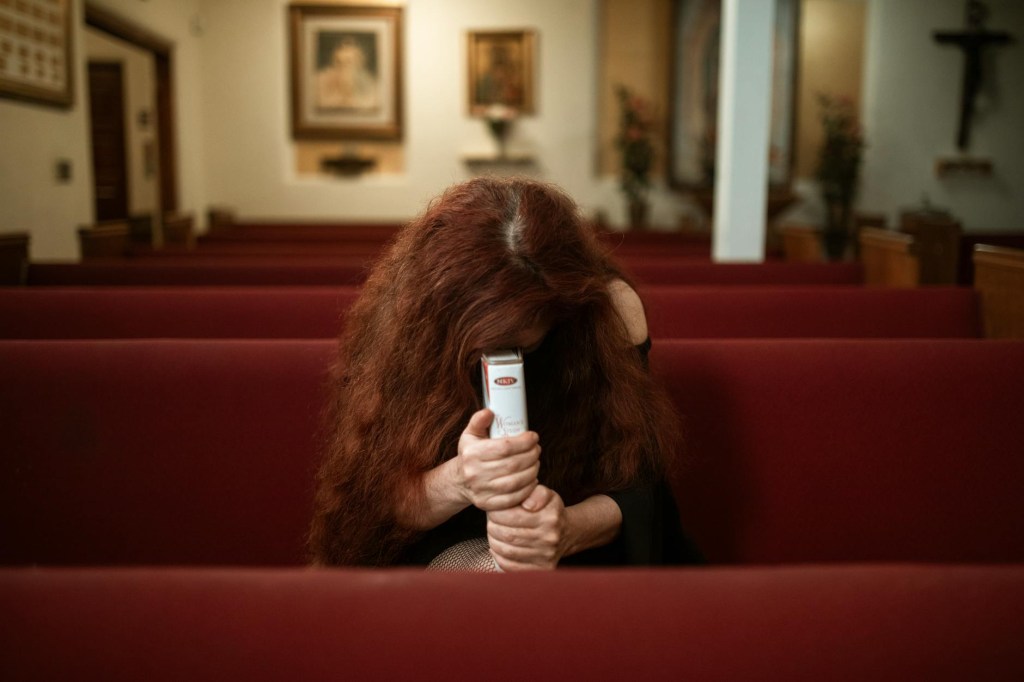
Prayer
Father God,
We are all fringe in one way or another, bearing wounds, angles, and stories that made us feel like outsiders.
Help each of us see why You shaped us the way You did.
Draw us out of isolation and into Your way, which always expresses itself through community.
Where community has built stereotypes that confuse us, let us see You instead.
Where we must unlearn, give us humility.
Where we must relearn, give us courage.
Where You have planted ideas that feel too strange or too big, surround us with people who keep us grounded in reality and ignited with holy imagination.
Whatever will make us more like You, Lord Jesus, teach us to surrender patiently to Your timing, Your way, and Your will.
Lead us from the edges of isolation into the warmth of Your light.
In Your Holy, Majestic, Stunning Name, Messiah King Jesus,
Amen.
TRACK TO ENJOY:

Footnotes
1. Gilles Deleuze and Félix Guattari, A Thousand Plateaus: Capitalism and Schizophrenia (Minneapolis: University of Minnesota Press, 1987).
2. Slavoj Žižek, The Sublime Object of Ideology (London: Verso, 1989).
3. René Girard, The Scapegoat (Baltimore: Johns Hopkins University Press, 1986).
4. Julius Nyerere, Freedom and Socialism: Uhuru na Ujamaa (Dar es Salaam: Oxford University Press, 1968).
5. The Akan proverb tradition recorded in: Kwame Gyekye, An Essay on African Philosophical Thought (Philadelphia: Temple University Press, 1995).
6. Ngũgĩ wa Thiong’o, Decolonising the Mind (Nairobi: East African Publishers, 1986).
7. Tinyiko Sam Maluleke, Essays on African Christianity (Pretoria: University of South Africa Press, 1997).
8. Alasdair MacIntyre, After Virtue (Notre Dame, IN: University of Notre Dame Press, 1981).
9. Jürgen Habermas, The Theory of Communicative Action (Boston: Beacon Press, 1984).
10. Charles Eisenstein, The More Beautiful World Our Hearts Know Is Possible (Berkeley: North Atlantic Books, 2013).
11. Colossians 1:17 (NRSV).
12. Hebrews 1:3 (NRSV).
13. Psalm 36:9 — “In Your light we see light.”
14. 1 Corinthians 13:12 — “For now we see through a glass, darkly…”
15. John 1:4–5 — Christ as the Light that gives life and direction.

 #Hayibo