
“Our life stories are at one and the same time reality, fallacy and fantasy.” – Rasheed Ogunlaru
Foreword
I am a strange cat. No, I don’t actually think of myself as a cat, but it feels necessary to clarify that in an age where thinking people are so confused they cross species lines in search of identity.
Rather, I am particular about patterns. I dislike when things in my home are moved from where they belong. My eye, perhaps to its own irritation, cannot rest until what is misplaced is restored. If object X belongs on spot A but wanders to spot B, my gaze keeps returning until order is re-established. My mind seems to find rest only where symmetry, balance, and coherence prevail. I’ve arranged my home so that squares converse with circles, and colours, though vivid, exist in harmony.
My mornings follow another pattern: coffee with cream, Scripture open, and silence before God. I arrive; He astonishes. Likewise, in 2025 I established a rule: the year would be wholly dedicated to study. The rhythm became almost liturgical: work, home, eat, study, repeat.
That pattern, harmony within order, has not imprisoned me. It has freed me. It has created the peace in which my study deepened and my thought matured. Yet, this blog explores a crucial truth: that clarity, when it is pursued apart from the divine pattern of coherence, risks becoming an idol, an act of intellectual narcissism.

The Hairdresser’s Mind and the Scholar’s Blind Spot
Years ago, I laughed at the idea that hairdressing could have anything to do with philosophy. Yet now, at the tail end of writing a Master’s thesis, I see that scissors and syntax share more kinship than I could ever have imagined. The hairdresser’s world is one of pattern, texture, symmetry, tension, release. Their mind moves through form not by calculation alone but by intuition trained through years of touch and observation. They do not invent beauty; they uncover the coherence already there.
The scholar, by contrast, is often trained to separate, to analyse, dissect, and categorise. Yet there is a kind of knowing that escapes dissection: a tacit knowing, as Michael Polanyi called it, where “we know more than we can tell.”¹ The hairdresser’s skill is precisely this kind of embodied intelligence: an art of integration rather than isolation. Each line of a cut mirrors the way meaning itself is shaped by relation, not reduction.
In this sense, the hairdresser’s attention is a form of contemplative philosophy. Simone Weil described such attention as “the very substance of prayer,” a posture that sees not through mastery but through patience.² Every act of perception becomes a moral act, every effort to notice a form of devotion. To see is to participate in coherence.
So perhaps the truest scholar is the one who learns to see like a craftsman, who finds in the material of thought the same reverence a stylist finds in the texture of hair. Where reason seeks mastery, it loses sight of coherence; where reason receives, it discovers that coherence has been there all along.
Where Academia Lost Its Pattern-Sense
Somewhere between the Enlightenment and the algorithm, academia forgot how to see. Once, the pursuit of knowledge was shaped by wonder and attention; now it is structured by metrics and method. In seeking precision, scholarship traded coherence for control. The modern university became an assembly line of knowledge, efficient, specialised, and profoundly fragmented.
Zygmunt Bauman saw this shift as the triumph of a strange kind of freedom. He wrote that to be “liberated from society” meant being released from the very norms that made life intelligible.³ The scholar, in this sense, became “free” to theorise endlessly, yet lost the shared grammar of meaning that once anchored inquiry. The Enlightenment’s promise of liberation turned out to be a dissolving of coherence itself: emancipation without orientation.
Max Weber traced an earlier form of this rational impulse to the Protestant ascetics who believed that every moment must serve a purpose. For Richard Baxter, “waste of time is the first and in principle the deadliest of sins.”⁴ Out of this moral discipline was born a new spirit, the one that would come to dominate both industry and intellect. The scholar’s clock replaced the monk’s bell; the lecture replaced the liturgy. The spiritual call to work for divine glory became the bureaucratic compulsion to publish for institutional survival.
In this environment, novelty became the new virtue. The search for pattern, once the scholar’s sacred labour, was displaced by the hunger for originality. Knowledge became a commodity; insight became output. The hairdresser, working quietly with pattern and proportion, might now see more of truth than the theoretician lost in their endless abstractions.
The Rise of Algorithmic Rationalism
If Weber’s ascetic scholar measured virtue in efficiency, then our digital age has perfected his ethic. The Protestant conscience has been replaced by the algorithmic one, Google as confessor, data as divine. Nicholas Carr saw this clearly when he wrote that Google’s engineers “try to make words less human and more a piece of the machinery.”⁵ What began as the pursuit of knowledge has become the automation of cognition.
The logic of Frederick Winslow Taylor’s stopwatch has been translated into code. Where Taylor once timed the motions of factory hands, the algorithm now tracks our thoughts and clicks, turning human attention into a field of measurable productivity.⁶ This is not merely a technological shift; it is a metaphysical one. The human mind, once seen as a living image of reason, is recast as a processing unit within an ever-expanding machine of data.
Yuval Noah Harari calls this new metaphysic Dataism, a religion that worships the free flow of information.⁷ In its liturgy, the most sacred commandment is to “connect everything to the system,” for meaning no longer resides in reflection but in circulation.⁸ The inner life becomes obsolete; experience has value only when uploaded and shared. “The individual,” Harari writes, “is becoming a tiny chip inside a giant system that nobody really understands.”⁹
In this techno-theology, even love and consciousness are reduced to algorithms. The sacred, once found in stillness and presence, is now sought in speed and sharing. Yet the hairdresser, whose craft depends upon attentive presence, remains quietly defiant: they refuse to outsource touch to code. Their art insists that meaning cannot be quantified, that there are still forms of knowing that no algorithm can compute.
The Return of Coherence: Pattern, Attention, and Faith
Against the background hum of data and disembodied intellect, a countercurrent persists; a longing to rediscover coherence as something received, not manufactured. This rediscovery begins not in innovation but in humility: the recognition that truth is not constructed but conferred. Søren Kierkegaard called this subjective truth; truth that must be lived inwardly, not abstractly grasped.¹⁰ For him, “the existing spirit” seeks not the fantasy of objectivity but the courage to dwell honestly within the tension of becoming.¹¹
In the same spirit, Simone Weil insisted that attention is the truest act of faith. To attend, to truly see, is to relinquish the will to control. It is to let the pattern reveal itself rather than impose a pattern upon it.¹² This disposition, which the craftsman naturally learns through practice, is precisely what academic reason has tried to systematise away.
Rainer Maria Rilke captures this interior coherence in his counsel to “love the questions themselves… and perhaps you will then gradually, without noticing it, live along some distant day into the answer.”¹³ His words transform inquiry from a race toward resolution into a discipline of receptivity. The hairdresser’s patient attention to the unseen symmetry of a cut mirrors this spiritual poise: both are acts of waiting upon form to disclose itself.
When knowledge ceases to be received, it becomes ideology; when craft forgets its contemplative roots, it becomes mere production. The rediscovery of coherence, then, is not a rejection of intellect but its redemption, reason reconciled to pattern. As Dietrich von Hildebrand wrote, the human person’s “yes” to truth requires “consciousness beyond nature.”¹⁴ To know is to be transformed, not merely informed.
Toward a New Integration: The Craft of Knowing
To recover coherence, we must learn again to think like craftsmen. Michael Polanyi wrote that “we can know more than we can tell,” a reminder that knowledge is not only intellectual but embodied, relational, and tacit.¹⁵ True understanding emerges through participation in patterns greater than ourselves. This is what both the artisan and the saint understand instinctively: that to create or to believe is to consent to a form already inscribed in reality.
The fragmentation of modern thought is, in essence, a failure of apprenticeship. In our haste to specialise, we have forgotten how to learn with the hands, to dwell within processes that disclose truth slowly. The hairdresser, the gardener, the musician, all move within living grammars of proportion, balance, and tension. Their work becomes a dialogue with being itself. John Gray, in his fierce critique of progress, reminds us that “most people today think they belong to a species that can be master of its destiny. This is faith, not science.”¹⁶ We cannot master what we refuse to revere.
Yet reverence need not mean retreat. Rather, it is the beginning of a renewed epistemic humility, one that sees coherence not as an imposed order but as an invitation to harmony. As Rilke wrote, “perhaps everything terrible is in its deepest being something helpless that wants help from us.”¹⁷ To think, then, is an act of care; to perceive rightly is to tend to the world’s fragile intelligibility.
The task before us is not to invent meaning anew but to remember the patterns that have always been there: mathematical, linguistic, moral, and spiritual. Hairdressing, at its most poetic, becomes a metaphor for theology, a craft of coherence, of shaping what already carries hidden order. The hands that trace these lines do not dominate; they discern.
The academic, the craftsman, and the believer meet in this single vocation: to receive the world as intelligible gift, and to respond with form.
Beyond Our Grammar
Human language is a marvellous but limited instrument. It allows us to trace the contours of reality but not to contain it. Scripture repeatedly reminds us that what is most real is not what is most visible. “The things that are seen are transient,” Paul writes, “but the things that are unseen are eternal.”¹⁸ The Christian imagination must therefore work in two grammars at once: the grammar of material order and the grammar of transcendent coherence. To perceive rightly, one must learn to read both.
The biblical witness insists that creation is not merely a collection of things but a theatre of relations, visible signs sustained by invisible order. Hebrews tells us that “the universe was formed by God’s command, so that what is seen was not made out of what was visible.”¹⁹ The same reality frames Paul’s affirmation in Colossians: “All things were created through him and for him… things visible and invisible.”²⁰ The unseen is not a shadow-world beyond matter but the ground of matter itself, the divine intelligibility that sustains it.
This order, however, is not neutral. The unseen realm is charged with moral and spiritual consequence. Ephesians 6:12 depicts existence as participatory in a cosmic drama: “We wrestle not against flesh and blood, but against principalities and powers.”²¹ Yet the same apostle assures us that “the one who is in you is greater than the one who is in the world.”²² The Christian therefore stands within an ordered conflict, not chaos, but contested coherence, in which divine sovereignty is the ultimate horizon.
Such coherence is not confined to theology alone; it frames the very logic of creation. Job declares that “the life of every creature and the breath of all mankind” are held in God’s hand.²³ Jesus, in his gentlest lesson, pointed to the lilies and the birds, natural patterns that, in their uncalculated beauty, reveal providence beyond human striving.²⁴ Nature’s laws, then, are not impersonal mechanics but sacramental structures: they point beyond themselves to the personal mind that orders them.
To inhabit that truth demands faith, a mode of knowing that transcends empirical verification. “We walk by faith, not by sight,” Paul reminds the Corinthians.²⁵ Faith is not the rejection of reason but its elevation into trust: the recognition that reason itself is a creature of revelation. The writer of Hebrews calls faith “the substance of things hoped for, the evidence of things not seen,”²⁶ and Paul clarifies to the Corinthians that spiritual things “are spiritually discerned.”²⁷ Rationality without faith becomes sterile; faith without reason becomes sentimentality. True knowledge, like true worship, requires both sight and surrender.
Finally, Scripture directs the mind beyond the temporal to the eternal. The pattern visible now is only a sketch of the pattern to come. John envisions a world without mourning, pain, or decay, where all incoherence is reconciled in divine presence.²⁸ Peter calls it “a new heaven and a new earth where righteousness dwells.”²⁹ The Christian confession is not escapist; it is teleological. The seen is unfinished because it is preparing for fulfilment.
To study the world, then, is not merely to catalogue its forms but to discern its grammar, the unseen syntax by which being speaks. In the end, theology and science, mathematics and art, all become dialects of the same language. Every true pattern participates in the Word through whom all things hold together.
Conclusion: When Coherence Speaks Back
Every search for truth begins with the assumption that coherence exists. Whether in theology, mathematics, physics, or art, what drives the quest is not chaos, but the hunger for pattern. To encounter coherence is, in a sense, to encounter God’s grammar written into the fabric of reality. When the world makes sense, it is because sense precedes the world.
The tragedy of modern thought is not that it seeks too much, but that it forgets its source. In its attempt to own meaning, reason becomes blind to the fact that intelligibility is not an achievement, it is a gift. The hairdresser’s hand, tracing balance and proportion; the mathematician’s mind, solving for harmony; the theologian’s heart, listening for divine order, all are participating in the same truth: coherence is not constructed, it is conferred.
To confess this is to rediscover humility. The world does not require our genius to hold together. It holds because it has already been spoken into being. Our task is not to author meaning, but to receive it truthfully, to stand before the patterned reality of creation and learn to read it as it reads us.
When reason listens, it finds that coherence speaks back.

Practical Application: Living Within the Pattern
The recognition of divine pattern is not only a matter of thought, it is a way of life. Order, when received rightly, brings peace; when resisted, it breeds anxiety.
To live within God’s grammar means:
To seek alignment, not control. The goal is not to force outcomes, but to move harmoniously with divine rhythm.
To recognise limits as sacred. The boundaries of creation are not barriers but invitations, to trust, to rest, to depend.
To practise attentiveness. As the hairdresser notices the balance of colour and form, the believer learns to perceive the balance of grace and truth in daily life.
To keep Sabbath in heart and habit. Rest is not withdrawal from meaning but its affirmation. It says: “The world holds because God holds it.”
Such living restores coherence to a fragmented age. It reminds us that holiness is not a flight from the ordinary but its transfiguration.
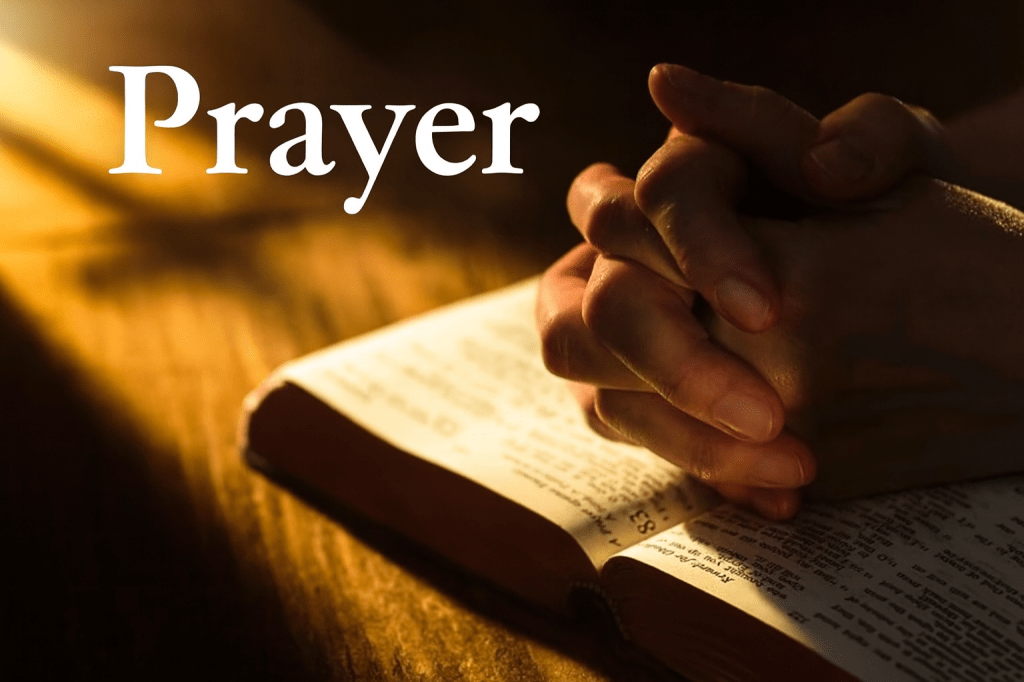
Prayer: For Eyes to See the Pattern
Lord God,
God of all order and beauty, You speak in symmetry and silence, in the logic of light and the tenderness of form.
Teach us to see the world not as chaos to control, but as coherence to receive.
Deliver us from the arrogance of mastery, from the blindness that calls disorder freedom. Let our reason bow before Your wisdom, and our words echo the grammar of Your grace.
In every craft, every calling, every act of making, may we mirror the faithfulness with which You hold all things.
Give us eyes to see the pattern, minds to trace its meaning, and hearts to rest in the One through whom all things hold together.
In Your Holy Lord Jesus, our coherence and our peace.
Amen.
TRACK TO ENJOY:

Footnotes:
1. Michael Polanyi, The Tacit Dimension (London: Routledge & Kegan Paul, 1966), 4.
2. Simone Weil, Waiting for God (London: Routledge Classics, 2009), 106–107.
3. Zygmunt Bauman, Liquid Modernity (Cambridge: Polity Press, 2000), 16–17, 20.
4. Max Weber, The Protestant Ethic and the Spirit of Capitalism (London: Routledge, 2001), 104–105.
5. Nicholas Carr, The Shallows: What the Internet Is Doing to Our Brains (New York: W. W. Norton, 2010), chap. 8.
6. Ibid.
7. Yuval Noah Harari, Homo Deus: A Brief History of Tomorrow (London: Harvill Secker, 2016), chap. 11.
8. Ibid.
9. Ibid.
10. Søren Kierkegaard, Concluding Unscientific Postscript (Princeton: Princeton University Press, 1992), 257–259.
11. Ibid.
12. Simone Weil, Waiting for God, 106–107.
13. Rainer Maria Rilke, Letters to a Young Poet (London: Penguin Classics, 2011), letter 4.
14. Dietrich von Hildebrand, Transformation in Christ (San Francisco: Ignatius Press, 2001), 70–75.
15. Michael Polanyi, The Tacit Dimension (Chicago: University of Chicago Press, 2009), 4–6.
16. John Gray, Straw Dogs: Thoughts on Humans and Other Animals (London: Granta Books, 2002), 1–3.
17. Rainer Maria Rilke, Letters to a Young Poet (London: Penguin Classics, 2011), letter 8.
18. 2 Corinthians 4:18 (ESV).
19. Hebrews 11:3 (NIV).
20. Colossians 1:16 (NIV).
21. Ephesians 6:12 (ESV).
22. 1 John 4:4 (NKJV).
23. Job 12:7–10 (NIV).
24. Matthew 6:28–29 (NIV).
25. 2 Corinthians 5:7 (NKJV).
26. Hebrews 11:1 (NKJV).
27. 1 Corinthians 2:14 (ESV).
28. Revelation 21:4 (NIV).
29. 2 Peter 3:13 (ESV).

 #Hayibo