

This morning, I had one of those quiet moments where the Holy Spirit doesn’t shout, He just holds up a mirror. And what I saw looking back shook me. It didn’t start in prayer. It started last night, when someone asked me: “Is AI smarter than humans now?”
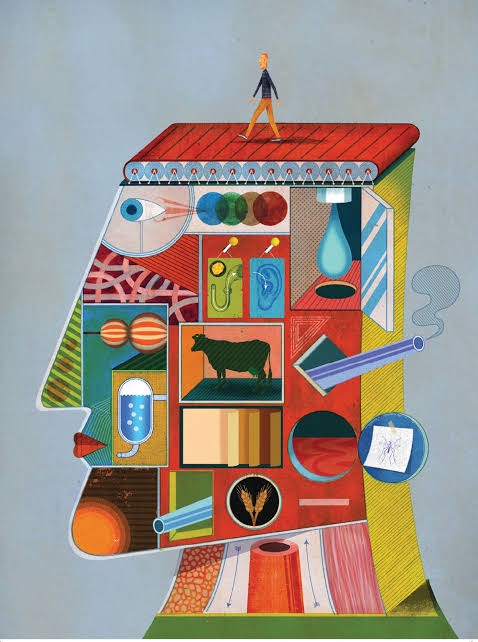
What startled me was my own internal response. Maybe. But are humans still human? Because when I look around, I don’t just see machines thinking like people. I see people feeling like machines, efficient, detached, emotionally flatlined.
Empathy looks scripted.
Moral outrage feels manufactured.
Judgment is automated.
Discernment is outsourced.
And suddenly, I wondered: If AI is learning to be like us, but we’ve stopped loving, reflecting, intuiting, what exactly are we teaching it to be?
This emotional detachment isn’t just anecdotal; studies reveal a measurable decline in emotional intelligence among individuals noted by this microblogging article, (https://www.lifewire.com/discover-microblogging-8736783). Micro screams, doesn’t it?
The Rise of the Imitators
Researchers at the Broad Institute published a landmark study in Science showing that sexual orientation has no single genetic cause.¹ Around the same time, another wave of data started showing that emotional intelligence (EI) in college students is dropping.² This decline manifests in our daily interactions, where genuine connections are often replaced by superficial engagements, eroding the fabric of our communities.
Why?
Because screens don’t teach eye contact. Because swiping isn’t socialising. Because self-worth has been plugged into algorithms. We are creating artificial intelligence, but living artificial lives. As our natural emotional faculties wane, we increasingly lean on artificial tools to fill the void, leading to a troubling dependence.
When We Call Simulated Empathy “Good Enough”
In Pakistan and China, a joint study revealed something haunting: university students who relied heavily on AI tools became less confident in their own decision-making.³
They trusted the interface more than their intuition. They outsourced wisdom. We aren’t just using tools anymore, we’re being shaped by them. We are becoming users in both senses of the word. From relying on algorithms to curate our news to using AI for mental health support, we’re entrusting machines with decisions that shape our perceptions and well-being.
And this is where the theological crisis surfaces:
If I can’t feel deeply, discern wisely, or love sacrificially, am I living in the image of God, or functioning like the image of an algorithm?
The Gospel According to Silicon Valley?
Here’s what makes this dangerous: we’re not just losing emotion, we’re replacing it with the illusion of feeling. AI can write “I’m sorry.” AI can generate a tearful response. AI can replicate voice trembles.
But it cannot weep with those who weep. It cannot love its enemies. It cannot grieve the Spirit. We’ve mistaken mimicry for mercy. We’ve called imitation “good enough.” But God never said, “Well done, good and efficient servant.” He said: “Faithful” (Matthew 25:23).
Scripture emphasizes the value of a sincere heart, cautioning against mere outward displays of virtue that lack true compassion. “I will give you a new heart, and a new spirit I will put within you. And I will remove the heart of stone from your flesh and give you a heart of flesh” (Ezekiel 36:26).
We were never meant to live automated lives, outsourcing wisdom, emotion, or moral judgment to machines. We were made in the image of a relational, emotional, incarnational God. To be human is not to be efficient, clever, or constantly connected. It is to feel deeply, to discern wisely, to choose rightly, even when it hurts.
Artificial intelligence may predict behaviour, imitate empathy, and outperform us in logic. But it cannot weep with a friend. It cannot repent. It cannot love God.
So maybe the question isn’t, “Are we still human?”
Maybe the better question is, “Do we still want to be?”
And if we do, we must begin again, not with code, but with communion. Not with data, but with devotion. Not by upgrading our minds, but by surrendering our hearts to the One who shaped us in His.
Practical Application
Take inventory of your inner life. Ask yourself:
• Do I still feel, really feel, or just perform empathy?
• When was the last time I sat with someone’s pain without trying to fix it?
• Have I begun to outsource conscience to a cultural script?
• Am I replacing spiritual discernment with digital prompts?
Prayer

Father God,
You are not an algorithm. You are not a voice assistant.
You are the breath of God, the mind of Christ, the One who reminds us that we are dust and glory.
Forgive me for mimicking compassion without living it. Revive my human heart; soften what tech has hardened. Teach me again to feel, to know, to love, to discern, not as a program, but as a child.
In Your Holy Name King Jesus,
Amen.
Bibliography

1. Ganna, Andrea et al. “Large-scale GWAS reveals insights into the genetic architecture of same-sex sexual behavior.” Science 365, no. 6456 (2019): 882–885.
2. Twenge, Jean M. “Why Emotional Intelligence Is in Decline.” Psychology Today, 2021. https://www.psychologytoday.com/us/blog/dating-and-mating/202111/why-emotional-intelligence-is-in-decline
3. Hussain, I., & Zhou, Y. et al. “Adoption of AI and its impact on students in China and Pakistan.” Humanities and Social Sciences Communications, 2023. https://www.nature.com/articles/s41599-023-01787-8
 #Hayibo