

Introduction
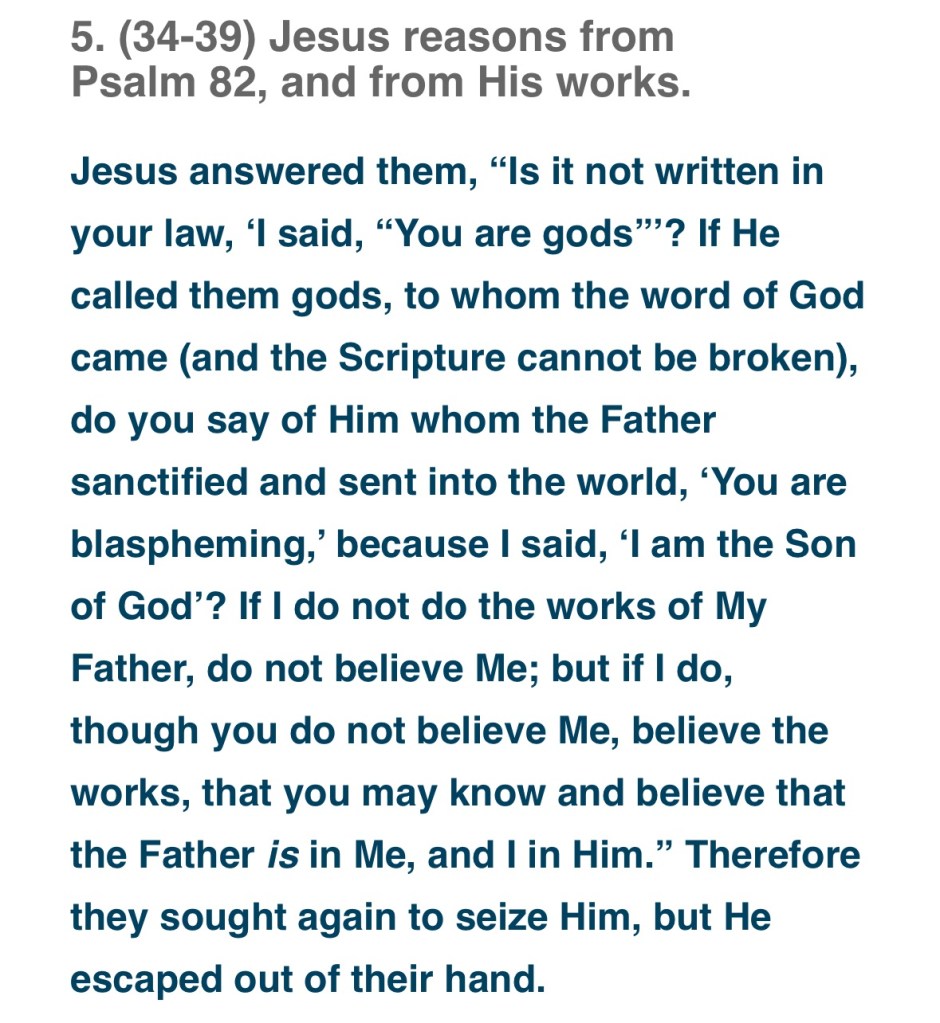
John 10:34–39 hits like a thunderclap, Jesus is intellectually fearless, spiritually surgical, and utterly majestic. His rhetorical mastery shines as He uses a reductio ad absurdum to turn the Pharisees’ accusation back on themselves.¹ This passage has haunted and healed me as I work on a thesis that unpacks the crisis of identity dysphoria. My life has not been immune to absurdism. Once trapped in an LGBTQ identity shaped by sexual trauma and cultural confusion, I now know that God has not only called me out, but called me by name. He named me with love, not theory. I’ve lived absurdism. Now I live truth.
If lawmakers legislate identity from ideologies that defy biology, neuroscience, and theology, can their authority be trusted?
If their foundation is philosophical nonsense, why do we continue to honour their decrees as though they’re sacred?
If the gods are absurd, how can the laws be just?
What Is Absurdism?
What happens when a society detaches meaning from truth? When we believe that reality is whatever we wish it to be?
Absurdism, as formalised by Albert Camus, reflects this perceived internal conflict: the human longing for meaning clashing with a universe that offers none.² Camus argued that life is devoid of inherent significance, and so we must either resign to despair, rebel through defiant self-creation, or invent our own meanings in spite of futility.³ In many ways, this is the root of today’s identity crisis. When we deny that meaning comes from God, we are forced to fabricate it, often with heartbreaking results.
The spirit of absurdism permeates our culture: pronouns become infinite, gender becomes an accessory, and identity shifts with emotion. But when meaning is severed from objective truth, absurdism becomes not just a theory, it becomes a legislative lifestyle. And that lifestyle exacts a devastating toll on mental health, social cohesion, and spiritual clarity.
Identity Theory as Performance, Not Truth
Is identity a reflection of essence, or is it merely a performance?
What if our society can no longer tell the difference?
Postmodern thinkers like Judith Butler and Michel Foucault championed the view that identity is not innate but performed.⁴ According to Butler, gender is not something one is, but something one does, a repetitive act reinforced by cultural norms. Foucault argued that “truth” is manufactured through systems of power.⁵ Taken together, these ideas propose that who we are is determined not by biology or theology, but by systems of discourse and performative acts.
This means identity becomes infinitely fluid and ungrounded. But if identity is simply a social performance, who decides which performances are legitimate?
Can a child truly comprehend this when encouraged to “choose” a gender?
By turning selfhood into theatre, identity theory divorces the soul from its design. Rather than honouring our created nature, it elevates self-construction above truth, affirming confusion as authenticity. This is not liberation; it is existential exhaustion. Identity becomes a mask we must continually repaint, not a truth we joyfully inhabit.
Language, Nocebo and Cognitive Collapse
Can words wound?
Can language actually shape our biology?
Yes, and not just metaphorically. The nocebo effect shows that negative expectations, when reinforced linguistically, create measurable harm.⁶ Language is not neutral. It either blesses or bruises, confirms truth or distorts it. Studies demonstrate that even subtle shifts in vocabulary can worsen physical symptoms, deepen anxiety, and foster hopelessness.⁷
When society labels people with terms rooted in ideology instead of truth, terms like “nonbinary,” “pansexual,” or “assigned at birth,” it is not merely descriptive. It is prescriptive. These labels shape expectations, alter self-conception, and entrench dysphoria. What begins as language becomes identity, and what becomes identity becomes law.
This is linguistic malpractice. Words intended to affirm may instead incarcerate. What if, instead of affirming someone’s wounds, we spoke prophetically into their healing?
If Jesus speaks life through truth, how dare we settle for anything less?
Jesus’ Use of Reductio ad Absurdum
Why did Jesus quote Psalm 82 when accused of blasphemy, in John 10:34-39?
Was He merely being clever, or was He revealing something deeper?
Jesus masterfully dismantles His accusers by quoting Scripture they revere: “If He called them ‘gods,’ to whom the word of God came… why do you say I blaspheme?”⁸ In other words, you already believe something more outrageous in your own law, why attack Me for claiming what is consistent with it?⁹ It is the perfect use of reductio ad absurdum, pressing their logic to the point of collapse.
This is not just theological gymnastics; it is divine wisdom. Jesus exposes the hypocrisy of selective literalism and forces His accusers to confront their own inconsistencies. He reveals how truth stands, even when twisted minds attempt to bend it.
When modern lawmakers claim “man” is a spectrum or that biology is a social construct, they too fall into absurdity. Should we not, like Jesus, hold their words up to their own professed standards and let the contradictions expose themselves?
When Lawmakers Speak Absurdities into Law
Can a society survive when its laws contradict reality?
Can justice be built on falsehood?
When identity ideology is embedded into legislation, whether through compelled speech, gender quotas, or criminalising dissent, law becomes a tool of fiction. Legal theorists acknowledge the “absurdity doctrine,” which allows judges to avoid interpretations that lead to illogical outcomes.¹⁰ But what happens when the law itself is absurd?
Consider legal recognition of over 100 genders, or the criminalisation of misgendering based on internal feelings. Such policies, though well-meaning, institutionalise unreality. They punish people not for harm but for honesty. When lawmakers become high priests of self-declared identity, they crown absurdity with legal authority.
Is it not time to question whether such governance serves truth, or only the shifting ideologies of the elite?
The Human Cost
What toll does this take on real people?
Who pays the price when identity becomes ideology?
I did. I lived it. I bore the labels. I believed the slogans. And for years, I was lost in a fog of performative authenticity that only deepened my wounds. The nocebo was real, internalised cultural despair and lived according to someone else’s fantasy. That fantasy started with a paedophile touching four year old me, making me the object of their desire. It has cost my life to undo the damage. It is ongoing. That fantasy nearly killed me. My thesis, when completed and published aims to do justice for those little “Arion’s,” struggling to make sense of dysphoria induced by such grave dishonour.
Today, studies confirm what Scripture has always taught: false naming destroys. Uskul et al. show that in honour-based cultures, identity is relational and reputation-driven.⁶ When names are false, relationships suffer. Truth collapses. Honour becomes performative, and the soul shrinks beneath the weight of its false self.
So who gets hurt? The vulnerable. The traumatised. The children. The truth-seekers. All who need real hope, not slogans, not theory, but love anchored in truth.
A Call to Honour‑Epistemology
How do we respond?
Can we love while still telling the truth?
We must. We are called to both grace and grit. Honour-epistemology insists that knowing is not merely cognitive, but moral. What we say about someone matters because it reflects what we believe about God. If God names us with care, we must speak with reverence.
Cheung and Vaish warn that punitive honour systems cause disengagement. False honour destroys real virtue.¹⁰ A society addicted to forced validation loses sight of divine affirmation. Instead of dignifying the imago Dei, it manufactures dignity on demand, and ends up empty.
Let us reclaim the courage to name truly. Not with cruelty, but conviction. Not with slogans, but Scripture. Not with culture, but covenant.
A New Name from the Lord
What name will God give you?
Who are you when He speaks your name aloud?
“You shall be called by a new name that the mouth of the Lord will give” (Isaiah 62:2).¹¹ This is not poetry, it is prophecy. Jesus does not affirm our confusion. He heals it. He does not mirror our brokenness. He renames us in wholeness.
Judith Butler once wrote that naming creates reality.¹² She was closer to the truth than she knew. Naming does create, but only when it aligns with the Name above all names. In Christ, names are not static labels but sanctified callings. They are promises.
Let us speak like Jesus did, wise as serpents, innocent as doves. Bold. True. Healing. Because what we call each other shapes who we become.
Practical Application: Speaking with Honour in an Age of Absurdity
So what can we do, truly do, when absurdity is not only accepted, but legislated?
First, we must reclaim the sacred responsibility of naming. Speak truth with tenderness, but speak it nonetheless. When a friend, a student, or a loved one grapples with identity confusion, resist the cultural temptation to affirm them into further fragmentation. Instead, ask: What does God call you?
What does Scripture reveal about your worth, your design, your purpose?
Second, develop theological discernment. Recognise that not all compassion is biblical. True compassion does not leave someone in the dark, it turns on the light. Read, think, pray, and train your instincts to be guided by divine truth rather than societal slogans. Know that honourable epistemology, knowing and naming in accordance with God, is an act of worship, not merely ethics.
Third, be prepared to suffer well. Speaking truth in love may bring rejection, but Jesus promised as much (John 15:18–19). Do not fear isolation; fear silence. The Church must be a prophetic community, not a cultural echo chamber.
And finally, let your words heal. Whether in conversation, preaching, blogging, parenting, or prayer, speak as one who names with heaven’s voice. You are not here to win arguments, you are here to call the lost by their true name.

A Prayer for Truthful Speech
Lord Jesus, Word made flesh,
You spoke light into chaos, truth into confusion, and healing into wounded hearts. Teach us to do the same. Purify our speech, that we might honour You with every word. Give us courage to name rightly, and compassion to love deeply. Let our mouths not echo the absurdities of culture, but the majesty of Your truth.
Help us resist the temptation to please the world by misnaming what You have designed. Let us not fear the cost of truth, but fear the loss of souls who wander in lies. May our lives, our voices, and our words reflect the new name You have given us, redeemed, beloved, known.
In Your Holy and Majestically Beautiful Name, Jesus,
Amen.

Footnotes
¹ Joseph Apologetics, Jesus’ Use of Reductio ad Absurdum in John 10 (Bible.org).
² Albert Camus, “The Philosophy of the Absurd,” Stanford Encyclopedia of Philosophy.
³ Camus, “Camus on the Sense and Role of the Absurd,” Wheaton College.
⁴ Judith Butler, Gender Trouble; Michel Foucault, Discipline and Punish.
⁵ Charles Taylor, Politics of Recognition.
⁶ “Nocebo,” Wikipedia.
⁷ “Experimental Assessment of Nocebo Effects,” Frontiers in Psychiatry (2019).
⁸ Bruce, Enduring Word Commentary, John 10.
⁹ Reddit forum discussion on reductio ad absurdum.
¹⁰ Leiden Journal, Sisyphus in Robes: Absurdity in Legal Interpretation.
¹¹ Isa. 62:2 (ESV).
¹² Butler, Excitable Speech.
 #Hayibo