

I. At a Traffic Light: My Awakening
I was twenty-five when it hit me. At a house-warming party, I realised the only thing I had spoken about all night was hairdressing. Eight years of work had somehow shrunk my identity into a job title. As I sat at a red light later that evening, tears streamed down my face. I felt hollow. Then a strange question surfaced, one I believe God planted: “Do I like red, or do I like red because the horoscope says Aries does?” I didn’t know the answer.
That moment was the beginning of a 26-year journey to understand who I truly am. Along the way, I faced addiction, chased affirmation, and eventually practised celibacy to follow Jesus. But it wasn’t a clear path. I tried therapy, Reiki, crystals, manifesting, and even considered that I might be transgender. Thankfully, I didn’t make that mistake. The world offered many voices claiming to heal, but most were illusions. I met many self-appointed shepherds, but most were thieves.
Then I met the Shepherd who entered by the door.

II. The True and the False Shepherd
In John 10, Jesus draws a contrast: “He who does not enter the sheepfold by the door… is a thief and a robber. But he who enters by the door is the shepherd of the sheep.” This passage follows His confrontation with the Pharisees after healing the blind man (John 9). These religious leaders had abused their power, and now Jesus unveils what true leadership looks like.
According to Enduring Word, a legitimate shepherd enters through love, calling, and sacrificial service, not through ambition, manipulation, or social status. False shepherds may speak in religious tones but their motives expose them. Jesus is clear: not all who gather sheep have come through the proper gate.
III. Progressive Christianity and Identity Ideology
Much like the Pharisees, many modern leaders enter the sheepfold through illegitimate means. Progressive Christianity, for instance, dismisses foundational doctrines as irrelevant. Felton and Procter-Murphy assert that traditional understandings of Christology, atonement, and the incarnation are “in flux,” even irrelevant to contemporary spirituality.¹ A recent article on progressivechristianity.org was titled, “Inconsistent Scripture: Why the Bible’s Errors Are Actually Good News.” The day before? “How to Combat Anti-LGBTQ Forces.”
This self-indulgent movement redefines sin and redemption through the lens of social justice and individual affirmation. But this is not the Gospel, it is a new gate, built by human hands, and climbed through by the spiritually ambitious.
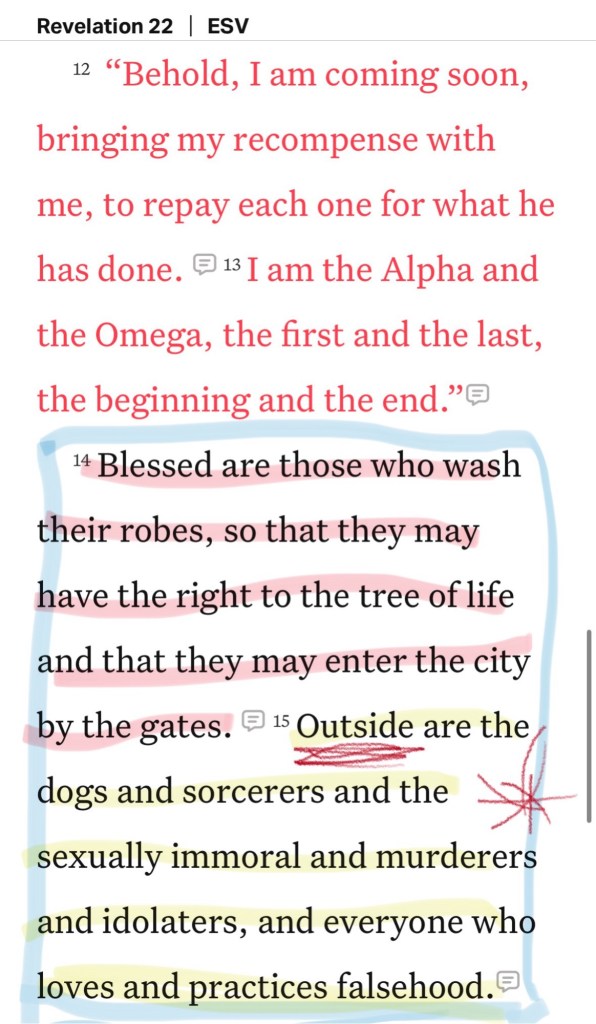
However, (un)progressive Christianity fails in its conceptual reasoning to justify self-interpretating the Scriptures when measured against the words of Jesus in Revelation 22.
IV. Cultural Hegemony and the War Over Meaning
Bart Cammaerts, in his critique of right-wing hegemonies, inadvertently illuminates the tactics used by secular ideologies. Drawing from Antonio Gramsci, he explains that political revolution in the West would not occur through violence, but through a “war of position,” a slow, cultural infiltration that redefines the abnormal as normal.²
He writes, “In recent decades… identity politics has appropriated the strategy and idea of the war of position to achieve a new authoritarian turn in hegemonic practices.”³ What was once rebellion has become dogma. And as Cammaerts admits elsewhere, the post-truth climate elevates emotion over fact, reducing public discourse to emotionally charged binaries.⁴
Cammaerts aims to critique conservative tactics, but ends up describing the authoritarianism embedded within progressive identity politics. In biblical terms, we might say: the thieves have climbed over the wall and are now guarding the gate. Furthermore, Cammaerts, anthropocentric worldview is narrow. David W. Kidner reveals this limitation found in anthropocentric lenses. He states, “The concept of anthropocentrism, then, serves the ideological purpose of deflecting awareness away from the invasive character of industrialism, hindering understanding of the predicament of both human and nonhuman nature.” – https://www.researchgate.net/publication/272571911_Why_’anthropocentrism’_is_not_anthropocentric
Jesus in Revelation 22:13, pointedly, draws us from anthropocentric ideologies to theocentric truth founded in Himself. Messiah King Jesus states, “I am the Alpha and the Omega, the first and the last, the beginning and the end” (Rev. 22:13). The nail-in-the-coffin that brings our self-importance to its knees is verse 12, “Behold, I am coming soon, bringing MY recompense with ME, to repay each one for what he has done.” Jesus is not only the theocentric lens of truth, but the arbitrator of our alignment to Him. Therefore our perspective, if not Christocentric is speculative academic justification to appease our emotivist narcissism. At best.
V. Feelings Over Facts: The Collapse of Transcendence
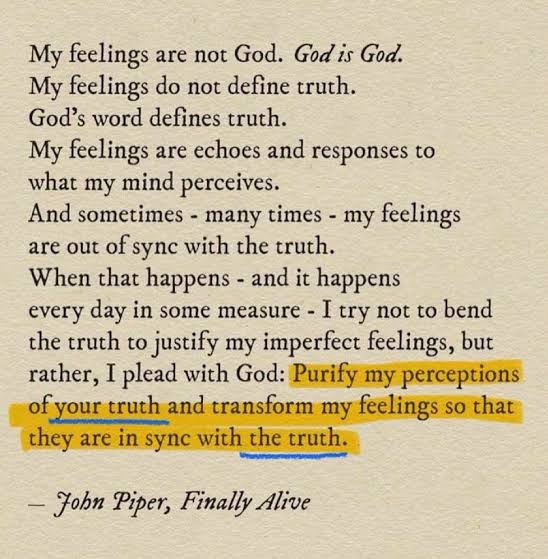
According to Pew Research, 71% of Americans under 50 believe that belief in God is not necessary to be moral.⁵ This secular confidence in self-authored ethics aligns with identity theory, which sees internal feelings as the ultimate arbiter of truth.
But the Divine Command Theory (DCT) offers a counterpoint: morality stems from God’s commands. Without a transcendent source, moral boundaries collapse into relativism.⁶ As John 10 shows, only one door leads to life; others lead to confusion and loss. Jonathan Haidt’s Social Intuitionist Theory reveals why anthropocentric worldview’s breed volatility, positing that in lived-experience impulsive emotional judgments drive moral behaviour. – https://www.simplypsychology.org/kohlberg.html
VI. The Robbery of the Self
Clinical psychology echoes this concern. D.J. Moran warns that irrational beliefs, such as those promoted by unstable identity ideologies, can fragment the self and cause real suffering.⁷ Carrie Gress goes further, arguing that separating body from soul under the guise of finding the “authentic self” laid the foundation for transgender theory.⁸ This erasure of design in favour of desire leads not to freedom, but to disorientation.
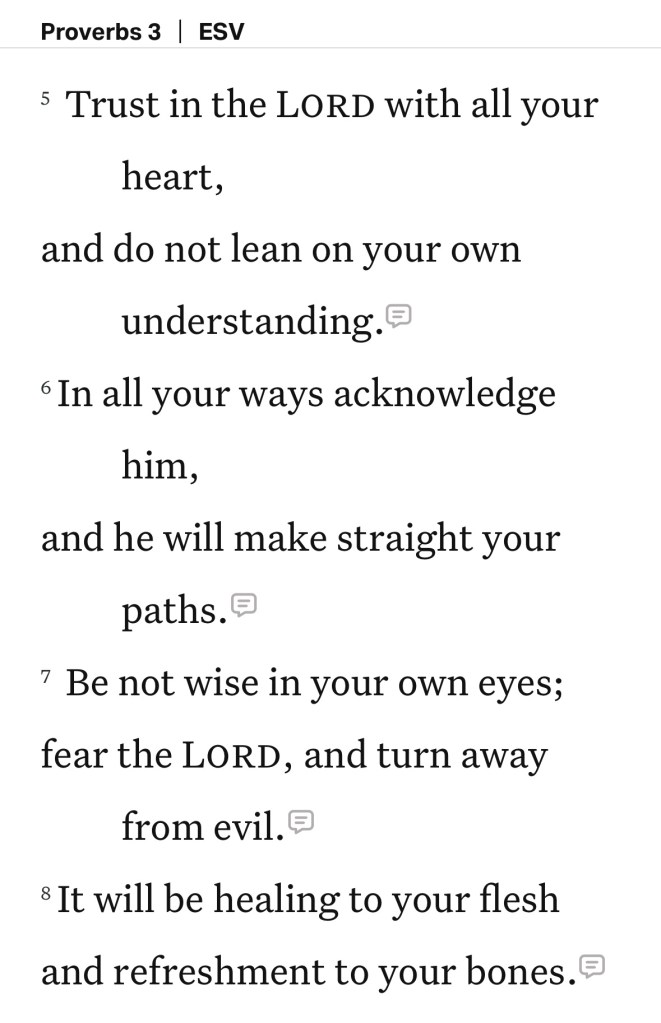
My own story bears witness to this. I nearly fell into the same trap, following emotion into chaos. But I was spared, not by clarity of mind, but by the voice of the true Shepherd. Proverbs 3: 5-6 has been a rock in which I cling.
VII. The Shepherd Who Lays Down His Life
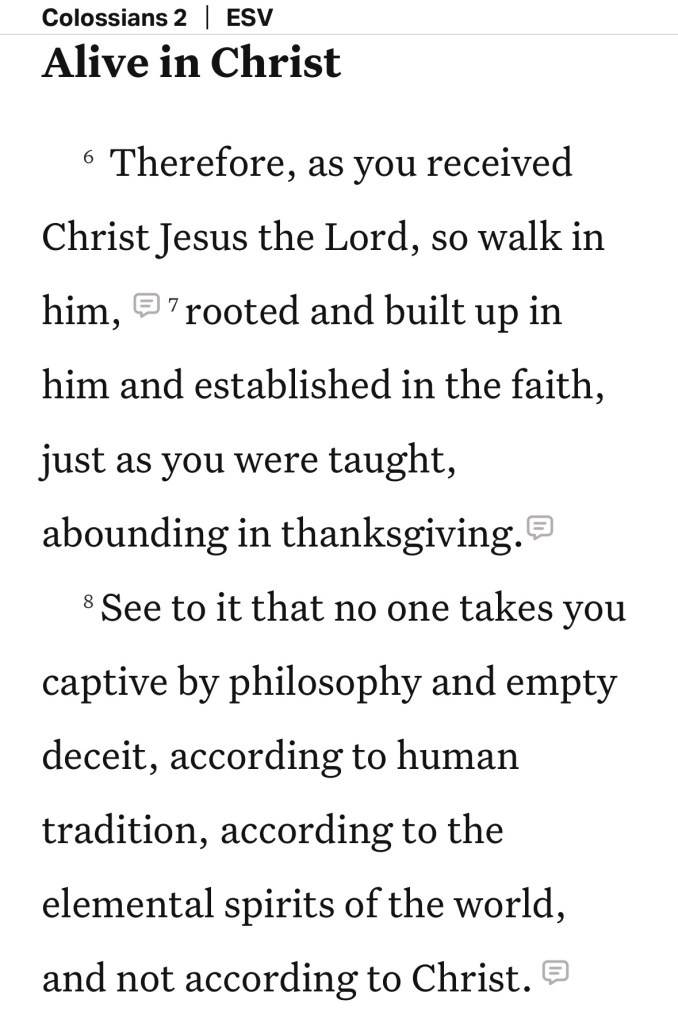
Jesus doesn’t confuse the sheep. He doesn’t seduce with flattery or ideology. He lays down His life. He enters the gate the right way. In a world brimming with impostors, from religious legalists to progressive deconstructionists, Jesus remains the only one who loves the sheep enough to die for them. We are, lovingly, guided in Colossians 2: 6-8, to be aware of not being seduced by anthropocentric interpretations and philosophies.
VIII. Seeing Again: A Call to the Blind
John 9 ends with Jesus saying, “If you were blind, you would have no sin; but now you say, ‘We see.’ Therefore your sin remains.” The greatest blindness is thinking we can see without Him.
Let us be among those who admit we are blind, so that we might truly see.

Practical Application
In a world full of counterfeit shepherds, ideologies that seduce with slogans, leaders who climb over walls instead of entering through the gate, and identities shaped more by social pressure than sacred desig, we are called to sharpen our discernment.
Ask yourself: Whose voice shapes my decisions? Who defines my worth?
Spend time this week in stillness, listening for the voice of the Shepherd who knows your name. Compare His words, recorded in Scripture, with the messages you absorb daily through media, influencers, and even well-meaning friends. Do they align with His sacrificial love, His calling to repentance, and His desire to lead you into abundant life?
Let John 10 remind you: Freedom is not found in throwing off all restraint, but in following the Shepherd who lays down His life for you.


Prayer
Jesus, You are the Good Shepherd.
In a world where so many climb over the fence to steal, confuse, and distort, I want to follow the One who enters by the door, who calls me by name and leads me to truth.
Open my ears to Your voice. Expose the lies I’ve believed, and guard me from the thieves who masquerade as liberators.
Help me to walk in Your path, even when it’s narrow.
Let Your rod and staff comfort me, and let Your Word be the voice I trust above all.
In Your Beautiful and Holy Name Messiah King Jesus,
Amen.

Footnotes
1. David Felton and Jeff Procter-Murphy, Living the Questions: The Wisdom of Progressive Christianity (New York: HarperOne, 2012), quoted in Alisa Childers, “Understanding Progressive Christianity,” Forging Bonds, accessed July 9, 2025, https://forgingbonds.org/blog/detail/understanding-progressive-christianityan-impostor-capturing-our-kids.
2. Bart Cammaerts, “The Abnormalisation of Social Justice: The Anti-Woke Culture War Discourse in the UK,” Discourse & Society 33, no. 6 (2022): 731, https://doi.org/10.1177/09579265221095407.
3. Ibid.
4. Ibid., 730
5. Pew Research Center, “Many People in U.S., Other Advanced Economies Say It’s Not Necessary to Believe in God to Be Moral,” April 20, 2023, https://www.pewresearch.org/short-reads/2023/04/20/many-people-in-u-s-other-advanced-economies-say-its-not-necessary-to-believe-in-god-to-be-moral/.
6. Rebus Press, “Can We Have Ethics Without Religion? On Divine Command Theory and Natural Law Theory,” Introduction to Philosophy: Ethics, accessed July 9, 2025, https://press.rebus.community/intro-to-phil-ethics/chapter/can-we-have-ethics-without-religion-on-divine-command-theory-and-natural-law-theory/.
7. D.J. Moran, “10 Psychological Lessons From the Ten Commandments,” Psychology Today, July 2025, https://www.psychologytoday.com/us/blog/commit/202506/the-ten-commandments-a-behavioral-science-view.
8. Carrie Gress, The End of Woman: How Smashing the Patriarchy Has Destroyed Us (Washington, D.C.: Regnery Publishing, 2023), 251.
 #Hayibo