

Spirituality can be misused as a defence mechanism, hindering the healing process. To fully understand this, we need to know what a psychological defence mechanism is. Essentially, it’s when an uncomfortable thought or feeling arises from the unconscious and is expressed indirectly in a disguised form. People may deny or repress their feelings, project them onto an authority figure, or act passive-aggressively. There are several defence mechanisms, including intellectualization, dissociation, displacement, humour, sublimation, and suppression. When someone “spiritualizes,” they’re misusing spirituality to avoid confronting their personal issues that they find threatening.
‘A Spiritual Illness view of mental disorders holds that a mental disorder is essentially a ‘spiritual illness’ – in that it is caused, or at least allowed, by God as a result of one’s sin, shortcomings, or evil supernatural forces – and ought to be treated through spiritual means (e.g. prayer, repentance, scripture reading – and in rare cases, exorcisms, etc.).
This view ‘over-spiritualizes’ or ‘reduces’ mental disorders to something primarily or solely spiritual, often denying or diminishing the role of biological, psychological, and environmental factors. This view can – and often does – lead to blame and stigmatization of the individual experiencing a mental disorder and a diminished desire or ability to seek professional treatment.’- https://christianscholars.com/christian-over-spiritualization-of-mental-disorders/
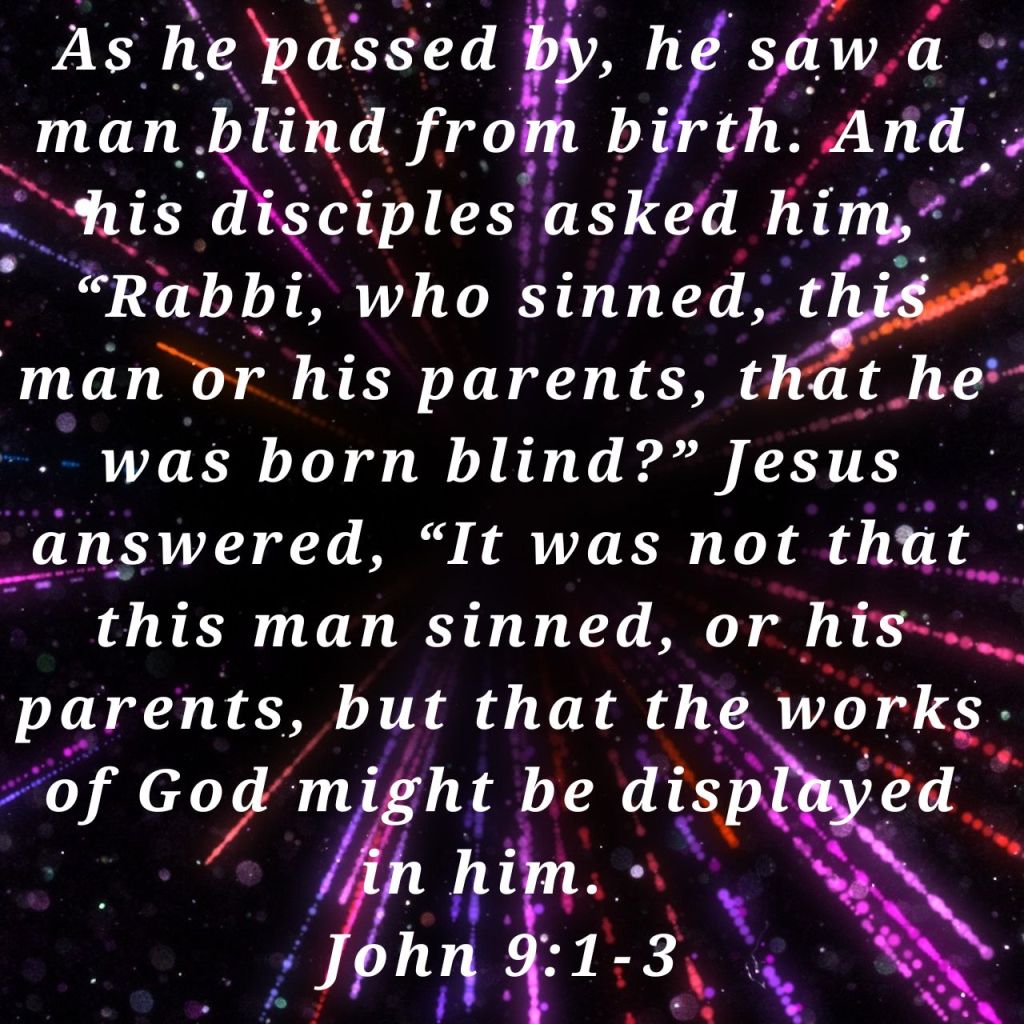
A beautiful display of ‘spiritualising’ is found in John 9 vs 1-3 when Jesus’ disciples spiritualise a blind man’s condition to sin.
The reasons for specific events can sometimes be attributed to the world’s fallen state, while other times, they result from our choices. For example, the Israelites in Judges repeatedly turned to pagan practices, leading to oppression and captivity, while in the case of Job, it was a spiritual matter. The story of Samson in Judges 13-16 is full of intrigue that helps us understand how spirituality can be used to avoid accountability. Towards the end of Samson’s story, Judges 16 vs 23, it is stated that “Our god has given Samson into our hands,” but is it truly a spiritual victory or just a means of deflecting responsibility?
LET’S LOOK DEEPER…

As we dig through this story, we can discern the presence of a contrasting force that stands apart from the celebrated spiritual triumph. The Philistine tribe’s reputation is infamous for belligerent, aggressive, and indulgent conduct. The term “philistine” remains a common insult used to denigrate those who exhibit uncultured or vulgar behaviour. Earlier in Judges 16, verses 4-5, we find that an entirely different scheme reveals human endeavour and nothing spiritual to warrant the false claim of a “god” defeating Samson.

In fact, Judges 16 vs 20 informs us that because Samson had broken his vow with THEE LIVING GOD, God removed Himself from Samson, ‘the Lord left him,’ thereby allowing Samson’s supernatural strength to fail, making him easy pickings for the evil Philistines.

This incident exposes dreadful traits of human nature, including corruption, bribery, power-seeking, and allowing behaviour that God deems detestable. Delilah was a prostitute, after all, and we are aware of God’s attitude toward the holiness of sex only in monogamous heterosexual marriage. Not only do we witness the consequences of Samson failing God, but we also see how it is simple to spiritualize events to serve a dishonest and propagandistic purpose that upholds false “gods” when we Christians don’t stand for righteousness.
MORE IMPORTANTLY, WE LEARN TO SEPARATE FACT FROM FICTION- SPIRITUAL FROM SINISTER HUMANISM.
At the very beginning of Samson’s story, we see clues as to what truly transpired.

- Israel forsook God
- God made a plan- Samson
- Samson betrayed His calling
- The evil Philistines got their way through bribery and capitalizing off seduction.
- The Philistines accredited a fake God.
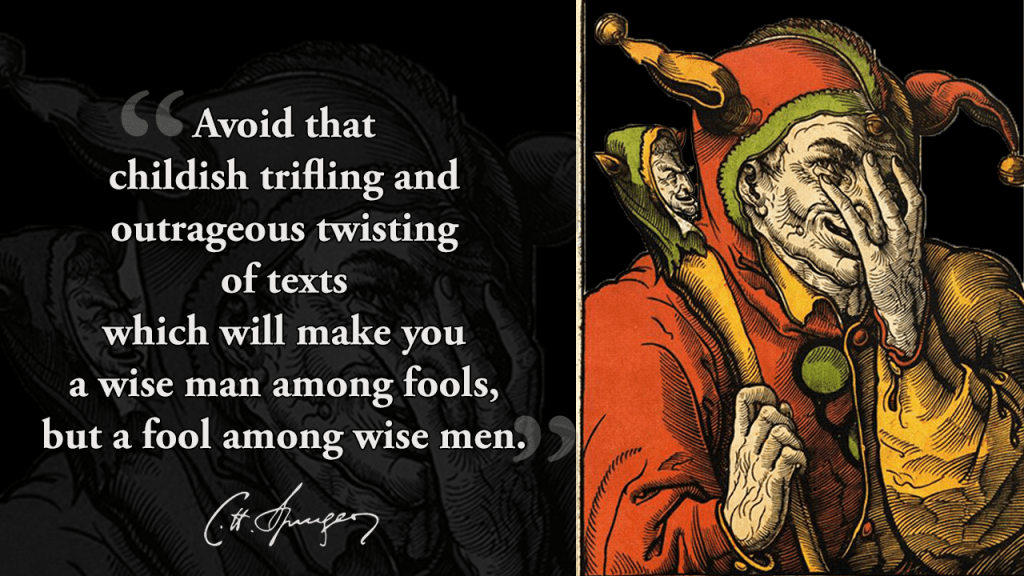
To quote: ‘In Christianity, as well as many other religions, over-spiritualizing is when scriptural interpretation exceeds its original meanings or when an event or action is overcompensated with implications that God, the Holy Spirit, or Jesus had orchestrated it.
This mentality can be used in the meekest of situations to the most complicated. Although many things can be justified as spiritual or influenced spiritually, it does not automatically mean that everything is spiritual, nor does it mean that God is the puppeteer behind all events and actions on earth.’- https://discover.hubpages.com/religion-philosophy/Christians-Stop-Spiritualizing-Everything
We mustn’t use our belief in an all-knowing, all-powerful God who created the universe as a means to escape accountability for our own judgments and mistakes. Instead, we must take concrete steps to apply our spiritual beliefs in the real world to mitigate any potential risks or hazards.
Fortunately, Samson comes to his senses and turns to God to deliver him from his terrible predicament. He is well aware that being blinded by the Philistines has rendered him weak, and in desperation turns back to God, who fulfils His mission through Samson. So in our lives, we, too, can learn to take responsibility by turning to God to help us face reality and return to His Holy Way.

 #Hayibo