Introduction
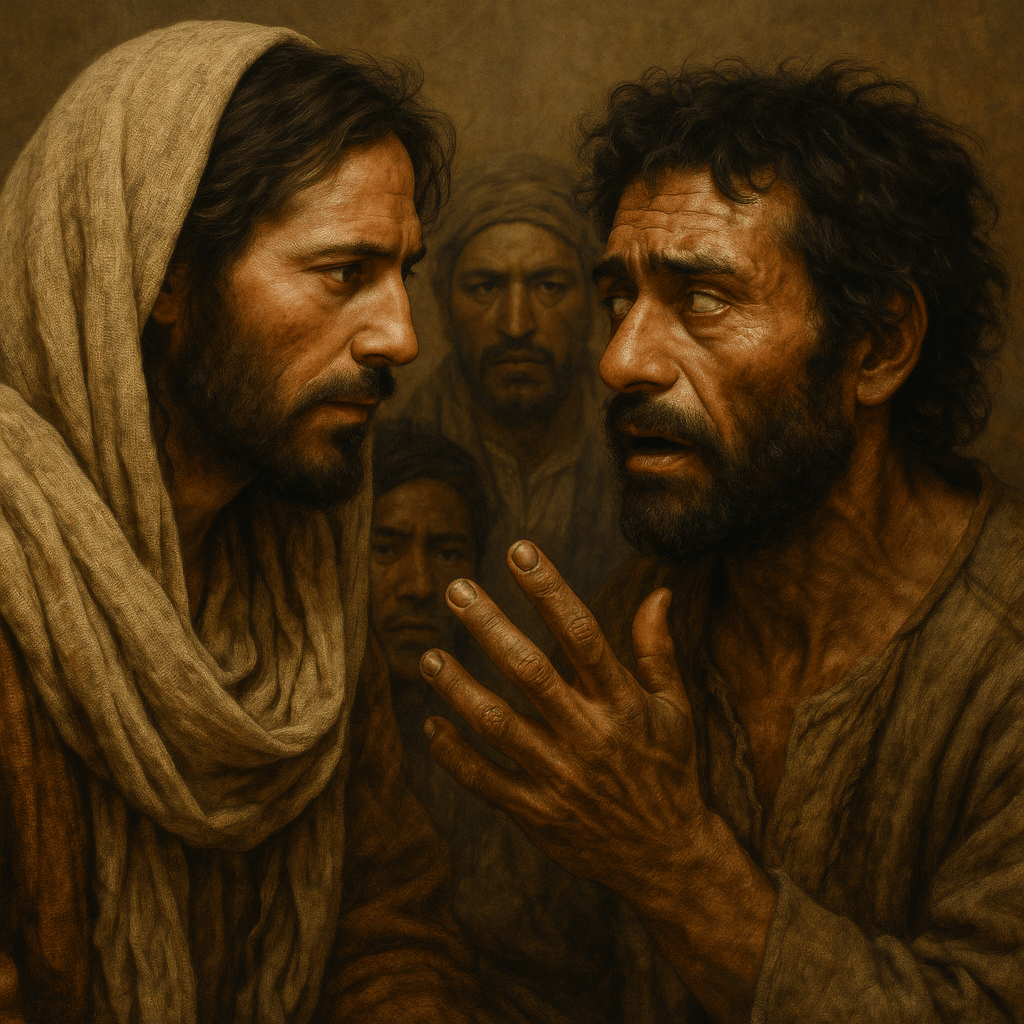
Throughout history, revelation has always demanded a rupture in perception. Yet, for most individuals and institutions, cognitive stability, rather than spiritual clarity, is the more desirable good. In John 9:17–18, we find a dramatic tension between miracle and mindset, healing and hesitance, testimony and theological control. The blind man, having received his sight, identifies Jesus as a prophet, a bold but still incomplete epistemological move. Meanwhile, the religious elite begin to unravel under the weight of their paradigmatic rigidity. The scene is not simply about sight restored, but perception restructured.
This blog explores how cognitive dissonance operates theologically and socially to obstruct revelation, often under the guise of religious certainty. Drawing from interdisciplinary sources, psychology, theology, epistemology, and sociocultural studies, this study argues that discipleship requires the intentional disruption of familiar thought patterns, and that reductionism, both in theology and society, is often a symptom of deeper insecurity masked as doctrinal or institutional control. When power becomes more precious than truth, the cost of control is spiritual blindness.

The Text and the Tension (John 9:17–18)
The progression of faith in John 9 is striking. The man who was healed initially refers to Jesus simply as “a man” (v.11), then as a “prophet” (v.17), and ultimately confesses, “Lord, I believe,” and worships Him (v.38). This narrative structure mirrors the movement from partial recognition to full revelation. Yet, the initial attribution of “prophet” reveals both reverence and limitation. In Second Temple Judaism, the figure of the prophet was the highest spiritual authority one could safely acknowledge without inviting doctrinal risk. The healed man speaks out of the framework he knows, a framework still too small to fully contain the Incarnate One.
At the same time, the Pharisees cannot accept the miracle itself. Their response is rooted in an institutional preservation instinct: if the man was never blind, then Jesus need not be reckoned with. As Morris notes, the very act of asking the formerly blind man for his opinion betrays their epistemic uncertainty, ordinarily, they would never have consulted a man of such status on a theological matter.¹ Their resistance is not based on lack of evidence but on the implications of accepting it. This is the heart of cognitive dissonance: when truth threatens identity, power often rewrites the narrative.
Epistemic Dissonance and the Formation of Belief
Before transformation can occur, dissonance must be named. The tension we see among the Pharisees is not merely about law, but about perception, how the mind protects belief systems when confronted with disruptive truth. To understand this resistance, we now turn to the psychological and sociological frameworks that help explain why so many reject the very revelation they long for.
Festinger’s classic theory of cognitive dissonance suggests that human beings experience psychological discomfort when new information conflicts with pre-existing beliefs.² Yet, as Xu explains, when these beliefs are tightly interwoven with moral or identity claims, as religious belief often is, the resulting epistemic dissonance is not merely inconvenient but deeply threatening.³ The response is often defensive rather than adaptive.
In spiritual terms, this is the limit of revelation shaped by prior exposure. As Viljoen points out in his study of Jesus’ Torah embodiment, discipleship involves not only understanding truth but embodying it in action.⁴ Jesus not only taught the meaning of the Law; He enacted it through miracles, particularly those challenging Sabbath rigidity.⁵ But if one’s categories for God are already filled by cultural constructs, even divine revelation can be misread.
From a Global South perspective, Sayer and Paris emphasise that epistemological limitations are often socioculturally imposed.⁶ Knowledge systems shaped by colonial or elitist frameworks prioritise certain voices while muting others, thereby reducing the possibility of recognising alternative modes of truth. The blind man’s confession, though limited, was truthful within his context. It became dangerous only because it destabilised the categories of those invested in theological hegemony.
Institutional Control and the Crisis of Witness
The deeper issue exposed in John 9 is not the man’s former blindness, but the religious institution’s current one. Shapin traces how the credibility of witnesses in Western history became increasingly tied to institutional authority rather than experiential or moral credibility.⁷ Richardson’s study of the Al-Aziz sexual abuse case illustrates how institutional bodies often silence marginal voices to preserve reputational control.⁸
In both cases, witness is filtered through a grid of control. When the blind man speaks, his testimony is questioned, not because it lacks coherence, but because it lacks institutional sanction. As with many whistleblowers today, his witness is met with disbelief not due to implausibility, but because it threatens to unmask structures built on selective sight.
Modern media systems mirror this dynamic. The Netflix documentary The Anti-Social Network highlights how algorithmic validation amplifies misinformation while suppressing nuance.⁹ In such systems, as in John 9, truth becomes subordinate to perception management. The divine becomes inconvenient.
We see this same dynamic today. A university student might admire Jesus as a great moral teacher, while refusing His claim to divinity. A political leader might quote the Beatitudes for social justice rhetoric, while ignoring Christ’s call to self-sacrifice. In both cases, Jesus is honoured as a prophet but denied as Lord, not out of ignorance, but because full submission disrupts their worldview.
Spiritual Formation and the Slow Unveiling of Truth
The man’s journey from healed to herald, culminating in worship, reflects the very nature of spiritual formation. It is not instant insight but progressive revelation. As Lee Beach observes, deep formation happens when one’s theological journey is framed as obedience, vulnerability, and co-labouring with God in the disruption of comfort.¹⁰
This aligns with the spiritual formation cohort model developed at Wa Nazarene, where discipleship was grounded in intentional practice, communal reflection, and spiritual memory.¹¹ Growth was not defined by certainty but by sustained responsiveness. Such models mirror the biblical reality: faith is not formed in flawless logic but in faithful action, “He told me to wash, and I did.”
Fowler’s stages of faith development also affirm this progression. True maturity involves movement from institutional to individuated faith, where dissonance is not a threat but a midwife of transformation.¹² The healed man’s confession moves from description (“He healed me”) to declaration (“I believe”). That is the journey of discipleship.
Conclusion: Seeing Again
Reductionism and dissonance blind us not just to the mystery of God, but to the complexity of one another. When we require that God fit within our systems, we trade worship for certainty, faith for control. The cost of that control is spiritual stagnation. John 9 does not merely celebrate a miracle; it indicts every impulse in us that prefers power over truth.
To follow Jesus is to confront our epistemic ceilings. To grow in Christ is to embrace dissonance as a doorway, not a danger. The miracle of sight was physical. The miracle of faith is epistemological.
Which one are we still resisting?
Cognitive dissonance, as seen in John 9, is not merely a psychological tension, it is a spiritual mirror. When we are confronted with witness that challenges our certainty, the temptation is to dismiss it as illegitimate, as the Pharisees did. But the blind man’s journey from naming Jesus a prophet to falling in worship reveals what happens when dissonance is not defended but discipled.
If “Part A” revealed the cost of control through reductionism, then this section has revealed the cost of resistance: we risk becoming blind to the very presence of the Divine. To see again requires that we surrender our need to be certain, and allow discomfort to do its work in us. As Jesus once asked Peter, so now He asks us: “Who do you say I am?” The answer still builds, or breaks, the Church.
Practical Application: Learning to See Again
Interrogate Your Certainties: Every time we are confronted with theological, relational, or political difference, we must ask: Is my resistance rooted in truth, or in comfort? When Jesus healed on the Sabbath, it was not a challenge to the law, but to a misused certainty that prioritised tradition over transformation. Begin to trace where your “certainty” comes from, does it reflect divine character or inherited assumption?
Embrace Discomfort as Discipleship: Cognitive dissonance is not a sign of spiritual failure. It is often the very space where formation begins. Rather than suppress the tension, lean into the question. Allow space for unlearning. As the blind man moved from knowing Jesus by name to calling Him Lord, so too must we allow our understanding of God to stretch beyond the edges of our tradition.
Practice Epistemic Humility Discipleship: requires the recognition that we do not see fully (1 Cor 13:12). We are not the final arbiters of truth. Practising epistemic humility means admitting that our cultural, theological, and psychological frameworks might limit what we can perceive. In the presence of witness, be it a healed man or a social outlier, listen before dismissing.
Reimagine Power: Much of what masquerades as orthodoxy is often just an attempt to hold onto control. But spiritual power, as seen in Christ, is self-emptying. Ask: Where am I using theology to protect my pride? If the answer unnerves you, take heart. It means you are already being healed of your blindness.
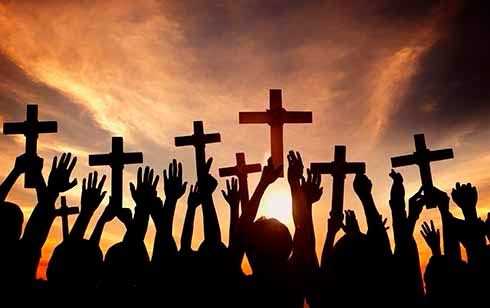
Prayer: Lord, Disrupt My Comfort
Father God,
I confess that I often prefer the security of what I know over the risk of what You reveal.
I grasp for control when You invite surrender.
I reduce the infinite to fit into my image, instead of allowing myself to be reshaped into Yours.
Heal me of my need to be right.
Heal me of my suspicion of others’ witness.
Heal me of my blindness to the ways You still disrupt, challenge, and love.
Let my life be a site of divine contradiction.
Where I once was blind, let me now see.
And when I see clearly, may I not just speak, but worship.
In the Holy Name of the One, Jesus, who still makes mud miracles out of broken dust,
Amen.

Bibliography
1. Morris, Leon. The Gospel According to John. NICNT. Grand Rapids: Eerdmans, 1995.
2. Festinger, Leon. A Theory of Cognitive Dissonance. Stanford: Stanford University Press, 1957.
3. Xu, Wei. “Cognitive Dissonance and Morality.” Journal of Moral Psychology 12, no. 2 (2021): 33–51.
4. Viljoen, Francois P. “Jesus and the Torah in Matthew.” Verbum et Ecclesia 25, no. 2 (2004): 547–561.
5. Grundmann, Walter. Das Evangelium nach Matthäus. Leipzig: Evangelische Verlagsanstalt, 1971.
6. Paris, Peter J., and Sayer, Dorcas. “Spiritual Knowing: Epistemology in the Global South.” Cambridge Scholars Publishing, 2015.
7. Shapin, Steven. A Social History of Truth: Civility and Science in Seventeenth-Century England. Chicago: University of Chicago Press, 1994.
8. Richardson, Riche. “Who Gets to Be Heard?” Cultural Studies Journal, 2022.
9. The Anti-Social Network. Directed by Jeff Orlowski. Netflix, 2022.
10. Beach, Lee. “Research as Discipleship.” McMaster Journal of Theology and Ministry 24 (2024): 122–138.
11. Martin, Thomas. “Transforming Disciples Through a Spiritual Formation Cohort.” Doctoral Thesis, Nazarene Theological Seminary, 2023.
12. Fowler, James W. Stages of Faith: The Psychology of Human Development and the Quest for Meaning. HarperOne, 1981.
 #Hayibo