


I have an incredible Hindu couple who frequent me for their hair. On their last visit, they expressed a desire to go to church with me. They are both practicing Hindus who were born and raised within the culture and religion of their Hindu families, environment, and schooling.
Often, in our discussions, in their attempt to be inclusive of my Christianity, they lean towards a Hindu assumption of pluralism. However, I see the indoctrination of their beliefs through the pluralistic perspective. They are both professionals, educated, and incredibly kind people. Yet, like many others, their perspective is based on largely unquestioned faith, faith that has been inherited rather than critically examined.
It is in the spirit of truth and love that I write this, not as an attack but as an invitation to question what has long been accepted without scrutiny. Hinduism presents itself as an ancient, all-encompassing path to enlightenment, yet its contradictions and theological inconsistencies warrant deeper examination. My friend, if truth is what we seek, then no belief, no matter how sacred, should be exempt from investigation.
Hindu Objections to Christianity
Christianity is an exclusive religion, whereas Hinduism is inclusive

• Objection: Christianity claims Jesus is the only way to God, which is intolerant. Hinduism, in contrast, accepts all paths as leading to the divine.
Response:
The Myth of Universalism and the Necessity of Truth
The claim that Hinduism is inclusive while Christianity is intolerant is a common misconception rooted in Hindu pluralism. Hinduism teaches that all religions are merely different paths leading to the same ultimate reality, whether one worships Vishnu, Shiva, Krishna, or even Jesus, all are said to be valid expressions of the divine. This belief is often appealing because it appears tolerant and accommodating. However, beneath the surface, it collapses under logical, theological, and historical scrutiny.
1. The Logical Contradiction of Universalism
The idea that all religions lead to the same divine reality is self-refuting. Christianity, Islam, and Judaism explicitly deny Hindu concepts such as reincarnation, karma, and multiple deities. Christianity, in particular, makes an exclusive truth claim in John 14:6, where Jesus declares:
“I am the way, and the truth, and the life. No one comes to the Father except through me.”
If all religions were true, then contradictory beliefs must also be true, which is logically impossible. Hinduism cannot simultaneously affirm and deny the divinity of Jesus. If Jesus claimed to be the only way to God, then Hinduism must either accept that claim (and reject pluralism) or deny it (and contradict its own inclusivity).
Furthermore, if Hinduism teaches that truth is relative and that no single path can be exclusively correct, then even that claim must be subject to doubt. By asserting that “all paths lead to God,” Hinduism ironically makes an absolute statement about spiritual reality, thereby contradicting its own relativism.
2. Historical Evidence Against Hindu Inclusivity
Despite its claim to inclusivity, Hinduism has historically been deeply exclusive, particularly in how it treats those outside the caste system and religious orthodoxy. The caste system, rooted in Hindu scripture, has long marginalized Dalits (the “untouchables”) and non-Hindus. Conversion from Hinduism has historically been met with social ostracism, and in many regions of India today, Christian converts face severe persecution.
If Hinduism were truly inclusive, it would not have resisted the spread of other faiths or maintained strict social divisions based on religious adherence. Instead, Hinduism has often sought to absorb other religions by redefining them within its framework rather than allowing them to stand on their own terms. This is not true inclusivity but rather a form of religious assimilation.
3. The Necessity of Truth in Religion
Tolerance should not be confused with truth. Hinduism may claim to accept all religions, but acceptance does not equate to correctness. Imagine a doctor who tells a patient that all medications, regardless of their intended use, will lead to healing. Such a claim, while inclusive, is dangerous because it ignores objective medical truth.
Likewise, Christianity does not reject other paths out of intolerance but out of a commitment to truth. Jesus did not merely claim to be one option among many, He claimed to be the way. If Jesus is who He said He is, then religious pluralism is false, no matter how appealing it may seem.
Conclusion:
Hinduism’s claim to inclusivity is logically self-defeating, historically inconsistent, and spiritually misleading. Christianity, while exclusive in its truth claim, is not intolerant, it offers salvation to all people, regardless of background. The real question is not whether Christianity is inclusive or exclusive, but whether it is true. And truth, by its very nature, cannot accommodate contradiction.
Jesus is just one of many divine figures
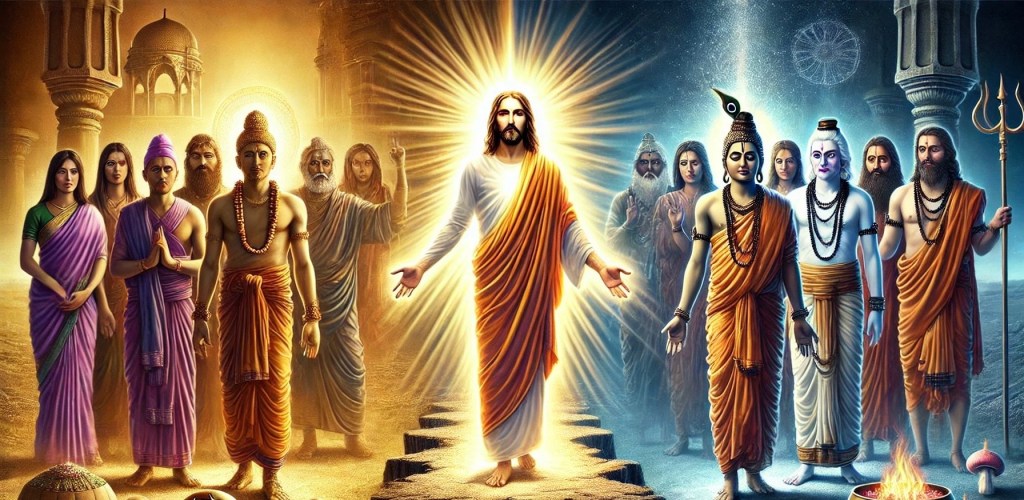
• Objection: Jesus is not unique—He is simply another enlightened teacher, like Krishna, Buddha, or Rama.
Response:
The Unparalleled Uniqueness of Jesus
Hinduism often absorbs religious figures into its own framework, portraying Jesus as one among many avatars, gurus, or enlightened beings. While this may seem inclusive, it fundamentally misunderstands who Jesus claimed to be and how He differs from Hindu deities and religious leaders. The comparison between Jesus and figures like Krishna, Buddha, or Rama collapses under theological, historical, and philosophical scrutiny.
1. Jesus Claimed to Be God in a Way No Hindu Figure Did
Jesus made direct, unambiguous claims to divinity, something that Hindu deities and teachers did not. In John 10:30, He declared:
“I and the Father are one.”
The Jewish audience understood this as a claim to deity, which is why they attempted to stone Him for blasphemy. Similarly, in John 8:58, Jesus said:
“Before Abraham was, I AM.”
This statement directly referenced God’s name in Exodus 3:14 (“I AM WHO I AM”), affirming that Jesus identified Himself with the eternal, self-existent God of the Bible.
In contrast, Hindu figures like Krishna or Rama are presented as avatars (incarnations) of Vishnu, but these avatars are mythological and cyclically reincarnated. Krishna, for example, did not exist in historical time and space, his story is part of Hindu mythology, recorded in texts such as the Bhagavad Gita. Jesus, by contrast, entered history at a specific time, lived a verifiable life, and made claims that could be tested.
Buddha, on the other hand, never claimed to be divine. He explicitly rejected Hindu polytheism and sought enlightenment through self-discovery, not divine revelation. Unlike Jesus, he did not claim to be the way to God but merely a guide toward self-awareness.
2. The Historical Foundation of Jesus vs. Mythological Avatars
Unlike Hindu avatars, Jesus was a real historical person. No credible historian denies His existence. Roman and Jewish historical records confirm His life, crucifixion, and the claims made about His resurrection. Tacitus, a Roman historian, wrote about Jesus’ execution under Pontius Pilate. Jewish sources such as the Talmud acknowledge Jesus’ miracles, albeit attributing them to sorcery.
In contrast, Krishna and Rama exist purely in Hindu epics, with no historical evidence to support their existence. Their stories evolved over centuries and were passed down through oral tradition, subject to heavy mythological embellishment.
This raises a critical question: Why should Jesus, a historical figure with verifiable claims, be placed on the same level as mythical or semi-historical Hindu figures?
3. Jesus’ Resurrection: A Singular Event
No Hindu figure has ever risen from the dead. The resurrection of Jesus is the cornerstone of Christianity, distinguishing Him from every other religious leader. Paul affirms in 1 Corinthians 15:14:
“And if Christ has not been raised, then our preaching is in vain and your faith is in vain.”
Unlike reincarnation, which is an endless cycle of birth and rebirth leading to moksha (liberation), Jesus’ resurrection was a one-time, historical event that validated His divine authority. The empty tomb, the transformation of His disciples, and the explosion of the early Christian church, all within the lifetime of eyewitnesses, offer compelling evidence that Jesus was not merely another enlightened teacher but the unique Son of God.
4. The Moral Perfection of Jesus vs. Hindu Figures
Jesus was sinless, a claim that no Hindu figure makes about himself. The Bhagavad Gita depicts Krishna engaging in deception and manipulative tactics, while Hindu gods often display human flaws, including lust, anger, and deceit. In contrast, Jesus lived a perfect life, loving even His enemies and calling His followers to the highest moral standard.
Conclusion:
The attempt to equate Jesus with Hindu figures like Krishna, Buddha, or Rama fails in every way. Jesus uniquely claimed to be God, lived a historically verifiable life, rose from the dead, and demonstrated perfect moral authority. No Hindu figure meets these criteria. The question is not whether Jesus was one of many enlightened beings, but whether He was who He said He was, the only way to God.
Reincarnation is more logical than resurrection

• Objection: The cycle of rebirth makes more sense than the Christian idea of resurrection and final judgment.
Response:
The Flaws of Reincarnation and the Superiority of Resurrection
Hinduism teaches that after death, the soul is reborn into a new body in an endless cycle known as samsara, with the goal of eventually achieving moksha, liberation from the material world. Christianity, on the other hand, teaches that humans live once, die once, and then face judgment (Hebrews 9:27). The resurrection of Jesus, and the future resurrection of believers, is central to Christian hope.
While reincarnation may seem like a more “scientific” or “just” system at first glance, a deeper analysis exposes its logical, moral, and historical flaws.
1. The Logical Contradictions of Reincarnation
Reincarnation assumes that souls accumulate karma, the sum of their past actions, which determines the circumstances of their next life. However, this system raises significant logical issues:
• No Memory of Past Lives: If people are reborn to learn and grow from their past mistakes, why do they have no recollection of their previous lives? True learning requires memory. Without the ability to remember past mistakes, how can justice or moral improvement occur?
• Population Growth Problem: If reincarnation were true, where do all the new souls come from? The world’s population is increasing, which suggests new souls are appearing. This contradicts the idea that reincarnation is a closed cycle of rebirth.
• Identity Crisis: If a person’s atman (soul) is continually reborn in different bodies, then what makes someone them? Unlike resurrection, which preserves personal identity, reincarnation erases it over multiple lifetimes. If my body, personality, and memories are lost, in what sense am I still “me”?
2. The Moral Failure of Reincarnation
The doctrine of reincarnation is often viewed as a just system because it supposedly ensures people pay for their past actions. However, this creates moral problems:
• Blaming Suffering on Past Lives: In Hindu societies, people suffering from illness, poverty, or disabilities are often considered to be paying off bad karma from a past life. This leads to victim-blaming rather than compassion. The Bible, in contrast, teaches that suffering is not always a direct result of sin (John 9:1-3) and calls for active love and justice, rather than fatalistic resignation.
• No Ultimate Justice: If reincarnation were true, there would never be final justice for evil. Hitler, for example, would simply be reborn in another form to “work off” his karma, rather than facing true justice. The resurrection, on the other hand, guarantees that all will be judged righteously (Revelation 20:12-13).
3. The Historical Evidence for Resurrection
Reincarnation is a philosophical idea with zero historical evidence. No one has ever verifiably remembered a past life, and all alleged “past life memories” have been debunked under scrutiny. By contrast, the resurrection of Jesus is one of the most well-documented historical events in ancient history.
• Eyewitness Testimony: Over 500 people saw Jesus alive after His resurrection (1 Corinthians 15:6).
• The Empty Tomb: Even Jesus’ enemies could not produce His body to disprove His resurrection.
• Radical Transformation: The disciples, who had been terrified after His death, suddenly became bold preachers willing to die for their claim that Jesus had risen.
4. Resurrection Preserves Identity and Offers Eternal Life
Christianity teaches one resurrection, not an endless cycle of rebirth. This guarantees:
• A restored body: Unlike reincarnation, which strips away identity, resurrection ensures that we remain ourselves, fully recognisable but glorified (Philippians 3:21).
• Eternal purpose: There is no endless suffering, no cycle of uncertainty, only final restoration and peace with God.
Conclusion:
Reincarnation is neither logical nor just. It erases identity, offers no historical evidence, and fails to bring true justice. The resurrection of Jesus, however, is a historical fact that promises real hope and final restoration. If Christ rose, then reincarnation is not only unnecessary but false. The real question is: Will you trust in endless cycles or the one who conquered death?
Karma is a more just system than salvation by grace

• Objection: Christianity allows sinners to be saved without facing the consequences of their actions, whereas karma ensures moral accountability.
Response:
The Illusion of Justice in Karma and the True Justice of Grace
Hinduism teaches that every action has consequences, good actions result in positive outcomes, while bad actions lead to suffering in future lives. This doctrine of karma is often seen as a fair and just system, as it supposedly ensures that individuals reap what they sow. Christianity, by contrast, teaches that salvation comes by grace through faith in Jesus Christ, not by personal merit (Ephesians 2:8-9). At first glance, karma may appear more just, but a deeper examination reveals its moral and theological flaws, while highlighting the superiority of divine grace.
1. Karma Fails as a Just System
While karma claims to ensure justice, it actually fails in multiple ways:
• No Explanation for Original Guilt: If every soul is reborn due to past karma, where did the first sin come from? Without an initial wrong, the cycle of karma should never have begun. Christianity, on the other hand, explains sin’s origin in the fall of Adam and Eve (Romans 5:12).
• No Direct Cause-and-Effect Accountability: Unlike justice in a legal system, where punishment follows wrongdoing in a clear and timely manner, karma stretches consequences across multiple lifetimes. A person may suffer without knowing what specific action caused their suffering, rendering the entire system meaningless as a form of moral correction.
• Karma Justifies Suffering Rather than Eradicating It: In Hindu societies, those suffering from illness, poverty, or disability are often seen as deserving their fate due to past life sins. This leads to fatalism and inaction rather than compassion. Christianity, in contrast, teaches that suffering is not always the result of sin (John 9:1-3) and calls for justice and mercy rather than resignation.
2. Karma Offers No Forgiveness, Only Endless Punishment
The doctrine of karma provides no room for true redemption. If every person must suffer for past misdeeds, then there is no escape from suffering, only endless cycles of rebirth and pain. The burden of karma becomes an inescapable debt that can never be truly erased.
Christianity, however, offers grace, a divine intervention that cancels the debt of sin through Jesus’ sacrifice (Colossians 2:14). Instead of requiring endless suffering, Christ took the punishment on behalf of humanity, offering a real solution rather than an endless cycle.
3. Grace Does Not Mean Injustice, It Means Fulfilled Justice
Critics argue that salvation by grace allows sinners to escape justice, but this misunderstands the Christian doctrine of atonement. Grace is not the absence of justice, it is justice fulfilled through Jesus.
• Jesus took the punishment for sin: Every sin deserves justice, and Christianity teaches that justice was carried out on the cross (Isaiah 53:5).
• Repentance and transformation are required: Grace is not a free pass to continue sinning. True faith results in transformation (2 Corinthians 5:17).
• Salvation is open to all: Unlike karma, which punishes people without clear explanation, salvation is freely offered to all who believe in Christ (Romans 10:9-10).
4. Grace Offers What Karma Never Can—Hope and Relationship
Karma locks people in a system of punishment with no certainty of escape. Christianity offers assurance of salvation and a relationship with a loving God. Rather than being trapped in an impersonal cosmic law, believers enter into a personal relationship with Jesus, who offers them new life (John 10:10).
Conclusion:
Karma appears just, but it ultimately leads to despair, fatalism, and endless suffering without true redemption. Grace, on the other hand, does not dismiss justice, it fulfills it through Jesus Christ, offering forgiveness, transformation, and a personal relationship with God. The real question is: Do you want a system that imprisons you forever, or a Saviour who sets you free?
The Christian concept of sin is flawed
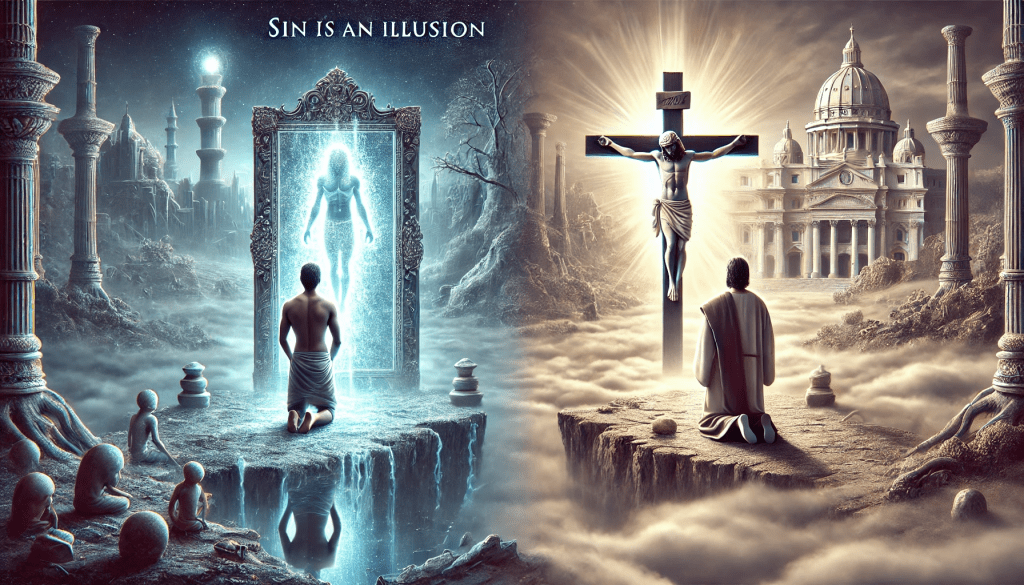
• Objection: Hinduism teaches that good and evil are illusions, whereas Christianity’s focus on sin is overly negative.
Response:
The Reality of Sin and the Danger of Denying It
Hindu philosophy, particularly in its Advaita Vedanta school, often teaches that the material world, including distinctions between good and evil, is an illusion (maya). According to this view, sin is not an objective reality but rather a misunderstanding of one’s divine nature. Christianity, by contrast, teaches that sin is a real and destructive force that separates humanity from God, requiring redemption through Jesus Christ. The claim that sin is an illusion fails on logical, moral, and existential grounds.
1. The Logical Contradiction of Denying Good and Evil
Hinduism often teaches that distinctions, such as good vs. evil, right vs. wrong, are mere illusions because everything is ultimately Brahman (the divine essence). However, this belief is self-contradictory:
• If good and evil are illusions, then the claim that “sin is an illusion” must also be an illusion.
• If morality is unreal, then Hinduism itself has no basis to call anything (such as harming others) “wrong.”
• Even Hindu scriptures contradict this claim, as they contain moral teachings that differentiate between righteous and unrighteous actions (e.g., the Bhagavad Gita).
Denying the reality of sin does not eliminate its consequences, just as denying gravity does not prevent someone from falling.
2. The Moral Failure of Viewing Sin as an Illusion
If sin is an illusion, then why do people suffer? If all suffering is due to mere ignorance of one’s divine nature, then victims of evil, including rape, murder, and oppression, are simply experiencing an illusion. This perspective leads to moral indifference, where people become desensitised to injustice because they believe suffering is either deserved (karma) or unreal.
In contrast, Christianity acknowledges the real pain and suffering caused by sin and calls for moral responsibility, repentance, and justice (Micah 6:8). The Bible does not dismiss evil as an illusion but directly confronts it as something that must be overcome through Christ (Romans 3:23-24).
3. The Universality of Sin: A Reality in Every Human
Christianity teaches that sin is not just an external force but an internal corruption within every person (Romans 7:18). Unlike Hinduism, which teaches that people are inherently divine but ignorant of it, the Bible describes humanity as inherently sinful, needing redemption.
Real-life evidence supports this:
• Even when people try to be “good,” they still struggle with selfishness, greed, and pride.
• Moral codes exist in every culture, showing that sin is universally recognised.
• No one is able to live perfectly, evidence that sin is an intrinsic part of human nature.
If sin were merely an illusion, then why does every human struggle with moral failure? The reality of human imperfection proves that sin is not an illusion, it is a defining human problem.
4. Jesus’ Solution: Redemption, Not Ignorance
Hinduism teaches that enlightenment (jnana), realising one’s divine nature, is the solution. But if people were already divine, why do they need to learn this? If divinity were inherent, no one would ever act immorally. The very fact that people must be “enlightened” proves that they are not naturally good.
Christianity, however, offers a real solution: forgiveness through Jesus Christ. Rather than leaving people to endlessly seek enlightenment, Jesus provides a definitive rescue from sin (John 8:36).
Conclusion:
Hinduism’s claim that sin is an illusion contradicts logic, morality, and human experience. The Bible, however, correctly diagnoses the human condition and provides the only true solution, not self-realisation, but salvation through Jesus Christ. The question is: Will you continue denying sin, or will you seek the only One who can remove it?
Hinduism predates Christianity, making it more credible

• Objection: Hindu scriptures are thousands of years older than the Bible, so Hinduism must be the more authentic religion.
Response:
Age Does Not Determine Truth
The idea that Hinduism is more credible simply because it predates Christianity is a false assumption that confuses antiquity with authenticity. Just because something is older does not make it true, otherwise, we would have to accept every ancient belief system, including those that have been completely abandoned.
Instead of relying on age as the measure of truth, we must examine historical accuracy, internal consistency, and divine revelation. When we do this, we find that Hinduism’s antiquity does not grant it superiority over Christianity.
1. Old Does Not Mean True
• Scientific Errors in Ancient Beliefs: Older beliefs often contain errors that later discoveries correct. For example, ancient cultures once believed that the earth was flat or that the sun revolved around the earth. Hinduism, too, has scientific errors, such as the belief in a cosmic turtle supporting the world or that eclipses are caused by demons swallowing the sun.
• Pagan Religions Are Also Older: If mere age determines truth, then Egyptian mythology, Babylonian paganism, and animistic tribal religions, many of which predate Hinduism, should also be considered more credible than Hinduism itself.
• Christianity’s Roots Go Back to the Beginning: While Hinduism, in its modern form, may have older texts than Christianity, the Bible traces its revelation back to the creation of humanity. The first humans, Adam and Eve, worshipped the true God long before Hinduism developed. Christianity is the fulfilment of God’s promises throughout history, not a “newer” religion, but the completion of what God had planned from the beginning.
2. Hinduism Has Changed Over Time, While Christianity Remains Rooted in Historical Events
Hinduism is not a single, unchanging belief system, it has evolved significantly over thousands of years:
• The earliest Hindu texts (Vedas) focus on rituals and sacrifices, but later Hinduism shifted towards polytheism and mysticism (Upanishads, Bhagavad Gita).
• The caste system, once strictly religious, has been challenged and reinterpreted over time.
• Hindu deities have multiplied, with local traditions incorporating new gods and goddesses over centuries.
By contrast, Christianity is anchored in historical events, particularly the life, death, and resurrection of Jesus Christ. These events are not myths or evolving traditions but verifiable history, confirmed by eyewitness testimony and extra-biblical sources.
3. Divine Revelation, Not Human Speculation
Hinduism is based on human speculation about the nature of reality. The Upanishads, for example, contain philosophical dialogues about the self (atman) and ultimate reality (Brahman), but they offer no clear divine revelation. Hindu sages debated spiritual ideas, often contradicting one another.
Christianity, however, is not based on human wisdom but on direct revelation from God:
• The Bible is not speculation, it is revelation. The prophets spoke what they received from God (2 Peter 1:21).
• Jesus did not merely teach spiritual philosophy, He demonstrated divine power. His miracles, teachings, and resurrection proved His claims (John 10:37-38).
• Christianity is built on evidence, not just belief. Unlike Hinduism’s mystical assertions, Christianity’s claims can be tested through history, archaeology, and fulfilled prophecy.
4. The Resurrection vs. Hindu Mythology
Hinduism’s oldest stories are mythological, containing gods who reincarnate, battle demons, and engage in human-like behaviour. These accounts are not historically verifiable.
Christianity, however, is based on a single, earth-shattering event, the resurrection of Jesus Christ. This is not a legend but a historically documented reality:
• Eyewitness accounts recorded in the Gospels and letters of early Christians.
• Corroboration from non-Christian sources, including Roman and Jewish historians like Tacitus and Josephus.
• The rapid rise of Christianity despite persecution, something that would not have happened unless the resurrection was true.
If we are to determine the truth of a religion, it is not how old it is that matters, but whether it is based on historical fact and divine revelation.
Conclusion:
The claim that Hinduism is more credible because it is older is logically flawed and historically unfounded. Christianity does not rest on tradition but on truth, a truth revealed by God, confirmed by history, and fulfilled in Jesus Christ. The question is: Do you want a belief system built on evolving human ideas, or a faith built on God’s direct revelation?
The caste system is a cultural practice, not a religious doctrine

• Objection: Critics of Hinduism misunderstand the caste system, it is not part of true Hindu spirituality but a social construct.
Response:
The Caste System Is Rooted in Hindu Scripture and Religious Doctrine
Many modern Hindus claim that the caste system (varna and jati) is a cultural development rather than an essential part of Hinduism. However, this assertion contradicts Hinduism’s foundational texts, which establish caste distinctions as divinely ordained. The caste system is not merely a societal practice, it is woven into Hindu religious philosophy, reinforcing inequality and restricting social mobility in ways that conflict with the Christian understanding of human dignity.
1. The Caste System Is Explicitly Defined in Hindu Scriptures
The Rig Veda (Hinduism’s oldest sacred text) describes the origin of the caste system in the Purusha Sukta hymn:
“When they divided Purusha, into how many parts did they divide him?
What was his mouth? What were his arms? What were his thighs and feet called?
The Brahmin was his mouth, of his arms was made the Kshatriya.
His thighs became the Vaishya, of his feet the Shudra was born.” (Rig Veda 10.90.11-12)
This passage claims that different classes of people were created from different parts of a cosmic being, with Brahmins (priests) at the top and Shudras (servants) at the bottom. This is not a cultural development, it is a religiously sanctioned hierarchy.
Other Hindu texts reinforce caste-based distinctions:
• The Manusmriti (Laws of Manu), one of Hinduism’s most authoritative legal texts, clearly prescribes different duties, rights, and punishments for each caste. It states:
“For the prosperity of the worlds, He (Brahma) caused the Brahmin, the Kshatriya, the Vaishya, and the Shudra to proceed from His mouth, His arms, His thighs, and His feet.” (Manusmriti 1:31)
“A Brahmin who remembers the Veda (scriptures) should not be killed, even if he commits all possible crimes.” (Manusmriti 8:379)
“If a Shudra arrogantly teaches Brahmins their duty, the king shall cause hot oil to be poured into his mouth and ears.” (Manusmriti 8:270)
These verses explicitly establish a divinely mandated social hierarchy, where lower castes are considered inherently inferior. This contradicts modern claims that caste is purely a social construct.
2. The Caste System Promotes Systemic Inequality
Because caste distinctions are religiously sanctioned, they have historically led to oppression, discrimination, and violence, particularly against Dalits (formerly known as “untouchables”). Even today, caste-based discrimination persists in many parts of India, despite legal bans.
By contrast, Christianity teaches that all people are equal in the eyes of God:
“There is neither Jew nor Greek, slave nor free, male nor female, for you are all one in Christ Jesus.” (Galatians 3:28)
Jesus did not place people into hierarchical categories, He lifted the lowly, associated with outcasts, and offered salvation to all regardless of social status.
3. Hindu Reform Movements Acknowledge the Problem of Caste
If the caste system were not a part of Hinduism, there would be no need for reform movements attempting to eliminate it. Many Hindu social reformers, such as Mahatma Gandhi, rejected the caste system as unjust but struggled to remove its influence. Even modern Indian law, which bans caste-based discrimination, cannot easily erase thousands of years of deeply embedded religious doctrine.
This raises an important question: If caste were not a religious doctrine, why has it been so difficult to eradicate, even among devout Hindus? The reality is that caste is not just a cultural construct, it is an institutionalised religious doctrine that has shaped Hindu society for millennia.
4. Christianity Offers True Equality
Unlike Hinduism, Christianity does not assign people worth based on birth, profession, or past-life karma. Instead, it teaches that all humans are created in God’s image (Genesis 1:27) and that salvation is available to everyone, regardless of background.
Jesus deliberately broke social barriers, dining with sinners, touching the untouchable, and rejecting religious elitism (Luke 5:30-32). His message of grace, redemption, and equality stands in direct opposition to the caste system’s rigid hierarchy.
Conclusion:
The claim that caste is merely a social construct is false, the system is deeply rooted in Hindu scripture and religious philosophy. While some modern Hindus attempt to distance themselves from it, Hinduism’s core texts establish and justify caste-based discrimination. Christianity, by contrast, offers true equality, valuing every individual as a child of God. The real question is: Will you follow a system that ranks people by birth, or a faith that welcomes all into God’s family?
Christianity is a Western religion, while Hinduism is indigenous to India
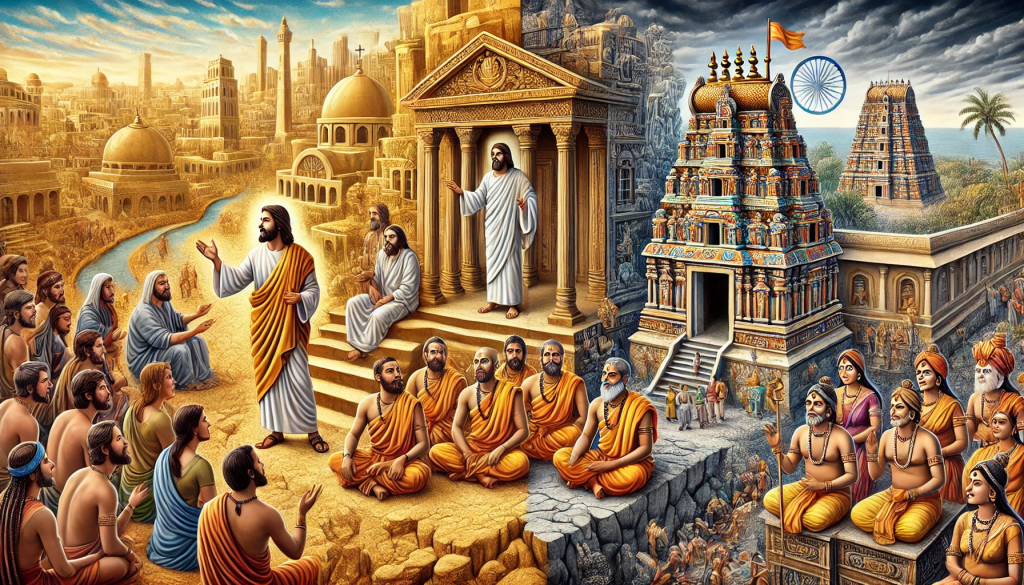
• Objection: Christianity is a foreign imposition, whereas Hinduism is deeply tied to Indian culture and identity.
Response:
Christianity is Universal, Not Western
A common misconception is that Christianity is a “Western” religion, whereas Hinduism is the natural and indigenous faith of India. This assumption is historically inaccurate, geographically flawed, and theologically misleading. Christianity is not a product of the West—it predates Western civilization as we know it and originated in the Middle East, not Europe. Furthermore, Christianity has deep historical roots in India that many overlook.
1. Christianity Originated in the Middle East, Not the West
Christianity began in first-century Judea (modern Israel/Palestine), not Europe or America. Jesus was not European; He was a Middle Eastern Jew who spoke Aramaic and lived under Roman occupation. The first Christians were Jews and Gentiles from across the Middle East, North Africa, and Asia Minor.
The assumption that Christianity is “Western” is based on later European influence, but historical Christianity predates the rise of Western civilisation. If Christianity is to be rejected simply because it spread beyond its birthplace, then Hinduism should also be rejected wherever it exists outside India.
2. Christianity Reached India in the First Century
Few people realise that Christianity has existed in India for nearly 2,000 years. According to historical tradition, Thomas the Apostle (one of Jesus’ twelve disciples) brought the Gospel to South India in the first century. The Saint Thomas Christians of Kerala trace their faith back to this apostolic mission.
Christianity was not introduced to India by Western colonialism, it was present in India before Islam even existed. By contrast, Hinduism took centuries to spread across the Indian subcontinent and did not exist in a unified form until later.
3. The Gospel Is for All Nations, Not Just One Culture
Unlike Hinduism, which is deeply tied to Indian identity, Christianity is a universal faith that transcends nationality, culture, and ethnicity. Jesus commanded His followers to make disciples of all nations (Matthew 28:19), showing that Christianity is not exclusive to any one people group.
Hinduism, on the other hand, is tied to Indian culture, language, and traditions. It requires adherence to Indian customs, Sanskrit scriptures, and caste-based social structures, making it difficult for non-Indians to embrace without cultural assimilation. Christianity, by contrast, has been translated into thousands of languages and is followed by people from every continent.
This raises an important question: If Hinduism is universal truth, why is it confined to one geographical region? Truth should not be limited by ethnicity or national identity.
4. Rejecting Christianity as ‘Foreign’ Is a Logical Fallacy
The argument that Christianity should be rejected because it came from outside India is a genetic fallacy, the idea that something is false simply because of its origin. Using this logic:
• Modern science should be rejected because it was largely developed in the West.
• Democracy should be rejected because it was not originally Indian.
• The Internet should be rejected because it was not invented in India.
Clearly, this reasoning is flawed. The truth of Christianity is not dependent on where it originated, it is dependent on whether it is true.
5. The True Measure of a Religion Is Not Its Origin, But Its Truth
Christianity is not bound by culture, geography, or ethnicity. It has spread across every continent, adapting to local languages and traditions without losing its core truth. This is because Christianity is based not on cultural identity but on the historical reality of Jesus Christ’s death and resurrection, a truth that applies to all people.
Conclusion:
Christianity is not a Western religion, it began in the Middle East and reached India before it reached much of Europe. It is not tied to any one culture but is for all people, everywhere. The real question is not whether Christianity is foreign, but whether it is true. Will you reject truth because of geography, or will you embrace the message of Jesus, which transcends culture and nation?
Moksha is superior to heaven
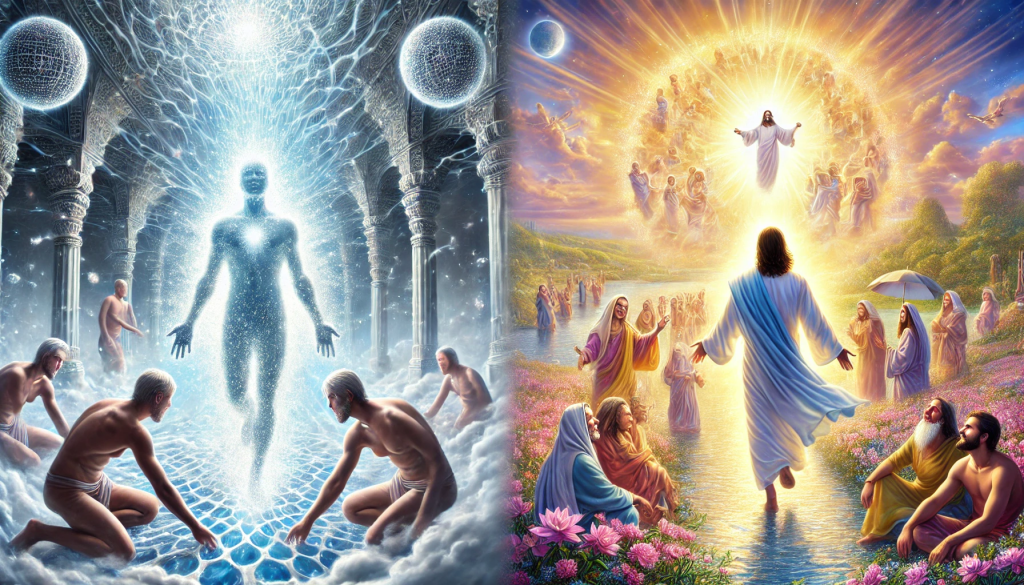
• Objection: The Christian idea of heaven is simplistic compared to Hinduism’s concept of moksha, which transcends material existence.
Response:
The False Promise of Moksha vs. the True Hope of Heaven
Hinduism teaches that moksha (liberation) is the ultimate goal of human existence. Unlike Christianity’s concept of heaven, moksha is not a place but a state of being, a dissolution of the individual soul (atman) into Brahman, the universal divine reality. Many Hindus believe this is superior to the Christian promise of heaven because it supposedly frees one from suffering and individual identity altogether.
However, this assumption fails under logical, philosophical, and theological scrutiny. Christianity’s vision of heaven is not simplistic but deeply personal, purposeful, and grounded in eternal joy, unlike moksha, which ultimately negates human identity and relationships.
1. Moksha Is the Erasure of Identity, Not True Fulfillment
Hinduism teaches that the self (atman) is ultimately an illusion and that true enlightenment requires its dissolution into Brahman, much like a drop of water merging with the ocean. This means that in moksha, personal identity, relationships, and individuality cease to exist.
This raises serious philosophical problems:
• If identity is erased, who experiences liberation?
• If all distinctions disappear, then is love, joy, and even existence itself meaningless?
• If self-awareness is lost, how is this different from annihilation?
By contrast, Christianity teaches that eternal life is not a loss of self but a restoration of perfect identity, in harmony with God and others (1 Corinthians 13:12). Heaven is a place of conscious joy, worship, and divine fellowship, where individuality is redeemed, not erased.
2. Moksha Fails to Solve the Problem of Justice
Moksha is often seen as an escape from samsara (the cycle of rebirth), which is governed by karma. However, if karma is truly just, then what about the countless people who suffer injustices in life, those who are oppressed, abused, or murdered? If their final fate is to dissolve into Brahman, then:
• Where is justice for victims?
• Do the wicked ultimately escape judgment simply by attaining enlightenment?
Christianity offers a far superior answer: God is a just judge (Revelation 20:12-13). No evil deed goes unpunished, and no suffering goes unseen. Those who trust in Christ receive grace and redemption, while those who reject God face judgment. This ensures that justice is truly upheld, unlike in Hinduism, where all distinctions ultimately vanish.
3. Heaven Offers Eternal Purpose, Not Just Escape
Hinduism teaches that life itself is an illusion (maya) and that liberation comes from detachment. However, this creates a paradox, if life, love, and relationships are ultimately meaningless, then why do we long for them?
Christianity, on the other hand, presents heaven as the full realisation of life’s purpose, where believers experience unbroken fellowship with God and one another. Heaven is not an escape from life but the fulfilment of God’s perfect design:
“Behold, the dwelling place of God is with man. He will dwell with them, and they will be his people, and God himself will be with them as their God.” (Revelation 21:3)
Rather than being absorbed into an impersonal divine essence, Christians will see God face to face (1 John 3:2) and experience a renewed, perfect existence where love, joy, and creativity continue forever.
4. Heaven Is a Gift, While Moksha Is Unattainable for Most
Moksha is considered nearly impossible to achieve in one lifetime, it requires lifetimes of meditation, detachment, and enlightenment. Even Hindu texts admit that only a select few ever attain it. This creates a system of despair, where countless souls are trapped in endless rebirths with no guarantee of liberation.
In contrast, heaven is not earned through endless striving but received as a gift of grace through Jesus Christ (Ephesians 2:8-9). Rather than an impossible burden, salvation is freely given to all who trust in Him.
Conclusion:
The idea that moksha is superior to heaven collapses under scrutiny. Moksha erases identity, fails to address justice, and provides no real hope for personal fulfillment. Heaven, by contrast, is a place of eternal joy, perfected relationships, and divine purpose, where believers remain fully themselves in the presence of God.
The real question is: Do you want to lose yourself into nothingness, or enter into eternal joy with the God who loves you?
Hindu gods are manifestations of the one divine reality
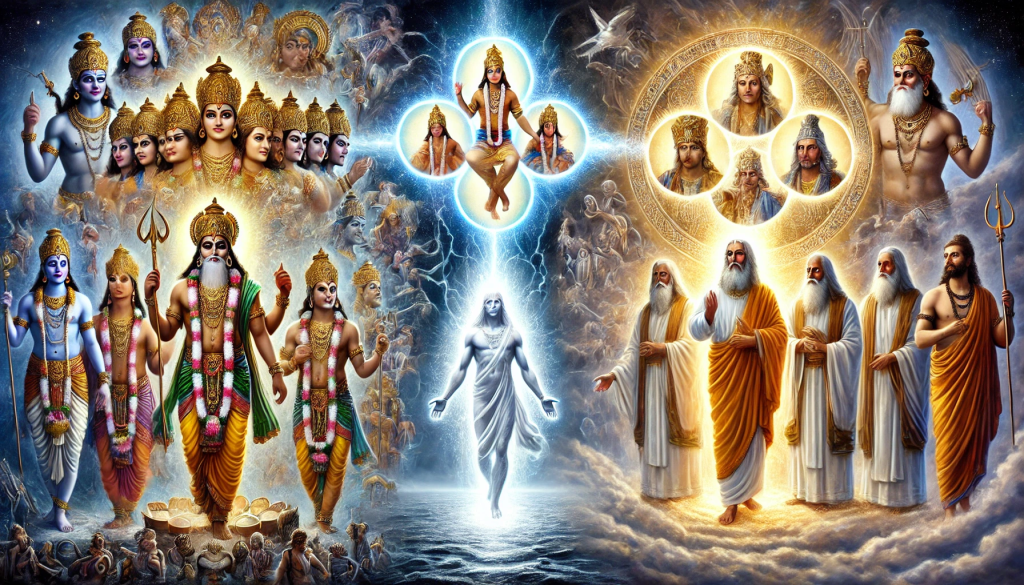
• Objection: Hinduism is not polytheistic but rather teaches that all gods are expressions of the same divine source, much like the Christian Trinity.
Response:
The Trinity and Hindu Polytheism Are Fundamentally Different
Many Hindus argue that their faith is not truly polytheistic but rather monistic, meaning that all deities are manifestations of one supreme reality (Brahman). This, they claim, is similar to the Christian doctrine of the Trinity, where God exists as Father, Son, and Holy Spirit. However, this comparison is deeply flawed, as Hinduism and Christianity present radically different understandings of God.
1. The Trinity Is One God, Not Many Gods in Disguise
The doctrine of the Trinity teaches that there is only one God (Deuteronomy 6:4), who eternally exists in three distinct persons, the Father, the Son (Jesus), and the Holy Spirit. These three persons are not separate beings or different manifestations but one divine essence.
In contrast, Hinduism presents a pantheon of gods, including Brahma, Vishnu, Shiva, Lakshmi, Kali, and others, each with distinct personalities, attributes, and mythologies. Some Hindus argue that these gods are simply different expressions of Brahman, but:
• These gods act independently, often fighting or deceiving one another in Hindu texts.
• Some deities are depicted as morally flawed, unlike the perfectly holy and righteous God of the Bible (Isaiah 6:3).
• There is no unified revelation of their nature, Hindu scriptures contain contradictory views on whether the gods are real individuals or illusions.
The Trinity, on the other hand, is coherent and unchanging. The Father, Son, and Holy Spirit never act against each other, and their unity is absolute (John 10:30). The Trinity is not three gods, nor is it one God appearing in three forms, it is a divine mystery rooted in absolute oneness.
2. Hinduism Allows Polytheism, Christianity Does Not
Even if some Hindus believe all gods are ultimately one, the reality is that millions of Hindus worship individual deities as distinct divine beings. Temples are dedicated to different gods, and prayers are directed to specific deities for different blessings. This is functionally polytheistic, regardless of philosophical arguments about Brahman.
By contrast, Christianity strictly affirms:
• There is only one true God (Isaiah 45:5).
• All other so-called gods are false and often linked to demonic deception (1 Corinthians 10:20).
Jesus is not one god among many, He is the only true God, and no other divine beings share His status (John 14:6).
3. Hindu Gods Do Not Offer Salvation, Jesus Does
In Hinduism, worshipping gods like Vishnu or Shiva does not provide salvation from sin. At best, devotees seek temporary blessings, wealth, or good karma, but these gods offer no permanent redemption.
By contrast, Jesus Christ alone provides:
• Forgiveness of sins (Colossians 1:14), something no Hindu god promises.
• Eternal life (John 3:16), Hinduism only offers endless reincarnation or dissolution into Brahman.
• A personal relationship with God (John 10:27-28), Hinduism teaches detachment, not intimate fellowship with a loving Creator.
4. The Problem of Hinduism’s Inconsistency About God
Hinduism contains contradictory teachings about the nature of divinity. Some Hindus claim there is only one true divine essence (Brahman), while others worship many gods as real, distinct beings. If Hinduism were truly monotheistic, why does it allow for such vastly different interpretations?
Christianity, by contrast, has maintained one clear, unchanging doctrine of God for over 2,000 years. The Bible provides a consistent revelation, not a mix of conflicting myths and philosophies.
Conclusion:
The idea that Hinduism is monotheistic like Christianity is false. The Trinity is not a collection of gods but one unified God in three persons. Hinduism’s claim that all gods are manifestations of Brahman is inconsistent, contradictory, and still results in polytheistic worship. Only Christianity presents one true, personal, and saving God, revealed through Jesus Christ.
The real question is: Do you want a belief system with many competing deities, or will you follow the one true God who alone can save you?
Conclusion: A Call to Truth
My dear friend, I do not write this to offend or to win an argument. I write because I care about truth, and because I care about you. If Hinduism is true, then it should withstand scrutiny, just as Christianity should. But when we examine the foundations of both, we find that Hinduism is built on evolving traditions, philosophical contradictions, and a system that ultimately denies justice, identity, and certainty.
Jesus, on the other hand, made a claim no Hindu figure ever did. He said, “I am the way, and the truth, and the life. No one comes to the Father except through me.” (John 14:6) He did not claim to be one of many paths. He claimed to be the only way. He proved this not through empty philosophy but through His life, death, and resurrection, real historical events that changed the world forever.
The question is not whether Christianity feels exclusive or whether Hinduism appears inclusive. The question is, what is true? Because in the end, sincerity does not save us, truth does.
My friend, will you continue trusting in a system that offers no certainty, or will you dare to examine the one who conquered death itself? I urge you, not out of arrogance, but out of love. Seek the truth, and do not be afraid to follow where it leads.
Prayer:

Heavenly Father,
Thank You for being the God of truth, love, and redemption. As we seek to engage in honest conversations about faith, give us wisdom, humility, and compassion. Open the hearts of those who read this blog, that they may question not out of defensiveness, but out of a genuine desire for truth. Let Your light shine through every word, guiding those who are searching toward the only path that leads to salvation—Jesus Christ. May this conversation be filled with grace, and may Your Spirit soften hearts to receive the truth that sets us free.
In Jesus’ Holy name,
Amen.
References:

Here is the complete list of scholarly books and journals, with URLs provided only for the journals:
Books:
1. Flood, Gavin. An Introduction to Hinduism. Cambridge University Press, 1996.
2. Doniger, Wendy. The Hindus: An Alternative History. Oxford University Press, 2009.
3. Basham, A. L. The Wonder That Was India: A Survey of the Culture of the Indian Sub-Continent Before the Coming of the Muslims. Grove Press, 1954.
4. Larson, Gerald James. India’s Agony Over Religion. State University of New York Press, 1995.
5. Ambedkar, B. R. Annihilation of Caste. Verso, 2014.
6. Dirks, Nicholas B. Castes of Mind: Colonialism and the Making of Modern India. Princeton University Press, 2001.
7. Dumont, Louis. Homo Hierarchicus: The Caste System and Its Implications. University of Chicago Press, 1980.
8. Shourie, Arun. Missionaries in India: Continuities, Changes, Dilemmas. HarperCollins India, 1994.
9. Parrinder, Geoffrey. Avatar and Incarnation: The Wild World of Myth, Legend, and Religion. Oneworld Publications, 1997.
10. Clooney, Francis X. Hindu God, Christian God: How Reason Helps Break Down the Boundaries Between Religions. Oxford University Press, 2001.
11. Coward, Harold G., and Daniel C. Maguire. Visions of God: Comparative Theologies of the Self. State University of New York Press, 1989.
12. Hick, John. Death and Eternal Life. HarperOne, 1976.
13. Davis, Richard. Lives of Indian Images. Princeton University Press, 1997.
14. Babb, Lawrence A. Redemptive Encounters: Three Modern Styles in the Hindu Tradition. University of California Press, 1986.
15. Boyd, Robin. An Introduction to Indian Christian Theology. ISPCK, 2000.
16. Mangalwadi, Vishal. The Book That Made Your World: How the Bible Created the Soul of Western Civilization. Thomas Nelson, 2011.
17. Robertson, Roland. Christianity and Globalization: Global Culture and Religion. Routledge, 2003.
18. Zacharias, Ravi. Jesus Among Other Gods: The Absolute Claims of the Christian Message. Thomas Nelson, 2000.
Journals:
19. Journal of Hindu-Christian Studies (Published by the University of Notre Dame).
• https://digitalcommons.butler.edu/jhcs/
20. International Journal of Hindu Studies (Springer).
• https://www.springer.com/journal/11407
21. Evangelical Missions Quarterly (Studies on evangelizing Hindus and Hindu-Christian dialogue).
• https://missionexus.org/emq/
22. Themelios (Gospel Coalition) (Scholarly defenses of Christianity against pluralistic worldviews, including Hinduism).
 #Hayibo