

This morning, God showed up spectacularly. As I shook off the dream-man from my eyes and sipped my cold-press coffee with cream, a C.S. Lewis quote leapt out at me. Upon verifying its authenticity, I found that the full version was even more profound than the paraphrase I had initially encountered. But why did it stand out to me? Was this merely confirmation bias, or was it a God-ordained moment?

It turns out the Holy Spirit was prompting me, preparing me for the next section of my Bible reading. I had been stuck on John 3:16 for days, and when I finally moved forward to John 3:17-21, my eyes nearly popped out of my head. There it was, a perfect alignment between Lewis’ words and scripture. The most striking part? I had no foreknowledge of either before today. The divine precision of this connection makes for a compelling argument for God’s existence. My consciousness or conditioned biases could never have arranged such a pattern.
Self-Inflicted Condemnation: The Nature of Bias
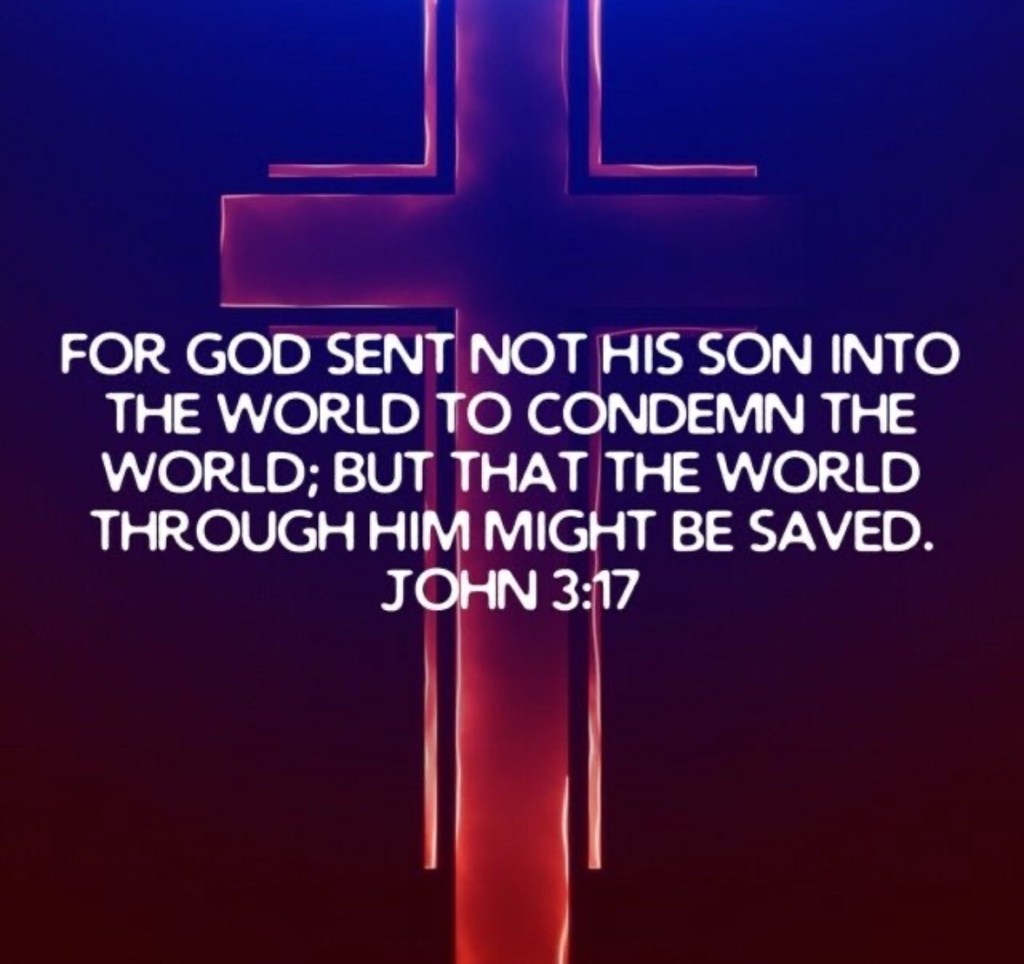
As I read John 3:18, “He who does not believe is condemned already,” it struck me that the best our conditioned learning can achieve is condemnation. Why do we cling so desperately to condemnation when billions have testified to Jesus’ transformative power? Why do we prefer ego-feeding, imprinted learning, even when the destructive effects of such thinking are glaringly evident in the world around us?
This reminds me of a particularly prescient quote:
“The illiterate of the twenty-first century will not be those who cannot read and write, but those who cannot learn, unlearn, and relearn.”– Alvin Toffler, Future Shock
Psychologists have long demonstrated that we are unreliable witnesses to ourselves because learning conditions bias into us. Daniel Kahneman and Amos Tversky’s research on cognitive bias shows that humans are more likely to justify their pre-existing beliefs than challenge them, even in the face of contradictory evidence.¹ If that learning, which is largely shaped by our innate desire to be our own gods, remains unchallenged, we enslave truth to self-interest.²
This is precisely what John 3:19-20 warns about:
“And this is the condemnation, that the light has come into the world, and men loved darkness rather than light, because their deeds were evil.”
We do not reject God for lack of evidence, we reject Him because we do not want our darkness exposed.
C.S. Lewis and the Subversive Nature of Institutional Bias
Here is where C.S. Lewis’ quote becomes even more powerful. He observed:
“The greatest evil is not now done in those sordid ‘dens of crime’ that Dickens loved to paint… But it is conceived and ordered… in clean, carpeted, warmed, and well-lighted offices, by quiet men with white collars.”³
Lewis exposes the insidious power of bias, not just on an individual level, but at an institutional level. Just as an individual deceives himself to preserve his ego, entire systems and institutions deceive themselves to preserve power. Like the Pharisees of Jesus’ time, modern elites reject God’s truth not because it is false, but because it threatens their control.
As Enduring Word’s commentary on John 3:17-21 highlights, the self-condemned do not require external judgement; their refusal to step into the light is their judgement.⁴
Trapp, cited in Enduring Word, puts it even more starkly:
“Heaven is too hot to hold unregenerate persons; no such dirty dog ever trampled on that golden pavement, it is an undefiled inheritance.”⁵
We do not accidentally arrive in heaven, nor do we stumble into salvation. We receive it only by the mercy of God, who loves us.
The Challenge
Are you willing to unlearn your biases and step into the light of truth? Or will you remain comfortable in darkness, preferring the safety of institutional deception and self-justification?
The world owes Jesus a great debt, for exposing these hidden power structures that manipulate, deceive, and condemn. In a world where truth is increasingly sacrificed for comfort, only those who step into the light will see clearly.
Prayer

Heavenly Father,
I come before You, acknowledging the limitations of my own understanding. Too often, my perceptions are clouded by personal biases and preconceived notions. I surrender these to You, seeking the renewal of my mind and the transformation of my heart.
Grant me the wisdom to discern Your truth amidst the noise of this world. Illuminate my path with Your light, guiding me away from the darkness that seeks to deceive. Help me to see others through Your eyes, extending grace and understanding, even in moments of disagreement.
Teach me to hold steadfastly to Your character, prioritising love and patience over the desire to be right. May my actions reflect Your grace, and may my decisions align with Your will.
In Jesus’ Mighty Name, I pray.
Amen.
References:

¹ Kahneman, Daniel. Thinking, Fast and Slow. Farrar, Straus and Giroux, 2011.
² Haidt, Jonathan. The Righteous Mind: Why Good People Are Divided by Politics and Religion. Pantheon, 2012.
³ Lewis, C.S. The Screwtape Letters (Preface to the 1961 Edition). HarperOne, 2015.
⁴ Guzik, David. Enduring Word Commentary: John 3. Enduring Word, 2024.
⁵ Trapp, John. A Commentary on the Old and New Testaments. Mid-17th Century.
 #Hayibo