

Introduction
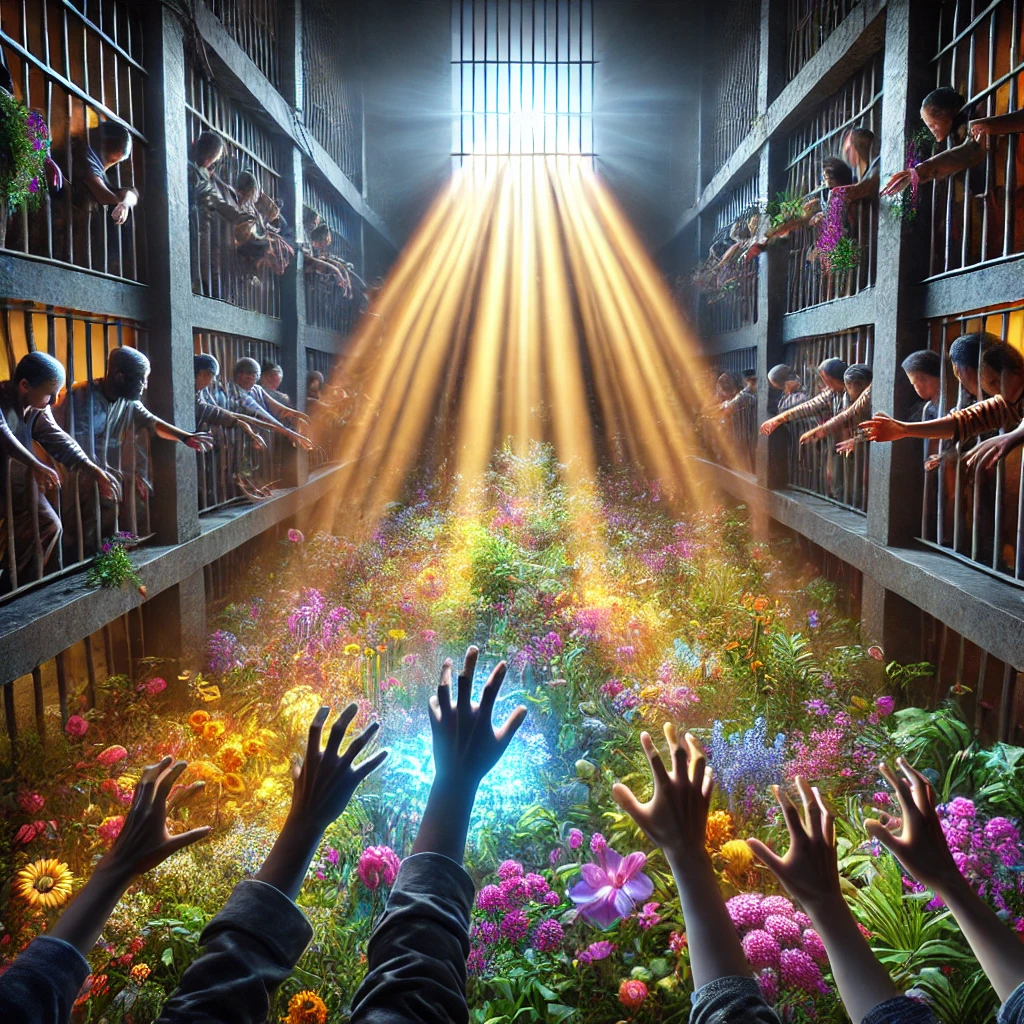
Is love truly love if it is coerced?¹ This question lies at the heart of understanding the profound gift of free will that God has bestowed upon humanity. Love, in its truest form, must be freely chosen, not compelled, reflecting the divine nature of God, who seeks a willing relationship rather than forced allegiance.² Augustine, in The City of God, powerfully underscores this, arguing that free will is intrinsic to the imago Dei—the image of God within mankind.³ Yet Søren Kierkegaard, in The Concept of Anxiety, reminds us that this freedom is fraught with tension, as it comes with the weight of responsibility and the risk of failure.⁴ Viktor Frankl, in Man’s Search for Meaning, reframes the anxiety of freedom as an opportunity to find deeper meaning, even in the face of suffering, showing how human autonomy can lead to profound growth.
In a world marred by systems and forces that seek to enslave the human mind and heart, the gift of free will is constantly under threat. Fyodor Dostoevsky, in The Brothers Karamazov, vividly illustrates the human tendency to trade freedom for security or control, a trade-off that ultimately leads to bondage.⁵ C.S. Lewis echoes this, suggesting in The Problem of Pain that while free will introduces the risk of evil, it also makes possible the noblest forms of love and virtue.⁶ Without the possibility of misuse, love would lose its authenticity, and moral growth would be impossible.⁷
Walter Brueggemann, in The Prophetic Imagination, exposes how systemic oppression functions as a modern form of subjugation, seeking to strip individuals of their God-given autonomy.⁸ Similarly, Aristotle, in Nicomachean Ethics, emphasizes that moral virtue can only flourish in a context of true freedom, where individuals have the capacity to choose the good.⁹ This starkly contrasts with Satan’s tactics, which aim to enslave humanity through tools such as hate, self-hate, and addictions—devices designed to erode the dignity and freedom that God intended for humanity.¹⁰
Charles Spurgeon offers hope, pointing out that the Holy Spirit empowers believers to resist these enslaving forces, reclaiming their freedom to live and love as God desires.¹¹ John Milton, in Paradise Lost, masterfully portrays Satan’s rebellion as the ultimate distortion of freedom—a freedom rooted in pride and a lust for dominance.¹² This distortion stands in opposition to God’s gift of free will, which reflects His goodness and allows humanity to choose Him freely rather than through coercion. Miroslav Volf, in Exclusion and Embrace, frames this as the essence of divine love: a love that flourishes through freedom.¹³
Thomas Aquinas, in Summa Theologica, highlights that the exercise of free will is foundational for moral development, aligning human actions with divine purpose.¹⁴ Richard Swinburne, in The Existence of God, further argues that free will is not only necessary for love but also for genuine moral growth.¹⁵ Free will, though often fragile and misused, remains the cornerstone of authentic love, moral responsibility, and a flourishing relationship with God.
The Nature of Free Will

Free will, at its core, is the capacity to make meaningful choices that reflect an individual’s autonomy. Karl Barth describes this ability as a divine gift, intrinsically linked to God’s will for humanity to respond to Him freely.¹⁶ In the creation narrative of Genesis 2–3, Gordon Wenham underscores the significance of choice, noting that Adam and Eve’s decision to obey or disobey was not merely a test but an affirmation of their moral responsibility.¹⁷ William Lane Craig contends that without free will, love and moral accountability lose their meaning, reducing human action to mere mechanical responses.¹⁸
Viktor Frankl, reflecting on his experiences during the Holocaust, reveals the profound depth of human freedom, asserting that even in the most dehumanising circumstances, individuals retain the ability to choose their attitude and find meaning.¹⁹ Karl Rahner builds on this theological perspective, suggesting that true freedom is realised when human autonomy aligns with divine grace, enabling individuals to fulfil their God-given purpose.²⁰ John Piper emphasizes the joy and fulfilment that arise from choosing to delight in God, describing this choice as central to the Christian experience of freedom.²¹
From a historical and cultural perspective, Craig Keener provides insights into ancient societies, demonstrating how biblical texts celebrate free will as a reflection of human dignity and divine intention.²² Jacques Derrida critiques traditional philosophical assumptions about free will, urging modern thinkers to grapple with its complexities and implications.²³ Derrida challenges the theological reliance on free will as an absolute, arguing in Of Grammatology that meaning is perpetually deferred, raising the question of whether true freedom is even possible. Meanwhile, Confucius offers an Eastern perspective, linking the exercise of free will to personal responsibility and societal harmony.²⁴ Similarly, Kosuke Koyama, in No Handle on the Cross, emphasizes how free will in the context of community reflects the relational nature of God, aligning personal autonomy with communal responsibility.
Psychological research complements these theological and philosophical insights. Roy Baumeister highlights that while free will operates within certain constraints, it remains vital for self-regulation and personal growth.²⁵ Baumeister and Tierney expand on this, showing how willpower strengthens the capacity for autonomy, enabling individuals to overcome temptations and align their actions with their values.²⁶ Deci and Ryan’s self-determination theory reinforces the importance of autonomy, revealing how it serves as a cornerstone for human flourishing and intrinsic motivation.²⁷
Benjamin Libet’s groundbreaking research on decision-making adds nuance to the conversation, exploring the interplay between conscious intent and subconscious processes in human choice.²⁸ Alasdair MacIntyre, in After Virtue, further enriches this discussion by arguing that free will and moral character are cultivated within traditions that guide individuals toward the good.²⁹ Daniel Kahneman, in Thinking, Fast and Slow, underscores the complexity of human decision-making, exploring how cognitive biases and dual processing systems affect our capacity for autonomy.³⁰
Returning to theological reflections, Miroslav Volf emphasizes that reclaiming free will is not merely a personal endeavour but a communal and spiritual act of resistance against systemic forces that suppress autonomy.³¹ Richard Bauckham reinforces this by connecting free will to God’s redemptive mission, asserting that it is through exercising freedom that humanity participates in God’s ultimate plan for justice and restoration.³²
The Opposite of Freedom: Subjugation

While free will embodies the divine gift of autonomy and love, subjugation represents its antithesis, manifesting as control and oppression. Walter Brueggemann describes subjugation as a systemic force that suppresses human dignity, replacing God-given freedom with structures of domination.³³ Carl Jung, in The Undiscovered Self, examines the psychological toll of subjugation, noting that it fosters conformity, fear, and the loss of individual identity, leaving people vulnerable to manipulation.³⁴
Gustavo Gutiérrez, in A Theology of Liberation, argues that subjugation is often entrenched in systemic inequality, particularly in the marginalisation of the poor.³⁵ Jemar Tisby, in The Color of Compromise, explores this dynamic in the context of systemic racism, demonstrating how oppression is perpetuated to maintain power hierarchies.³⁶ Chinua Achebe’s Things Fall Apart illustrates subjugation through the lens of colonialism, showing how external forces destroy cultural identity and autonomy.³⁷ Similarly, Mahatma Gandhi critiques imperialism in Hind Swaraj, advocating for nonviolent resistance as a means of reclaiming autonomy.³⁸
The Apostle Paul’s epistle to the Galatians offers a biblical perspective, contrasting the freedom found in Christ with the bondage of legalism. As F.F. Bruce notes, Paul’s writings underscore the spiritual liberation that accompanies faith, breaking the chains of both sin and societal oppression.³⁹ This theme aligns with the findings of Rajita Sinha and Anisa Zaki, whose psychological research demonstrates how stress and addiction can perpetuate cycles of control, further eroding an individual’s ability to exercise free will.⁴⁰
Rebecca Walker and Rosalind McDougall expand on this, exploring how societal oppression undermines personal autonomy, often forcing individuals into roles that limit their ability to flourish.⁴¹ Rosemary Radford Ruether, in Sexism and God-Talk, critiques patriarchal systems, arguing that they perpetuate subjugation within both society and the Church, calling for a theology that liberates individuals from oppressive structures. Philosophically, David Hume critiques the traditional understanding of free will, suggesting that many human decisions are shaped more by external forces than by true autonomy.⁴² However, Karl Rahner counters this, arguing that even in the face of subjugation, divine grace allows for the restoration of freedom, aligning human autonomy with God’s purpose.⁴³
Kevin Vanhoozer explores how God’s will interacts with human freedom, even in oppressive contexts, suggesting that divine action empowers individuals to resist subjugation.⁴⁴ C.S. Lewis identifies suffering as a tool often employed by oppressive systems to break the human spirit, but he also emphasizes that God can use suffering to draw people closer to Him.⁴⁵ Alvin Plantinga ties subjugation to the greater framework of free will and redemption, arguing that God’s allowance of subjugation serves the purpose of ultimate restoration and justice.⁴⁶
James Cone, in A Black Theology of Liberation, ties resistance to oppression to the biblical narrative of justice, highlighting how God’s redemptive work liberates the oppressed.⁴⁷ Edward Said, in Orientalism, critiques how cultural and political dominance often masquerades as progress while perpetuating subjugation.⁴⁸ The practice of slavery, often justified through distorted theology, defied the core tenets of Christianity, which affirm the God-given dignity and freedom of all people. Such misuse of faith, such as the Arab slave trade, highlights a tragic departure from God’s intent for justice and liberation. Paulo Freire, in Pedagogy of the Oppressed, offers practical solutions, showing how education can empower individuals to reclaim their autonomy and resist systemic forces.⁴⁹ Andrew Delbanco, in The Death of Satan, poignantly observes how subjugation is often a manifestation of evil, highlighting humanity’s collective struggle against forces that enslave.⁵⁰
Biblical Foundations of Free Will

The concept of free will is woven throughout the biblical narrative, portraying humanity as created in God’s image with the capacity to choose between obedience and rebellion. In Genesis 2–3, Gordon Wenham emphasizes that Adam and Eve’s choice to eat from the tree of knowledge of good and evil was not merely a test but an affirmation of their moral agency.⁵¹ John Calvin, in The Bondage of the Will, argues that while humanity retains the ability to choose, sin often distorts this freedom, making divine grace essential for true liberation.⁵²
Paul’s writings further highlight the significance of free will. N.T. Wright, in The Resurrection of the Son of God, underscores that the resurrection serves as the ultimate restoration of human freedom, breaking the chains of sin and death.⁵³ John Milton’s Samson Agonistes poetically captures the tension between freedom and consequence, portraying Samson’s story as a reflection of divine redemption through human choice.⁵⁴
Philosophically, Jean-Paul Sartre’s existential framework echoes the biblical narrative, affirming that true freedom comes with the responsibility of authentic choice.⁵⁵ Nathan DeWall and Brad Bushman’s research on social acceptance and rejection parallels biblical teachings, showing how God’s non-coercive love offers ultimate belonging, contrasting with manipulative tactics that undermine autonomy.⁵⁶ Bertrand Russell, however, critiques the concept of free will from a secular perspective, questioning its compatibility with the existence of suffering.⁵⁷
Biological insights also contribute to the discussion. Robert Sapolsky, in Behave, highlights how human decision-making is influenced by neural processes, yet retains an element of autonomy that reflects the biblical principle of accountability.⁵⁸ Stephen C. Meyer, in Return of the God Hypothesis, ties the existence of free will to intelligent design, arguing that human freedom is evidence of a purposeful creation.⁵⁹ Charles Taylor builds on this, linking free will to moral and identity formation, suggesting that freedom is not merely a right but a transformative journey aligned with biblical teachings.⁶⁰
Theologically, Thomas Torrance, in The Mediation of Christ, emphasizes Christ’s role in reconciling divine sovereignty with human freedom, portraying Jesus as the mediator who restores humanity’s ability to choose God.⁶¹ John Mbiti offers an African perspective, where communal values affirm the significance of free will in fostering societal harmony, aligning individual autonomy with collective responsibility.⁶² John Pobee, in Toward an African Theology, expands on this by emphasizing that free will must serve the community, reflecting the interconnectedness of autonomy and relationality in African theological thought.
Scot McKnight, in Kingdom Conspiracy, describes how the exercise of free will aligns with God’s mission to establish His kingdom on Earth, where love and justice prevail.⁶³ William Lane Craig, in The Only Wise God, argues that God’s foreknowledge of human choices does not negate free will but rather affirms it, as God’s omniscience exists alongside human responsibility.⁶⁴ Similarly, Boethius, in The Consolation of Philosophy, reconciles divine foreknowledge and free will by arguing that God’s eternal perspective allows Him to know all choices without compelling them, thus preserving human autonomy. Richard Swinburne reiterates that free will is indispensable for genuine love and moral growth, framing it as central to God’s plan for redemption.⁶⁵
The story of the Prodigal Son (Luke 15:11-32) exemplifies this biblical foundation, portraying a father’s love that waits patiently for the son’s free return. This narrative illustrates how God respects human autonomy, allowing individuals to choose Him freely, which is the foundation of genuine relationship and transformation.
Satan’s Tactics of Subjugation
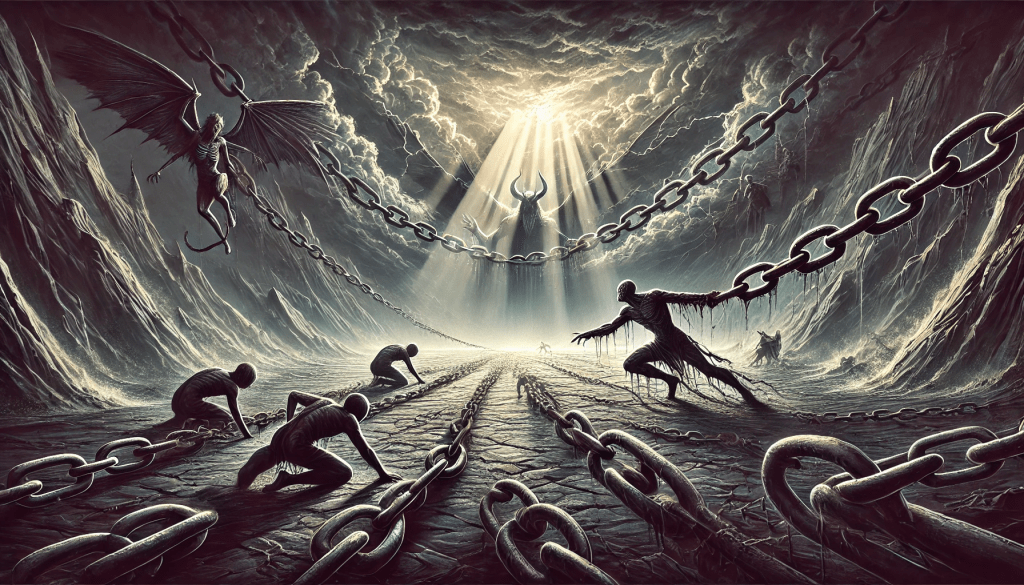
While God grants humanity free will as a reflection of His goodness, Satan seeks to undermine this freedom by enslaving the human spirit. Walter Brueggemann, in The Prophetic Imagination, describes systemic subjugation as one of Satan’s most effective tools, replacing God-given autonomy with structures of fear and control.⁶⁶ Moltmann extends this hope to address systemic evils such as poverty and environmental degradation, arguing that eschatological hope compels believers to resist these evils as part of God’s redemptive mission. Carl Jung, in The Undiscovered Self, complements this by showing how subjugation fosters psychological fragmentation, leaving individuals vulnerable to manipulation and despair.⁶⁷
Chinua Achebe illustrates how colonial powers used subjugation to destroy cultural identity and autonomy, a tactic that reflects Satan’s broader strategy of eroding human dignity.⁶⁸ Jürgen Moltmann, in The Crucified God, frames subjugation as a distortion of creation’s purpose, arguing that liberation is central to Christ’s mission to restore humanity’s freedom and dignity.⁶⁹ Francis Chan, in Crazy Love, points out how Satan uses materialism and distractions to enslave people subtly, diverting their focus from their God-given purpose.⁷⁰
Timothy Keller, in The Reason for God, highlights that misplaced worship—of power, status, or wealth—is one of Satan’s primary tactics to keep humanity in bondage, drawing individuals away from God’s love.⁷¹ Naomi Eisenberger and Matthew Lieberman provide psychological insight into this, showing how social rejection and exclusion can act as tools of subjugation, eroding confidence and autonomy.⁷² Similarly, C.S. Lewis, in Mere Christianity, describes sin as a form of self-inflicted slavery, where individuals willingly relinquish their freedom by succumbing to harmful desires.⁷³
Jürgen Moltmann, in The Coming of God, emphasizes the eschatological hope of liberation, asserting that Satan’s tactics, while effective, are ultimately temporary, as Christ’s victory secures ultimate freedom for believers.⁷⁴ Anselm of Canterbury, in Proslogion, reflects on how subjugation results from humanity’s departure from God’s will, a separation that only divine grace can reconcile.⁷⁵ William Abraham, in Divine Agency and Divine Action, adds that liberation from subjugation requires a synergistic partnership between human effort and divine grace.⁷⁶
René Girard, in I See Satan Fall Like Lightning, highlights Satan’s use of scapegoating as a tool to perpetuate cycles of violence and oppression, deflecting attention from systemic issues and sowing division.⁷⁷ Walter Wink, in Engaging the Powers, identifies spiritual warfare as a key component of resisting Satan’s tactics, emphasizing the need for prayer, discernment, and collective action.⁷⁸ Andrew Delbanco, in The Death of Satan, poignantly critiques modern society’s failure to recognize the pervasive influence of evil, a denial that allows subjugation to flourish unchecked.⁷⁹
James Cone ties the fight against subjugation to the biblical narrative of justice, showing how God’s redemptive plan is one of liberation for the oppressed.⁸⁰ Paulo Freire offers practical tools for resisting subjugation, emphasizing education as a means of reclaiming autonomy.⁸¹ Together, these perspectives illuminate the breadth of Satan’s tactics and the biblical hope for freedom through Christ.
Conclusion
God’s gift of free will reflects His goodness, allowing humanity to choose Him freely rather than through coercion or fear. Augustine reaffirms that free will is central to humanity’s being, as it enables authentic relationships with God and others.⁸² Timothy Keller highlights that this freedom underscores God’s trust in humanity, even amidst the risks it entails.⁸³
While free will creates space for love, moral growth, and responsibility, it also opens the door to subjugation. Walter Wink explains that subjugation often manifests as a spiritual battle, requiring discernment and resistance.⁸⁴ Paulo Freire offers a practical dimension, emphasizing that reclaiming freedom is both an educational and spiritual act.⁸⁵
Richard Swinburne argues that the risks of free will are outweighed by the profound value it brings: the possibility of genuine love and moral growth.⁸⁶ Jürgen Moltmann, in The Spirit of Life, assures us that God’s redemptive plan will ultimately triumph over subjugation, restoring creation to its intended freedom.⁸⁷
Andrew Delbanco reminds us of the importance of naming and confronting the forces of evil, as ignoring their existence only allows them to thrive.⁸⁸ William Lane Craig underscores the compatibility of divine foreknowledge and human freedom, showing how God’s sovereignty complements human responsibility.⁸⁹
Miroslav Volf frames this battle as part of God’s mission of reconciliation, where freedom and love are essential to healing relationships.⁹⁰ Charles Taylor reinforces that the exercise of free will is a transformative journey, one that aligns with humanity’s ultimate purpose in God’s design.⁹¹
Stephen C. Meyer concludes that free will reflects the intentionality and purpose of creation, affirming the unique role of humanity in God’s plan.⁹² Free will, though fragile and often misused, remains the cornerstone of authentic love, moral growth, and a flourishing relationship with God. However, applying the theology of free will to modern systemic oppression raises challenging questions. How can individual autonomy align with the broader need for structural change? Theological frameworks must grapple with this tension to address both personal and collective dimensions of liberation.
In granting humanity free will, God demonstrates His profound goodness and trust, inviting us to choose Him and embrace the fullness of life He offers. It is through this freedom that we find true love, purpose, and hope, overcoming the subjugation that seeks to enslave.
In Jesus Christ, we find the ultimate answer to the tension between free will and subjugation. Through His life, death, and resurrection, Jesus embodies God’s redemptive plan to restore humanity’s freedom and dignity. He proclaims in John 8:36, “So if the Son sets you free, you will be free indeed,” offering liberation not only from sin but also from the systemic and personal forces that seek to enslave. His invitation in Matthew 11:28–30 to take on His yoke, which is light and easy, reminds us that true freedom is found in surrendering to Him, as His lordship leads to life rather than bondage. In a world grappling with addiction, oppression, and despair, how can we respond to His call to freedom and embrace the life He offers?
Practical Application

• Embrace the Freedom Christ Offers:
Recognize areas in your life where you may feel enslaved by fear, addiction, or societal expectations. Meditate on John 8:36: “So if the Son sets you free, you will be free indeed.” Jürgen Moltmann writes, “Freedom in Christ is not just freedom from something but freedom for a new, redeemed life in fellowship with God and others.“⁹³
• Exercise Your Free Will for Good:
Make intentional choices that reflect God’s character, such as pursuing justice, showing compassion, and resisting actions or systems that perpetuate subjugation. Deuteronomy 30:19 reminds us: “I have set before you life and death, blessings and curses. Now choose life, so that you and your children may live.” Richard Bauckham affirms, “The Bible’s concept of justice is profoundly relational, aimed at restoring right relationships within the community.“⁹⁴
• Reflect on Your Use of Freedom:
Evaluate how you use the gift of free will in daily life. Are your choices leading to love, moral growth, and alignment with God’s purpose, or are they fostering division or harm? Galatians 5:13 says: “You, my brothers and sisters, were called to be free. But do not use your freedom to indulge the flesh; rather, serve one another humbly in love.” Miroslav Volf notes, “True freedom finds its highest expression not in autonomy but in loving service to others.“⁹⁵
• Engage in Advocacy:
Identify ways you can support others in reclaiming their God-given dignity and freedom. This could involve challenging systemic oppression, providing support to those battling addictions, or mentoring individuals to make positive choices. Isaiah 1:17 calls us to: “Learn to do right; seek justice. Defend the oppressed. Take up the cause of the fatherless; plead the case of the widow.” Gustavo Gutiérrez emphasizes, “Justice is the central dimension of the Gospel because it reflects the liberating mission of Christ.“⁹⁶
• Strengthen Your Relationship with God:
Through prayer, Scripture, and worship, draw closer to God, allowing His Spirit to guide your decisions and empower you to resist the tactics of subjugation. Psalm 119:105 says: “Your word is a lamp for my feet, a light on my path.” Karl Barth asserts, “God’s Word confronts us with a choice: to walk in His light or to remain in darkness.“⁹⁷
• Invite Jesus into Everyday Decisions:
Surrender your choices to Christ, inviting His wisdom and guidance into both big and small decisions. This ongoing relationship ensures that your free will is exercised in alignment with His will. Proverbs 3:5–6 advises: “Trust in the Lord with all your heart and lean not on your own understanding; in all your ways submit to him, and he will make your paths straight.” Timothy Keller writes, “True freedom comes from submission to God, as it aligns our will with His divine purposes.“⁹⁸
• Support Community Freedom:
Encourage others to embrace the freedom found in Christ by fostering open dialogue, offering spiritual encouragement, and addressing barriers that inhibit autonomy, such as poverty, oppression, or cultural expectations. 1 Thessalonians 5:11 urges: “Therefore encourage one another and build each other up, just as in fact you are doing.” Walter Wink notes, “Engaging the powers requires communal resistance, where the Church embodies an alternative reality of justice and love.“⁹⁹
• Cultivate Hope in Christ’s Victory:
Reflect on the eschatological promise that Christ will ultimately overcome all forms of subjugation. Let this hope inspire you to persevere in personal and communal acts of liberation and faithfulness. Revelation 21:4 assures us: “He will wipe every tear from their eyes. There will be no more death or mourning or crying or pain, for the old order of things has passed away.” Jürgen Moltmann adds, “The hope of resurrection is not just an individual promise but the basis for the renewal of all creation.“¹⁰⁰
Prayer
Heavenly Father,
Thank You for the gift of free will, reflecting Your love and trust in us. Forgive us when we misuse this freedom and guide us to choose paths that glorify You. Help us to resist the forces of subjugation—addictions, hate, and injustice—and empower us through Jesus to walk in true freedom.
Teach us to surrender our choices to You daily, trusting in Your wisdom. May our freedom reflect Your goodness, bringing hope and justice to others. We place our hope in Jesus’ victory and the promise of ultimate freedom in Your kingdom.
In Jesus’ Mighty name,
Amen.
References

1. Augustine, The City of God. Translated by Marcus Dods. New York: Modern Library, 1950.
2. Søren Kierkegaard, The Concept of Anxiety. Princeton: Princeton University Press, 1844.
3. Fyodor Dostoevsky, The Brothers Karamazov. Translated by Richard Pevear and Larissa Volokhonsky. New York: Farrar, Straus and Giroux, 2002.
4. C.S. Lewis, The Problem of Pain. London: HarperOne, 1940.
5. Walter Brueggemann, The Prophetic Imagination. Minneapolis: Fortress Press, 1978.
6. Aristotle, Nicomachean Ethics. Translated by Terence Irwin. Indianapolis: Hackett Publishing, 1999.
7. Charles H. Spurgeon, The Power of the Holy Spirit. London: Passmore & Alabaster, 1853.
8. Thomas Aquinas, Summa Theologica. Translated by Fathers of the English Dominican Province. New York: Benziger Bros., 1947.
9. N.T. Wright, Evil and the Justice of God. Downers Grove: IVP Books, 2006.
10. Alvin Plantinga, God, Freedom, and Evil. Grand Rapids: Eerdmans, 1977.
11. John Milton, Paradise Lost. Edited by Gordon Teskey. New York: Norton, 2005.
12. Miroslav Volf, Exclusion and Embrace: A Theological Exploration of Identity, Otherness, and Reconciliation. Nashville: Abingdon Press, 1996.
13. Richard Swinburne, The Existence of God. Oxford: Clarendon Press, 1979.
14. Timothy Keller, Making Sense of God: An Invitation to the Sceptical. New York: Viking, 2016.
15. Aquinas, Summa Theologica.
16. Karl Barth, Church Dogmatics, Vol. II/1: The Doctrine of God. Edinburgh: T&T Clark, 1957.
17. Gordon Wenham, Word Biblical Commentary: Genesis 1–15. Waco: Word Books, 1987.
18. William Lane Craig, Reasonable Faith: Christian Truth and Apologetics. Wheaton: Crossway Books, 2008.
19. Viktor Frankl, Man’s Search for Meaning. Boston: Beacon Press, 1959.
20. Karl Rahner, Spirit in the World. New York: Herder and Herder, 1968.
21. John Piper, Desiring God: Meditations of a Christian Hedonist. Colorado Springs: Multnomah, 1986.
22. Craig S. Keener, The IVP Bible Background Commentary: New Testament. Downers Grove: IVP Academic, 1993.
23. Jacques Derrida, Of Grammatology. Translated by Gayatri Chakravorty Spivak. Baltimore: Johns Hopkins University Press, 1976.
24. Confucius, The Analects. Translated by Edward Slingerland. Indianapolis: Hackett, 2003.
25. Roy F. Baumeister, Free Will and Consciousness: How Might They Work? Oxford: Oxford University Press, 2010.
26. Roy F. Baumeister and John Tierney, Willpower: Rediscovering the Greatest Human Strength. New York: Penguin, 2011.
27. Edward L. Deci and Richard M. Ryan, “Self-Determination Theory: A Macrotheory of Human Motivation, Development, and Health.” Canadian Psychology/Psychologie Canadienne 49, no. 3 (2008): 182–85.
28. Benjamin Libet, Mind Time: The Temporal Factor in Consciousness. Cambridge: Harvard University Press, 2004.
29. Alasdair MacIntyre, After Virtue: A Study in Moral Theory. 3rd ed. Notre Dame: University of Notre Dame Press, 2007.
30. Daniel Kahneman, Thinking, Fast and Slow. New York: Farrar, Straus and Giroux, 2011.
31. Miroslav Volf, Exclusion and Embrace: A Theological Exploration of Identity, Otherness, and Reconciliation. Nashville: Abingdon Press, 1996.
32. Richard Bauckham, Bible and Mission: Christian Witness in a Postmodern World. Grand Rapids: Baker Academic, 2003.
33. Walter Brueggemann, The Prophetic Imagination. Minneapolis: Fortress Press, 1978.
34. Carl Jung, The Undiscovered Self. Princeton: Princeton University Press, 1957.
35. Gustavo Gutiérrez, A Theology of Liberation. Maryknoll: Orbis Books, 1988.
36. Jemar Tisby, The Color of Compromise: The Truth about the American Church’s Complicity in Racism. Grand Rapids: Zondervan, 2019.
37. Chinua Achebe, Things Fall Apart. London: Heinemann, 1958.
38. Mahatma Gandhi, Hind Swaraj or Indian Home Rule. Ahmedabad: Navajivan, 1938.
39. F.F. Bruce, The Epistle to the Galatians. Grand Rapids: Eerdmans, 1982.
40. Rajita Sinha and Anisa M. Zaki, “Stress and Addiction: A Dynamic Interplay of Genes, Environment, and Behavior.” Annual Review of Clinical Psychology 7 (2011): 271–293.
41. Rebecca L. Walker and Rosalind J. McDougall, eds., Personal Autonomy and Social Oppression: Philosophical Perspectives. London: Routledge, 2018.
42. David Hume, An Enquiry Concerning Human Understanding. Oxford: Oxford University Press, 1748.
43. Karl Rahner, Foundations of Christian Faith. New York: Crossroad, 1978.
44. Kevin J. Vanhoozer, “God’s Will and Human Freedom.” Scottish Journal of Theology 43, no. 4 (1990): 441–463.
45. C.S. Lewis, The Problem of Pain. London: HarperOne, 1940.
46. Alvin Plantinga, God, Freedom, and Evil. Grand Rapids: Eerdmans, 1977.
47. James Cone, A Black Theology of Liberation. Maryknoll: Orbis Books, 1970.
48. Edward Said, Orientalism. New York: Pantheon Books, 1978.
49. Paulo Freire, Pedagogy of the Oppressed. New York: Continuum, 1970.
50. Andrew Delbanco, The Death of Satan: How Americans Have Lost the Sense of Evil. New York: Farrar, Straus and Giroux, 1995.
51. Gordon Wenham, Word Biblical Commentary: Genesis 1–15. Waco: Word Books, 1987.
52. John Calvin, The Bondage of the Will. Grand Rapids: Baker, 1957.
53. N.T. Wright, The Resurrection of the Son of God. Minneapolis: Fortress Press, 2003.
54. John Milton, Samson Agonistes. Edited by Gordon Teskey. New York: Norton, 2005.
55. Jean-Paul Sartre, Being and Nothingness. Translated by Hazel E. Barnes. New York: Washington Square Press, 1956.
56. Nathan DeWall and Brad Bushman, “Social Acceptance and Rejection: The Sweet and the Bitter.” Current Directions in Psychological Science 20, no. 4 (2011): 256–260.
57. Bertrand Russell, Why I Am Not a Christian. New York: Simon and Schuster, 1957.
58. Robert Sapolsky, Behave: The Biology of Humans at Our Best and Worst. New York: Penguin Press, 2017.
59. Stephen C. Meyer, Return of the God Hypothesis. New York: HarperOne, 2021.
60. Charles Taylor, Sources of the Self: The Making of the Modern Identity. Cambridge: Harvard University Press, 1989.
61. Thomas F. Torrance, The Mediation of Christ. Colorado Springs: Helmers & Howard, 1992.
62. John S. Mbiti, African Religions and Philosophy. London: Heinemann, 1969.
63. Scot McKnight, Kingdom Conspiracy: Returning to the Radical Mission of the Local Church. Grand Rapids: Brazos Press, 2014.
64. William Lane Craig, The Only Wise God: The Compatibility of Divine Foreknowledge and Human Freedom. Grand Rapids: Baker Academic, 1987.
65. Richard Swinburne, The Existence of God. Oxford: Clarendon Press, 1979.
66. Walter Brueggemann, The Prophetic Imagination. Minneapolis: Fortress Press, 1978.
67. Carl Jung, The Undiscovered Self. Princeton: Princeton University Press, 1957.
68. Chinua Achebe, Things Fall Apart. London: Heinemann, 1958.
69. Jürgen Moltmann, The Crucified God. Minneapolis: Fortress Press, 1993.
70. Francis Chan, Crazy Love. Colorado Springs: David C. Cook, 2008.
71. Timothy Keller, The Reason for God: Belief in an Age of Skepticism. New York: Penguin, 2008.
72. Naomi Eisenberger and Matthew Lieberman, “Why It Hurts to Be Left Out: The Neurocognitive Overlap Between Physical Pain and Social Pain.” Trends in Cognitive Sciences 8, no. 7 (2004): 294–300.
73. C.S. Lewis, Mere Christianity. New York: HarperOne, 1952.
74. Jürgen Moltmann, The Coming of God: Christian Eschatology. Minneapolis: Fortress Press, 1996.
75. Anselm of Canterbury, Proslogion. Translated by Thomas Williams. Indianapolis: Hackett, 2001.
76. William J. Abraham, Divine Agency and Divine Action. Oxford: Oxford University Press, 2018.
77. René Girard, I See Satan Fall Like Lightning. Maryknoll: Orbis Books, 2001.
78. Walter Wink, Engaging the Powers: Discernment and Resistance in a World of Domination. Minneapolis: Fortress Press, 1992.
79. Andrew Delbanco, The Death of Satan: How Americans Have Lost the Sense of Evil. New York: Farrar, Straus and Giroux, 1995.
80. James Cone, A Black Theology of Liberation. Maryknoll: Orbis Books, 1970.
81. Paulo Freire, Pedagogy of the Oppressed. New York: Continuum, 1970.
82. Augustine, The City of God. Translated by Marcus Dods. New York: Modern Library, 1950.
83. Timothy Keller, Making Sense of God: An Invitation to the Skeptical. New York: Viking, 2016.
84. Walter Wink, Engaging the Powers: Discernment and Resistance in a World of Domination. Minneapolis: Fortress Press, 1992.
85. Paulo Freire, Pedagogy of the Oppressed. New York: Continuum, 1970.
86. Richard Swinburne, The Existence of God. Oxford: Clarendon Press, 1979.
87. Jürgen Moltmann, The Spirit of Life: A Universal Affirmation. Minneapolis: Fortress Press, 1992.
88. Andrew Delbanco, The Death of Satan: How Americans Have Lost the Sense of Evil. New York: Farrar, Straus and Giroux, 1995.
89. William Lane Craig, The Only Wise God: The Compatibility of Divine Foreknowledge and Human Freedom. Grand Rapids: Baker Academic, 1987.
90. Miroslav Volf, Exclusion and Embrace: A Theological Exploration of Identity, Otherness, and Reconciliation. Nashville: Abingdon Press, 1996.
91. Charles Taylor, Sources of the Self: The Making of the Modern Identity. Cambridge: Harvard University Press, 1989.
92. Stephen C. Meyer, Return of the God Hypothesis. New York: HarperOne, 2021.
93. Jürgen Moltmann, The Spirit of Life: A Universal Affirmation (Minneapolis: Fortress Press, 1992).
94. Richard Bauckham, Bible and Mission: Christian Witness in a Postmodern World (Grand Rapids: Baker Academic, 2003).
95. Miroslav Volf, Exclusion and Embrace: A Theological Exploration of Identity, Otherness, and Reconciliation (Nashville: Abingdon Press, 1996).
96. Gustavo Gutiérrez, A Theology of Liberation: History, Politics, and Salvation (Maryknoll: Orbis Books, 1988).
97. Karl Barth, Church Dogmatics, Volume I/1: The Doctrine of the Word of God (Edinburgh: T&T Clark, 1936).
98. Timothy Keller, The Reason for God: Belief in an Age of Skepticism (New York: Penguin, 2008).
99. Walter Wink, Engaging the Powers: Discernment and Resistance in a World of Domination (Minneapolis: Fortress Press, 1992).
100. Jürgen Moltmann, The Coming of God: Christian Eschatology (Minneapolis: Fortress Press, 1996).
 #Hayibo