


We live in an age where “peace” has become a product.
Meditation apps, wellness coaches, self-help gurus, and spiritual influencers all promise the same thing Jesus does: inner calm, healing of the self, freedom from anxiety, and clarity of mind.
But Jesus makes a stunning claim:
The world gives a kind of peace, but it is not the same as His.
And it cannot accomplish what His does.
Modern spirituality promises peace without truth, transformation without repentance, and transcendence without the Living God. Much of contemporary culture presents “inner peace” as a psychological technique, a therapeutic state, or a curated emotional experience. But Jesus presents peace as a Person:
Peace is the presence of God Himself dwelling within you.

Why People Seek Peace in All the Wrong Places
A question many ask, “If adults are intelligent, why do they believe incoherent or fraudulent spiritual systems?”
Because human beings do not merely seek truth; we seek relief.¹ When life feels fragmented, traumatic, or chaotic, we grasp for anything that promises meaning or calm. Even irrational systems feel comforting if they reduce fear.² Belonging also outranks logic, people often accept beliefs that keep them connected to a community, even when those beliefs collapse under scrutiny.³
The world’s peace is appealing because it is immediate, flattering, and cost-free. Jesus’ peace is appealing because it is eternal, grounding, and real.
And only one can heal the self.

The Holy Spirit: The Peace That Teaches, Forms, and Restores
Jesus promises two gifts as He prepares to depart:
1. The Holy Spirit, the Teacher Who Forms Us
“He will teach you all things…”
The Spirit does not offer escape. He offers formation, conviction, and transformation. Where the world gives distraction, the Spirit gives understanding. Where the world gives emotional sedation, the Spirit gives wisdom. Where the world gives self-flattery, the Spirit gives truth that heals.⁴
The Holy Spirit does not numb the heart; He rebuilds it.
2. The Peace of Christ; a Peace Rooted in Being, Not Feeling
“My peace I give to you… not as the world gives.”
The world’s peace depends on conditions. Jesus’ peace depends on conferral: Who He is, and who you are in Him. The peace Jesus gives is not the absence of trouble; it is the presence of God within trouble. It is not emotional anesthesia; it is the reordering of the soul by the Spirit of Truth. It is not self-derived; it is received, like identity, like grace, like love.
And that is why He concludes: “Let not your heart be troubled, neither let it be afraid.” Not because life is safe, but because you are held.
The Peace That Confers Identity
In a culture of relativism, self-construction, and existential exhaustion, Jesus’ peace is revolutionary. His peace is not cognitive therapy. His peace is not self-optimisation. His peace is not a breathing technique. His peace is ontological, it restores who you are.
Peace is the fruit of conferral:
the Father naming you,
the Son redeeming you,
the Spirit dwelling within you.
This is why every competitor to Christian identity formation ultimately collapses: it cannot bear the weight of human longing, it cannot diagnose the wound of sin, it cannot confer an identity it does not possess. Only Jesus can say,“My peace I give to you.” Because only Jesus is peace.
And only Jesus can place peace inside a human soul.

Practical Application: How to Live the Peace Jesus Gives
If Jesus promises His peace, not the world’s, then the question becomes practical: How do we actually receive it? How do we practice conferral in a world shouting competing identities at us?
The answer is not complex, but it is sacred.
We learn to return to the voice that names us.
Below are three daily practices to cultivate the peace Jesus gives.
1. Ask Jesus to Name You Again and Again
Conferral is not an achievement. It is a posture of continual receiving. Each day, sometimes each hour, simply pray:
“Jesus, who do You say I am right now?”
You are training your inner world to shift authority away from the world’s naming, your wound’s naming, your fears’ naming, and toward the Spirit’s naming.
Peace flows from identity rightly received. This is the meaning of: “He will bring to your remembrance all things I said to you.”
The Spirit reminds you of the identity you forget.
2. Discern Which Voice Is Speaking
Every moment of your life you are listening to one of three voices:
The world’s voice: “You must perform. You must earn your worth. You must manage everything.”
Your wound’s voice: “You are alone. You must stay vigilant. You cannot trust anyone.”
The Spirit’s voice: “You are Mine. You are safe. You are held. You are named.”
Spiritual formation begins when you pause and ask, “Which voice is speaking right now?”
The Holy Spirit cannot always silence the noise around you, but He can give you clarity within it.
Peace begins in clarity.
3. Practice Returning, Not Performing
Many believers think peace is something they must maintain through perfect discipline.
But Jesus says:
“Let not your heart be troubled.”
“My peace I give to you.”
This is not performance language.
It is receiving language.
So the question is never, “Am I peaceful enough?”
The question is, “Who am I returning to when I lose peace?”
Every return is confession.
Every return is worship.
Every return is conferral.
You do not need to be perfect, you only need to return.
4. Invite the Spirit into Your Survival Mode
Jesus did not promise peace after the storm. He promised peace in it. If you feel overwhelmed, stretched thin, hypervigilant, or emotionally tired, do not hide these conditions from God.
These are not obstacles to conferral; they are the very places where conferral takes root.
Pray simply:
“Holy Spirit, name me in this place.”
Peace is formed not in avoidance, but in communion.
5. Anchor Yourself in the Jesus Who Does Not Leave You
Jesus’ promise is not, “I will teach you occasionally,” “I might help you,” “I give peace if circumstances align.”
His promise is:
“The Helper… will teach you all things.”
“My peace I give to you.”
You are not responsible for producing peace. You are responsible for receiving the One who gives it.
Conferral is daily.
Peace is relational.
Identity is bestowed.
And you walk in that identity not by overcoming the world’s noise, but by staying near the One whose voice cuts through it.
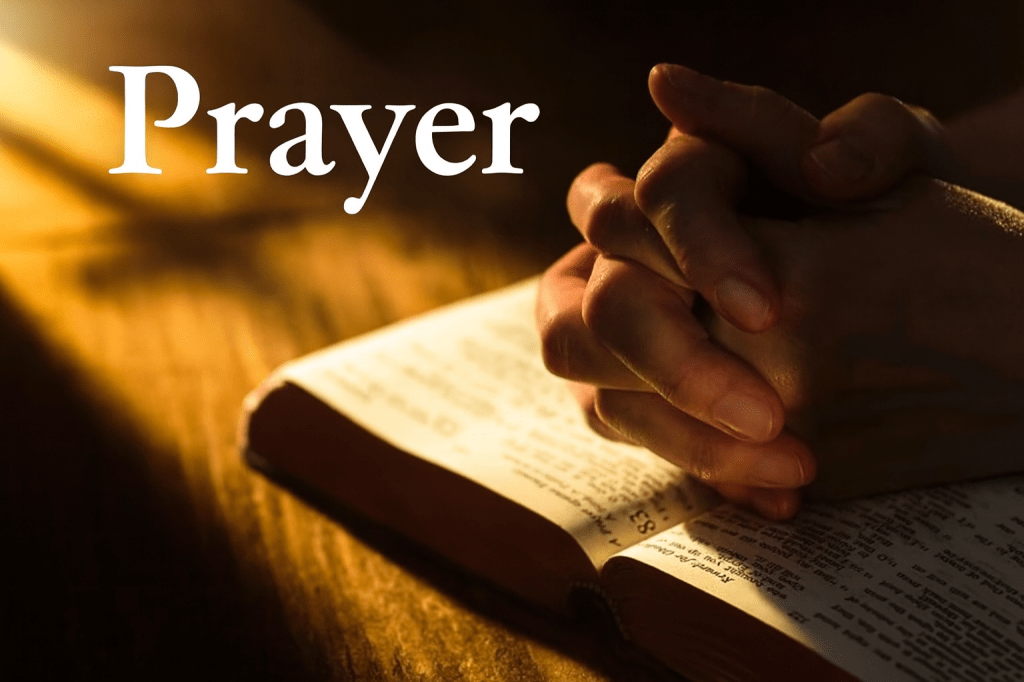
Prayer
Jesus,
Speak Your peace into my heart again. Silence the voices that un-name me, and let the Holy Spirit remind me of who I am in You.
Where I feel overwhelmed, be my calm. Where I feel unsure, be my truth. Where I feel pressed, be my presence.
Teach me to return to You again and again, not striving, but receiving; not performing, but surrendering; not grasping, but resting in the identity You confer.
Name me today, Lord, and give me the courage to walk in the peace that only You can give.
In Your Magnificently Holy Name Messiah King Jesus,
Amen.
TRACK TO ENJOY:

Footnotes
1. Viktor E. Frankl, Man’s Search for Meaning (Boston: Beacon Press, 2006), 99–105.
2. Sheldon Solomon, Jeff Greenberg, and Tom Pyszczynski, The Worm at the Core: On the Role of Death in Life (New York: Random House, 2015), 23–45.
3. Peter L. Berger and Thomas Luckmann, The Social Construction of Reality (New York: Anchor Books, 1966), 171–72.
4. Jonathan Haidt, The Righteous Mind: Why Good People Are Divided by Politics and Religion (New York: Pantheon, 2012), 44–53.
 #Hayibo