


The doctrine of creation is not merely a metaphysical claim about what the cosmos is. Rather, the biblical theology of creation functions as a manifesto—as marching orders, a commission that sends humanity into God’s good yet broken world with a calling. This (com)mission can be summarised in three verbs: image, unfold, and occupy. These are action words. They describe what humanity is called to do.
First, human beings are called to image God. Scripture declares that humanity is created in the image of God (Gen. 1:27), yet it is helpful to hear this not merely as a noun but as a verb—not simply a property that humans possess, but a task entrusted to them. The imago Dei is therefore a mission rather than merely a characteristic of human nature.
As Richard Middleton observes, the image of God designates “the royal office or calling of human beings as God’s representatives and agents in the world, granted authorised power to share in God’s rule or administration of the earth’s resources and creatures.” Humanity is commissioned as God’s vice-regents, entrusted with the responsibility of cultivating creation and unfolding its latent possibilities through human cultural activity. In this sense, to image God involves representing—and in some measure extending—God’s rule on earth through the ordinary communal practices of human life. (James KA Smith, You Are What You Love, chap. 7.)

Foreword
At this moment in my life, I find myself carrying a financial burden heavy enough to keep a person awake at night. I do not say this to invite sympathy, nor to dramatise hardship. It is simply the ordinary reality that sometimes follows the transition from one income structure to another.
Under such circumstances, it would be natural to read Scripture with a particular hope in mind: that God might intervene with a financial miracle. Yet when my Bible reading plan brought me to the opening lines of the Book of Psalms, I encountered a different kind of miracle altogether.
The first word of Psalm 1 is blessed.
For many of us, that word has been domesticated. In contemporary culture, blessing often refers to favourable circumstances: financial success, professional advancement, fortunate timing, or the visible signs of a life that appears to be going well. We say, “I am blessed,” and mean that things have worked out in our favour.
Yet Psalm 1 immediately unsettles that assumption.
The Psalmist does not describe blessing in terms of wealth or comfort. Instead, blessing appears as something far more subtle, and far more profound: a pattern of life rooted in the instruction of God. What unfolds is not a description of good fortune, but a portrait of formation. The blessed life, the Psalm suggests, is not the life that escapes hardship, but the life that is planted in the right place.
This insight is striking, especially in a culture that has learned to measure identity and success through external validation. As the philosopher Charles Taylor observes, the modern self increasingly understands identity as something constructed through the affirmation of surrounding voices rather than received through participation in a larger moral order.¹ If this is true, then the question of blessing cannot be separated from the question of formation: who, or what, is shaping the soul?
Psalm 1 opens the entire Book of Psalms with precisely this question.
Epilogue : The Pattern Hidden in Psalm 1
At first glance, Psalm 1 appears simple. Yet beneath its surface lies a carefully crafted literary structure typical of Hebrew wisdom literature. Scholars have long noted that the Psalm is arranged as a chiasm, a mirrored pattern in which the centre reveals the core message.²
The structure unfolds roughly as follows:
Rejecting the counsel of the wicked Delighting in the instruction of the Lord The tree planted by streams of water The wicked compared to chaff The final separation of the two paths
At the centre of this pattern stands a single image: the planted tree.
The Psalmist’s argument is therefore not primarily moral but relational. The crucial question is not simply what a person does, but where a person is rooted. The image of the tree signals that human identity grows from a source of nourishment. As Walter Brueggemann notes, Psalm 1 presents the Psalter not merely as a collection of prayers but as an invitation into a way of life shaped by the instruction of God.²
The blessed life, then, is not accidental. It is cultivated.
Identity Through the Eyes of Psalms 1 and 2
Psalm 1 does something remarkable: it opens the entire Psalter by placing before the reader two distinct paths.
One path leads to stability, fruitfulness, and endurance. The other leads to dissolution, like chaff scattered by the wind.
Yet the opening of the Psalter does not end there. Psalm 2 completes the picture by introducing the figure of the Lord’s anointed king. The final line of that Psalm echoes the opening word of Psalm 1:
“Blessed are all who take refuge in him.”
Taken together, these two Psalms form the doorway into the entire book. Psalm 1 describes the way of the righteous; Psalm 2 reveals the king who ultimately embodies that way. The pattern of blessedness therefore moves beyond moral instruction into relationship with God’s appointed ruler.
The Two Trees and Human Formation
The image of the tree in Psalm 1 is not an isolated metaphor. Throughout Scripture, trees frequently symbolise the conditions under which human life flourishes.
The biblical narrative begins with trees in the Book of Genesis and concludes with the tree of life in the Book of Revelation. Between those two trees lies the entire story of humanity.
Psalm 1 situates the reader within that story through a striking pattern of formation:
walk → stand → sit
The progression describes the subtle ways in which environments shape identity. What begins as casual exposure eventually becomes settled belonging. As John Goldingay observes, the Psalm portrays the gradual deepening of influence through which a person becomes formed by a particular community and worldview.³
Modern thinkers have described similar dynamics in cultural terms. Philosopher James K. A. Smith argues that human beings are shaped less by abstract ideas than by the practices and environments that capture their imagination and direct their desires.⁴ In other words, we become what we repeatedly participate in.
The Psalmist recognised this long before modern sociology or psychology gave it a name.
Coming to Know
The process of formation also raises an epistemological question: how do we come to know what is true?
The futurist Alvin Toffler famously observed that the illiterate of the twenty-first century would not be those who cannot read and write, but those who cannot learn, unlearn, and relearn.⁵ His remark captures the intellectual challenge of a rapidly changing world. Yet the deeper challenge may lie not merely in acquiring information but in cultivating the posture necessary for genuine understanding.
Philosopher Esther Lightcap Meek argues that knowing is fundamentally relational. We come to know reality not by forcing it into our categories but by inviting it, much as we would approach another person.⁶ In this sense, knowledge is not merely informational but interpersonal.
Such insight resonates with the biblical portrayal of wisdom. Psalm 1 describes the blessed person as someone who delights in the instruction of the Lord and meditates upon it continually. Knowledge emerges not from detached analysis but from attentive relationship.
To know truth, the Psalm suggests, requires being rooted in a source capable of revealing it.
Blessed Because…
This perspective helps clarify the meaning of the Psalm’s opening word.
The Hebrew term often translated “blessed” conveys a state of flourishing rather than mere good fortune. It describes a life aligned with the order and wisdom of God.
The blessed person is therefore not characterised primarily by favourable circumstances but by a particular pattern of life:
refusing destructive counsel delighting in divine instruction remaining rooted in a life-giving source
As theologian Jonathan Pennington observes, biblical teaching about blessedness ultimately concerns human flourishing within the framework of God’s kingdom.⁷
The image of the planted tree captures this idea vividly. The tree does not generate its own life; it receives nourishment from the stream beside which it grows.
Blessedness, then, is not something we manufacture. It is something we receive by remaining where life flows.
Jesus: The Way of Blessedness
The New Testament deepens this vision through the teaching of Jesus Christ. In the Sermon on the Mount recorded in the Gospel of Matthew, Jesus begins with a series of statements echoing the language of Psalm 1:
“Blessed are the poor in spirit…
Blessed are the meek…
Blessed are those who hunger and thirst for righteousness.”
These declarations overturn conventional expectations. The blessed are not those who appear powerful or secure but those whose lives are oriented toward God’s kingdom.
According to N. T. Wright, Jesus’ teaching presents a vision of human flourishing grounded in the restoration of God’s intended order for the world.⁸ In this sense, the Beatitudes do not introduce a new idea of blessedness; they reveal its fullest expression.
The way of the blessed life is ultimately embodied in the person of Christ.
Conclusion
Psalm 1 began with a simple word: blessed.
Yet the Psalm quietly dismantles the assumptions we often attach to that word. Blessing is not measured by comfort, wealth, or favourable circumstances. It is measured by rootedness.
The tree planted beside living water may endure seasons of drought or storm, yet its life is sustained by a source deeper than the conditions surrounding it.
So too with the soul.
The decisive question is not whether life unfolds without difficulty, but where our roots are planted.

Practical Application
Three questions emerge from this reflection:
What voices are shaping my imagination? What practices are quietly forming my desires? Where am I planting the roots of my identity?
The answers to these questions determine the trajectory of a life.
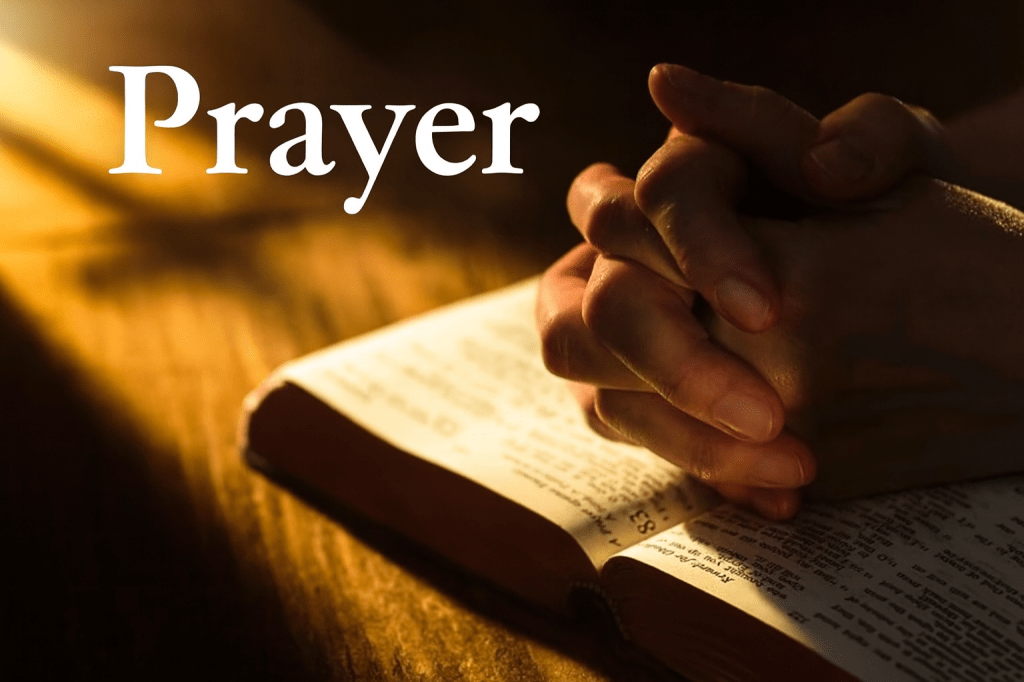
Prayer
Lord,
Plant my life beside the waters of Your wisdom.
Teach me to delight in Your instruction rather than the passing counsel of the world.
Root my identity in Your truth so that my life may bear fruit in its season.
In Your Holy and Magnificent Name: Messiah, King, Lord Jesus,
Amen.
Prologue : A Stoic Reflection
The Roman emperor Marcus Aurelius once wrote that human beings possess power over their own minds but not over external events.⁹ The Stoic tradition therefore sought peace through disciplined self-mastery.
There is wisdom in that insight. Yet Stoicism ultimately places the burden of flourishing upon the strength of the self.
The biblical vision of blessedness offers something different.
The blessed life does not emerge from the mastery of the self but from the planting of the self beside a living stream.
TRACK TO ENJOY:

References
1. Charles Taylor, A Secular Age (Cambridge, MA: Belknap Press, 2007), 37–42.
2. Walter Brueggemann, The Message of the Psalms (Minneapolis: Augsburg Publishing House, 1984), 38–43.
3. John Goldingay, Psalms Volume 1: Psalms 1–41 (Grand Rapids: Baker Academic, 2006), 83–87.
4. James K. A. Smith, You Are What You Love (Grand Rapids: Brazos Press, 2016), chap. 2.
5. Alvin Toffler, Future Shock (New York: Random House, 1970), 414.
6. Esther Lightcap Meek, A Little Manual for Knowing (Eugene, OR: Cascade Books, 2014), 36–39.
7. Jonathan T. Pennington, Jesus the Great Philosopher (Grand Rapids: Brazos Press, 2020), 201–210.
8. N. T. Wright, Simply Christian (New York: HarperOne, 2006), chap. 1.
9. Marcus Aurelius, Meditations, trans. Gregory Hays (New York: Modern Library, 2002), 8.47.
 #Hayibo