

Throughout God’s Holy Word vanity reoccurs. We ALL struggle with it. But how do we navigate the difference between self-care versus vanity?
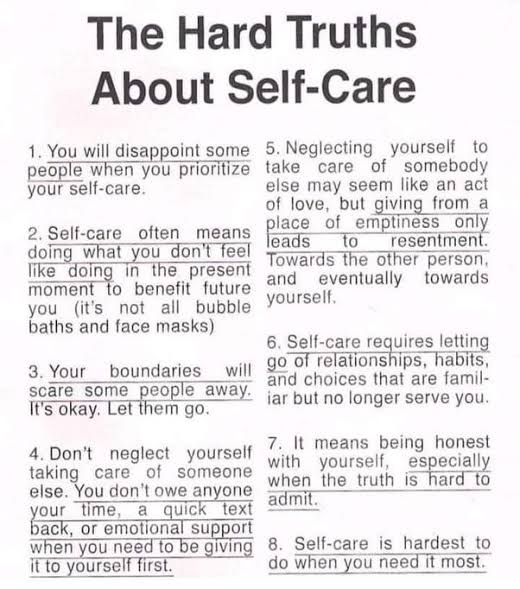
Michelle Goodloe, gmichelle.com, describes the difference between narcissistic vanity and self-care beautifully.
To quote:
‘When someone only exercises vanity, they may lose out of the rich and fulfilling self-connection that self-love can bring.
On the other hand, self-love is the deep care, acceptance, admiration and appreciation that you have in your relationship with yourself. Unlike vanity, self-love is recognizing the internal and external parts of yourself and having love for them. When we think of self-love, we also think of having:
- Self-compassion for yourself
- Patience for your growing edges
- Appreciation for your strengths and your challenges
- Awareness of yourself and what your needs are
- Understanding that physical looks are only one component of who you are
Simply put, vanity is the shallow appreciation of self. Vanity is “skin-deep” and in only recognizing your physical looks, you miss out on having a deeper connection with yourself. Self-love is not vanity: it is taking in the whole you and loving the whole you from the inside-out.’ – https://www.gmichelle.com/blog/2019/04/29/the-difference-between-self-love-and-vanity
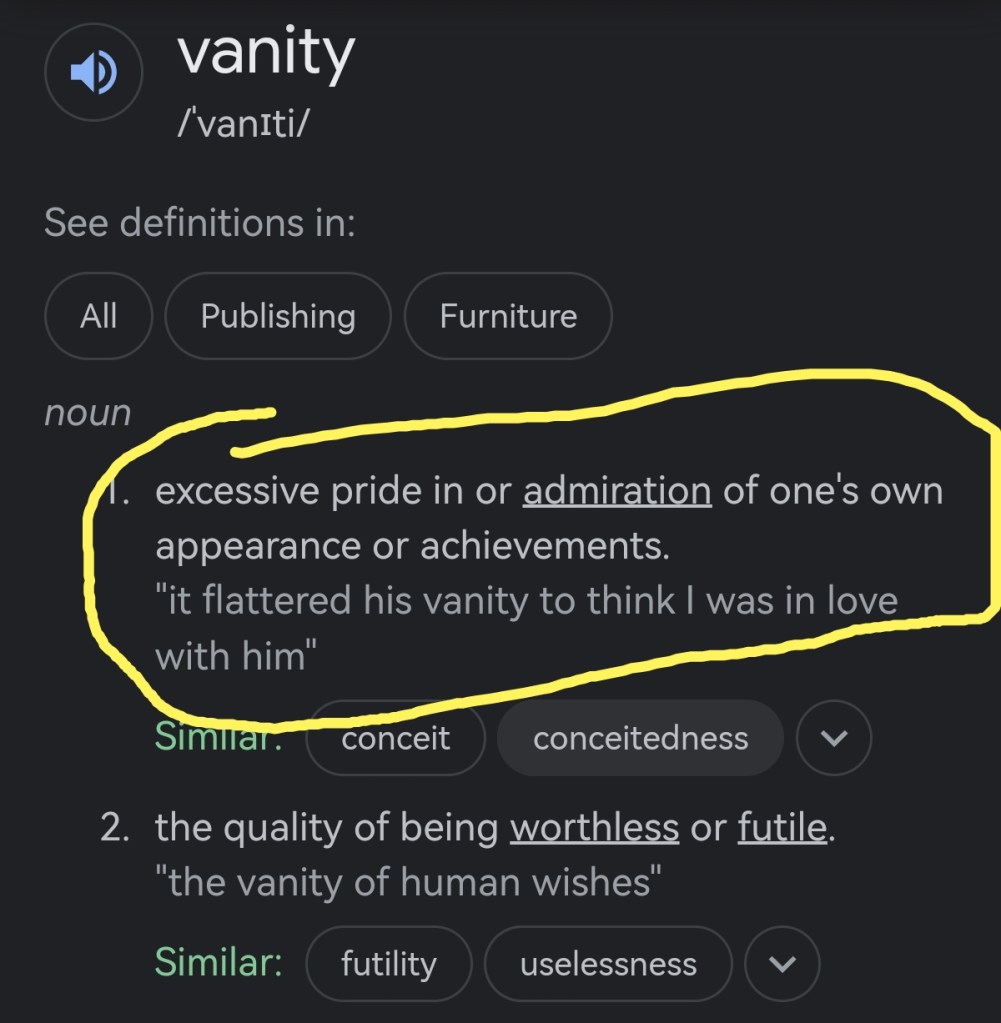
If vanity is self-aggrandizing and self-care about value what does God’s Holy Word teach us?
Psalm 127 has an alarming statement that gets us to sit up and measure our motives.

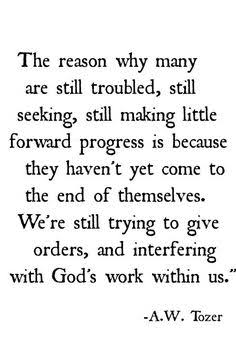
We discover a valuable lesson in Psalm 127- God must be the Director, Purpose, and Motive that we live for. Outside of this, we are valuing ourselves and fall into vanity.
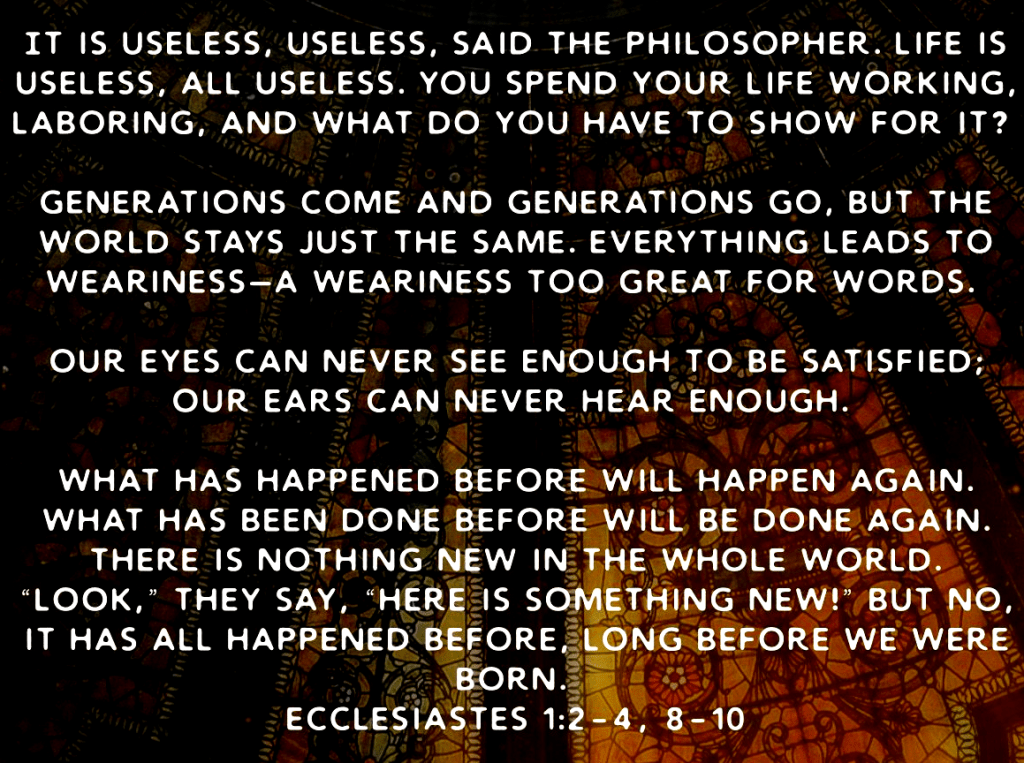
King Solomon, heralded as the wisest person to have lived, saturated with concubines, wealth, influence, and admiration, fell away from God’s Way, and died depressed. In Ecclesiastes 1 Solomon imparts some hard-hitting wisdom about the self-indulgence of our vanities.
Fortunately, Solomon comes to his senses on his death bed and concludes that which separates vanity from values is that self must subject itself towards obedience to God. He states, Ecclesiastes 12 vs 13-14, “After all this, there is only one thing to say: Have reverence for God, and obey his commands, because this is all that we were created for. God is going to judge everything we do, whether good or bad, even things done in secret.”
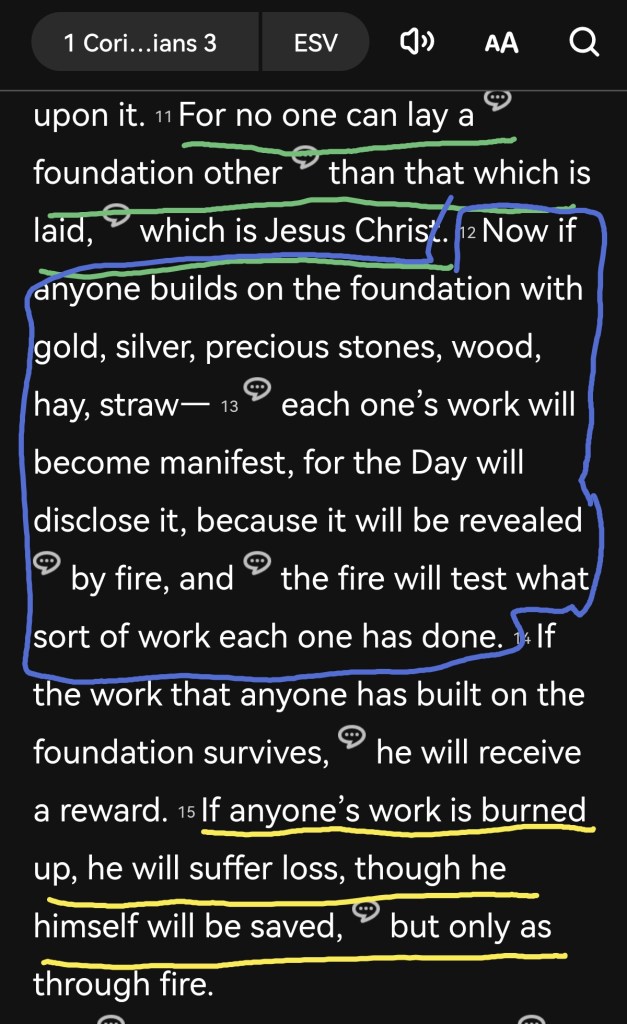
1 Corinthians 3 vs 11-15, picks up the theme of Psalm 127 and the wisdom of Solomon. Here Paul is teaching that building our lives- spiritually, psychologically, emotionally, even financially- that isn’t founded in Jesus, for Jesus, and by Jesus, will fail when tested by Jesus when He returns.
Can you imagine that moment when Jesus is judging our work, motives, and ethics, and everything we have done counts for zero because vanity ruled us, not God?
Talk about a deflating experience.
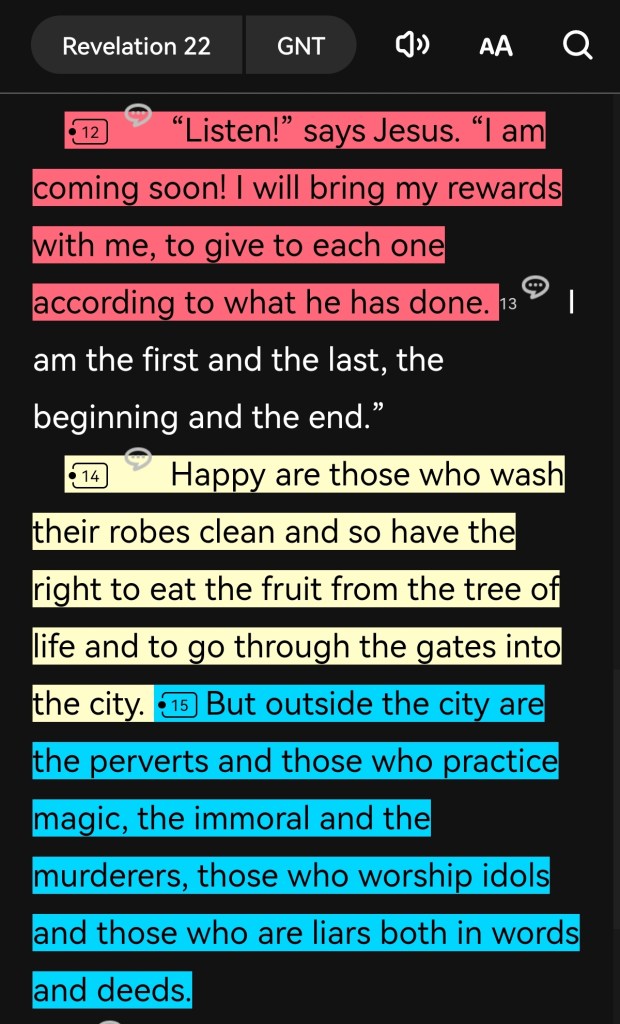
Messiah King Jesus, Himself tells us in Revelation 22 vs 12-15 that He is coming with His reward based on what we’ve done. Verse 14-15 are particularly interesting. We see what excludes us from eternity with Jesus in verse 15, BUT, we see the requirement to cleanse ourselves of our vanities parading in sin, poor ethics, and self-indulgent motives in verse 14. Jesus calls us into relationship, by believing and obeying God’s Word regarding value versus vanity. Where we fail, and we all do, daily, ‘washing our robes’ teaches us that we must humbly acknowledge our shortcoming before Jesus and ask His help to turn us, repentedly, away from our vanities that birth sin in us.
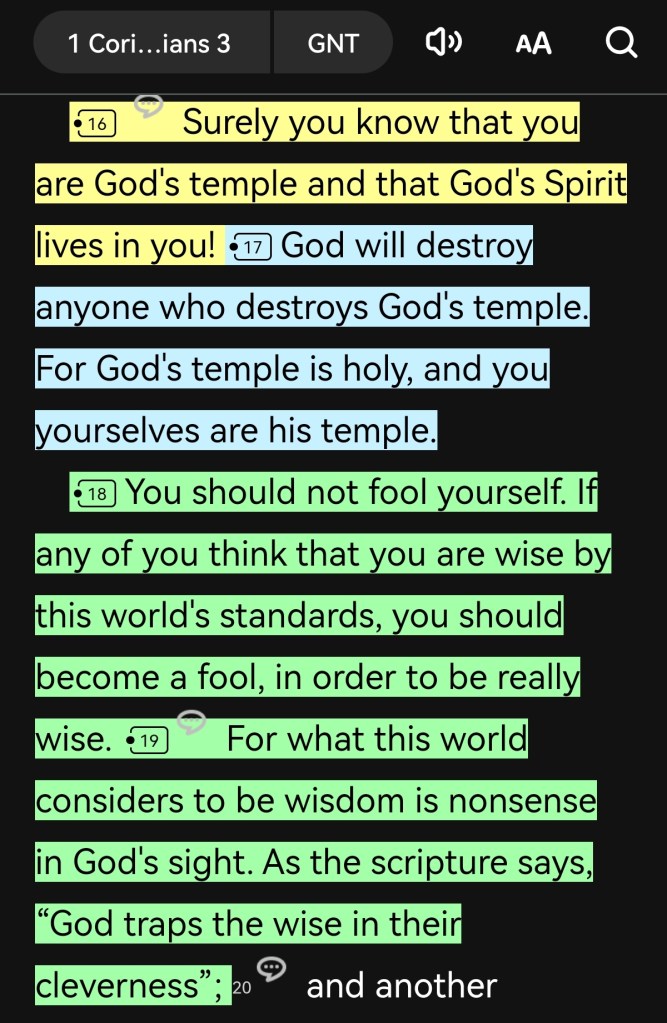
1 Corinthians 3 verse 16-19 reminds us that we do not belong to ourselves. As such we have to value ourselves as God values us. Anything done from a position of vanity defiantly puts ourselves above God, and verse 17 warns of the consequences that await should we not work on dying to self. 1 Corinthians 3 vs 18-19 smashes the wind out of guts as we stare into the mirror of self before God. We see that imagined humanist wisdom that sets itself up above ALMIGHTY, ALL-KNOWING God is foolish vanity, as Solomon tells us in Ecclesiastes 12 vs 13-14.
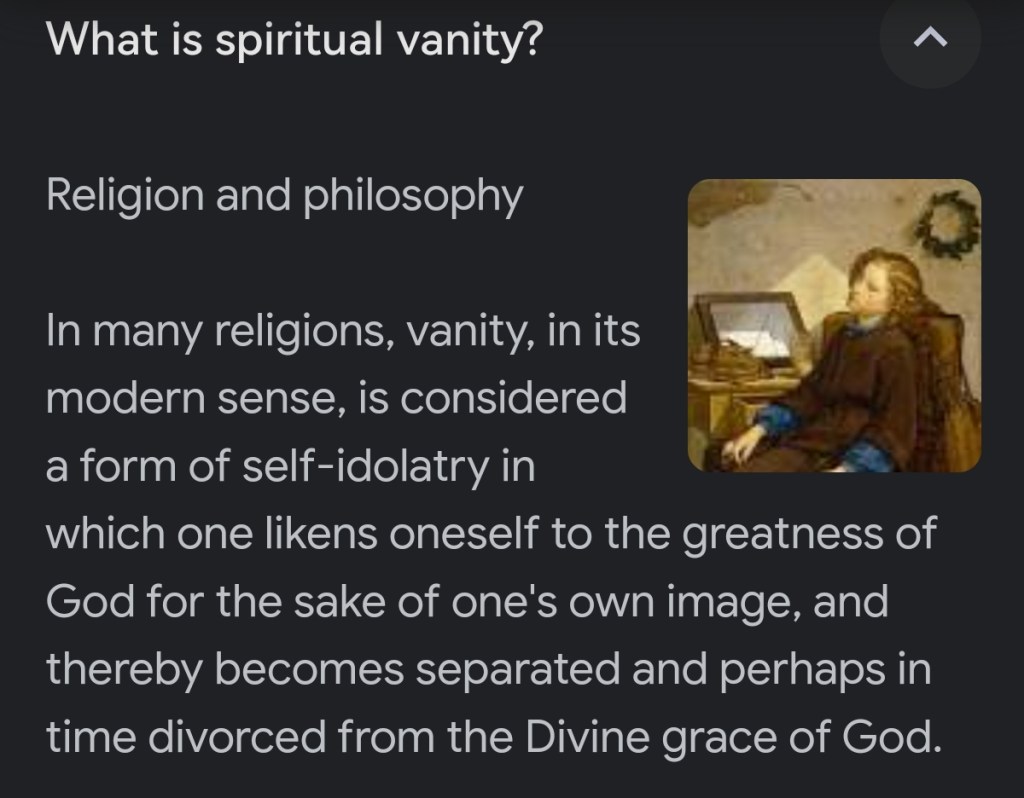
So what are we to do about our troublesome imprinted condition of narcissistic vanity?
Colossians 3 vs 1-25 removes the log out of our eyes, and the veil of deceit off our understanding, exposing us to correct motives where EVERYTHING we do is to honour, obey, and learn from our Lord Messiah King Jesus.
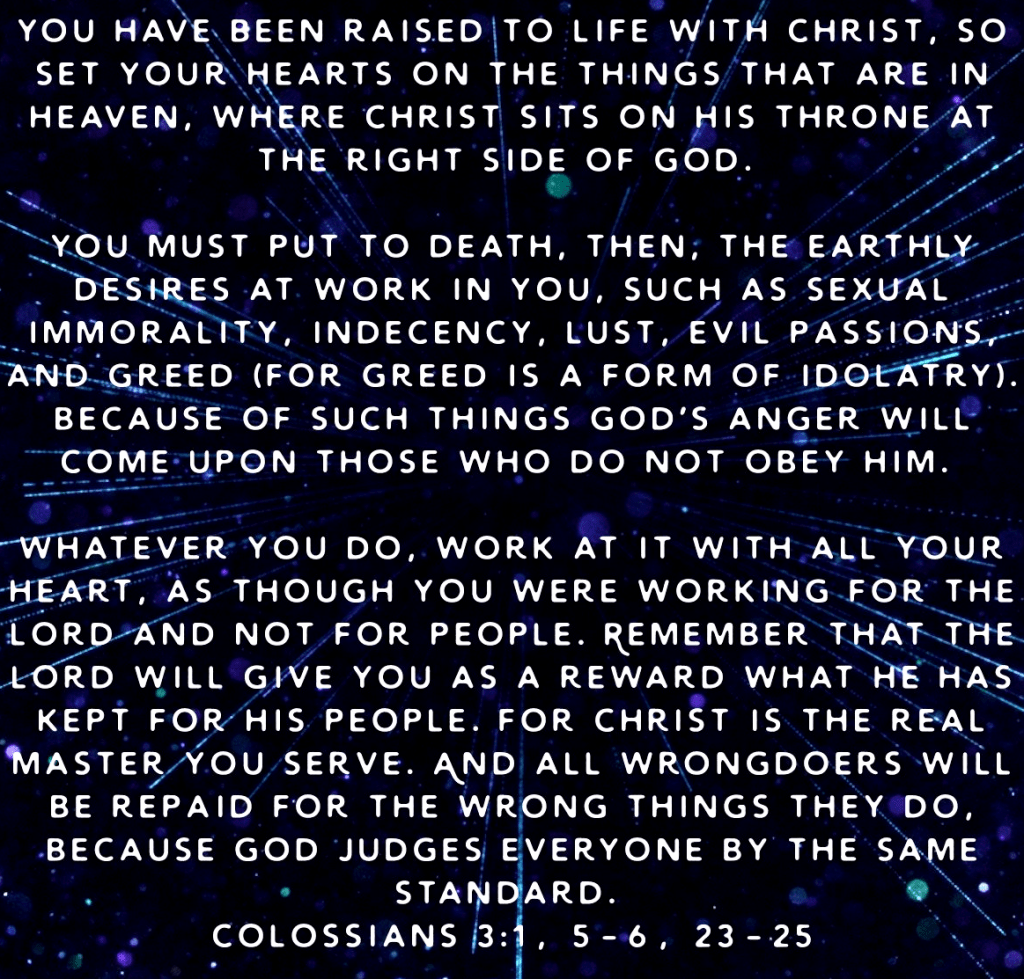
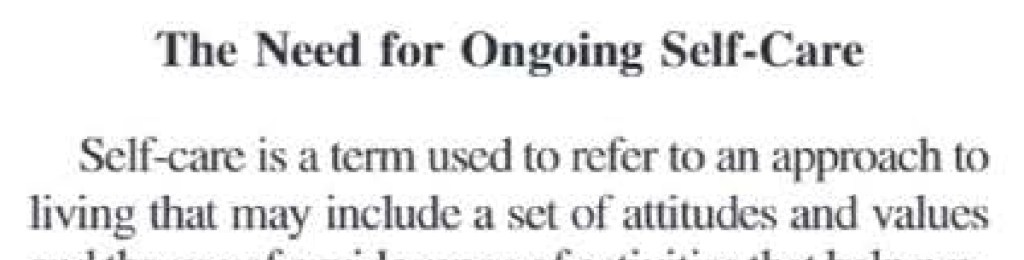
Funnily enough the quoted piece from the American Psychological Association about self-care being about value and attitudes, is titled, ‘The New Self-Care: It’s Not All About You’.
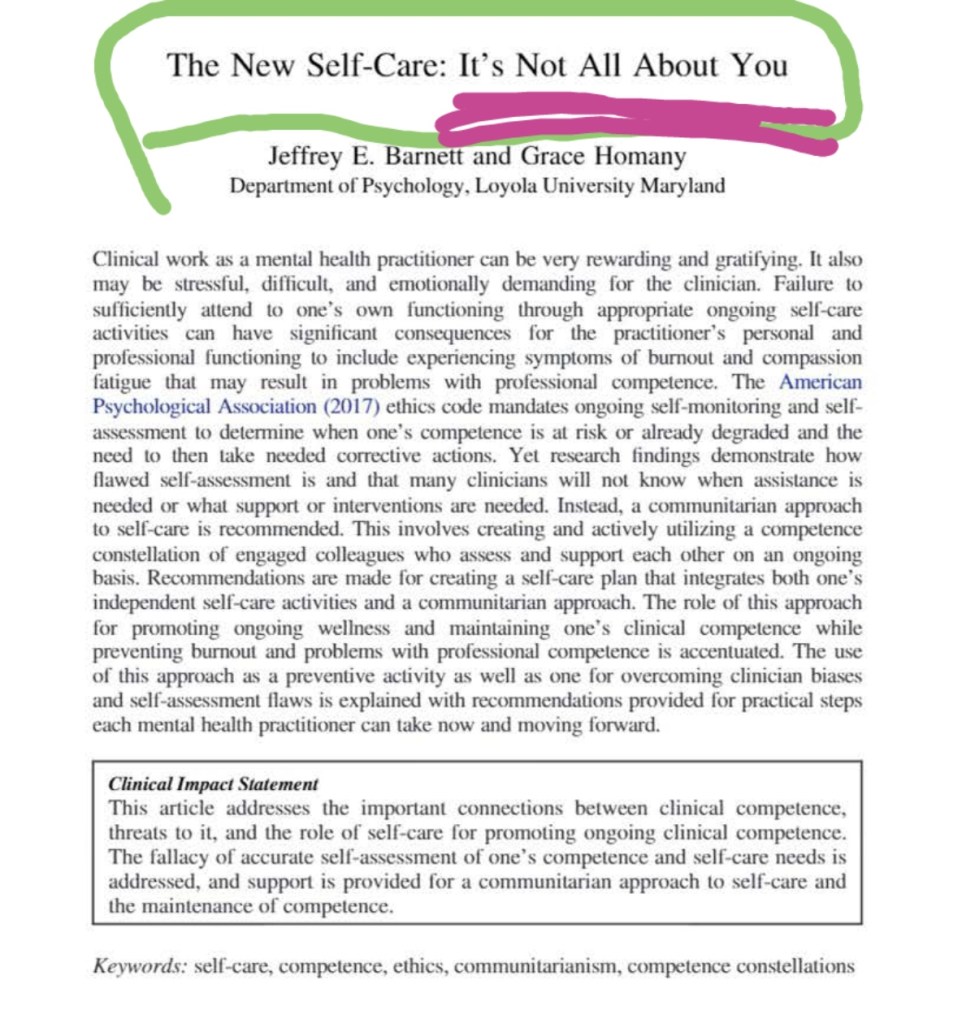
WHO BETTER THEN, THAN LEARNING VALUE AND ATTITUDES FROM THAN FROM THE ONLY PERFECT HUMAN- JESUS- WHO OVERCAME SO THAT WE CAN BE RECONCILED TO GOD?

Funny thing is…..
Jesus told us that the two greatest commandments are:
* Love God
* Love others
Jesus ALSO tells us, “To be my disciples, deny self, pick up your cross, and follow me.” (Matthew 16 vs 24)
In conclusion, the greatest self-care we can have is to follow God’s Instructions. The greatest vanity, to not.
PRAY THIS:
Father God,
Please forgive me my vanities. Teach me to lay down my self-indulgences, sins, and self-praise by helping me to value myself enough to follow You. Help me to unlearn why I became vain, and relearn working as unto You. Help me discover the joy of becoming who You say that I am so that I can have better through You, than settling for eternal separation from You in my vanities. Thank You that Your Holy Word, Jesus, he Holy Spirit and Your whole motive is to save me. Forgive me for making it all about me.
In Your Holy Name King Jesus
AMEN
 #Hayibo